Algeria
 Egypt
 Libya
 Morocco
 Sudan
 Tunisia
 Benin
 Burkina Faso
 Cabo Verde
 Côte d'Ivoire
 Ghana
 Guinea
 Guinea-Bissau
 Liberia
 Mali
 Mauritania
 Niger
 Nigeria
 Sierra Leone
 The Gambia
 Togo
 Cameroon
 Central African Republic
 Chad
 DR Congo
 Equatorial Guinea
 Gabon
 Republic of the Congo
 São Tomé and Príncipe
 Burundi
 Comoros
 Djibouti
 Eritrea
 Ethiopia
 Kenya
 Madagascar
 Malawi
 Mauritius
 Mozambique
 Rwanda
 Seychelles
 Somalia
 South Sudan
 Tanzania
 Uganda
 Angola
 Botswana
 Eswatini
 Lesotho
 Namibia
 South Africa
 Zambia
 Zimbabwe
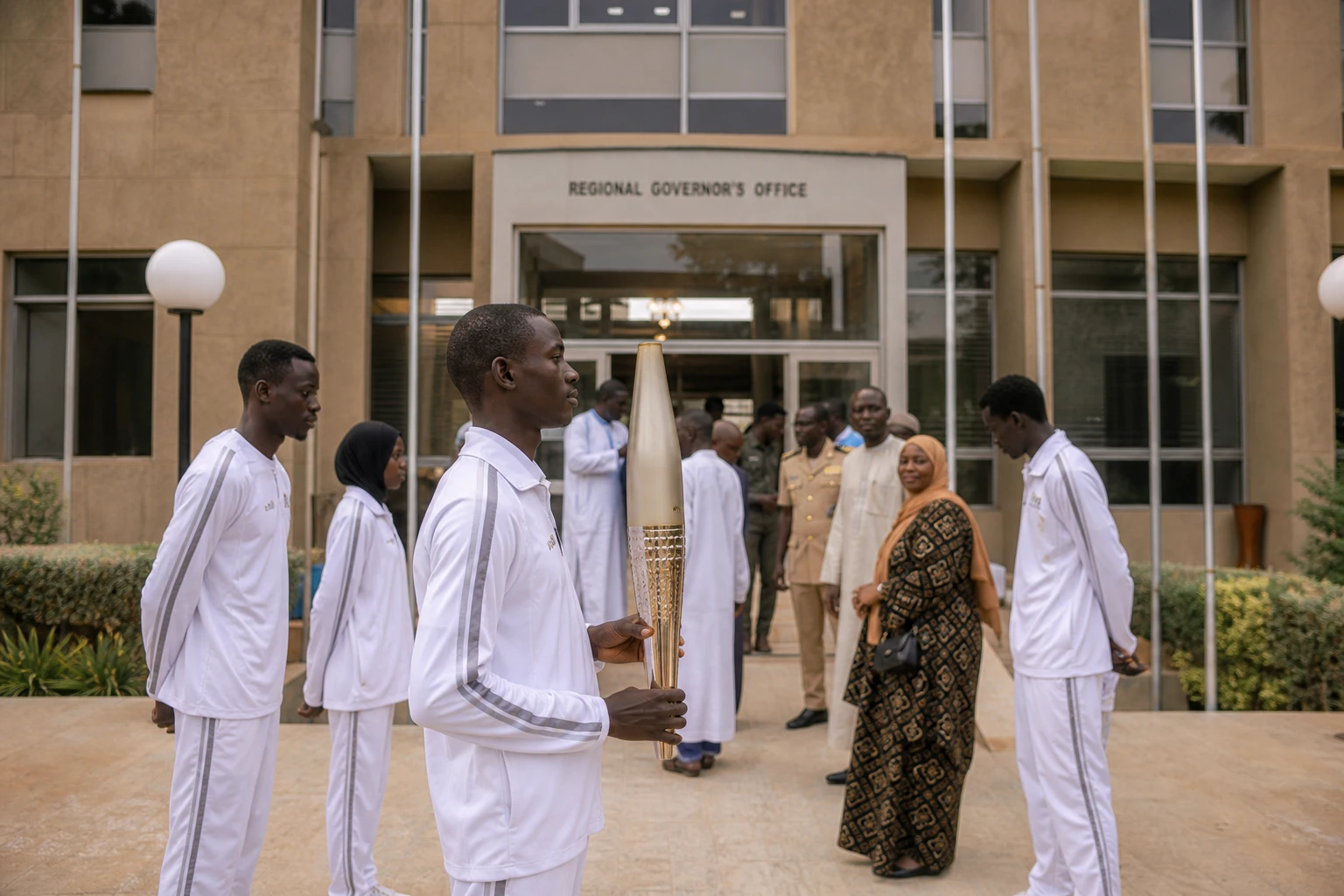
In Dakar, a flame that speaks to the whole country
With the opening of the Youth Olympic Games just weeks away, Senegal is doing more than welcoming a sporting symbol. It is staging a national promise: to show that Dakar, and the regions too, can host a global event without reducing the country to its capital alone.
The Dakar 2026 Youth Olympics flame relay began in the Senegalese capital before spreading across the country. The route is set to pass through Senegal’s 14 regions, with 30 stages announced, in a country whose territorial administration is organised around governors, prefectures and sub-prefectures. This structure matters because it brings the event down to the local level, far beyond Dakar’s political centre.
The tour also follows a precise timetable. The Games will take place from 31 October to 13 November 2026. They will bring together about 2,700 young athletes aged 17 or under across three host locations: Dakar, Diamniadio and Saly. For the continent, the stakes are historic: this will be the first Olympic event held in Africa.
A ceremony designed as a national relay
The flame was lit in Athens on 10 September 2026, as part of the Olympic ritual. It was then handed to a Senegalese delegation before arriving in Dakar. The welcoming ceremony in the capital was designed as a popular occasion, with young people, athletes, cultural figures and prominent people from across the country in attendance.
The decision to start the tour in Dakar and then send it to the 14 regions is no accident. It reflects an intention to make the Youth Olympics a national project, rather than simply an event for infrastructure in the capital and its suburbs. It is also a way to take the event into areas where the state is sometimes experienced mainly through its administrative services, roads, schools and sports facilities.
The operation relies on regional development committees, under the authority of governors, to organise each stage and identify the torchbearers. In other words, the event draws on the decentralised state, the administrative network linking Dakar with the regions and communes. In the Senegalese context, this mechanism is important: it presents a country seeking to combine sporting spectacle, local governance and civic engagement.
What the relay changes in practice
For the authorities, the flame is a tool for mobilisation. It brings people together around a narrative of unity, youth and logistical achievement. It also provides an opportunity to showcase the venues planned for the event, notably Dakar, Diamniadio and Saly, as well as projects related to hosting delegations, transport, accommodation and security.
For the population, the stakes are more tangible. An event of this scale is measured first by what it leaves behind: better-connected roads, better-maintained public spaces, usable sports facilities, and greater involvement of young people in cultural and sporting activities. The Ministry of Water and Sanitation has also said that an interministerial task force is working on risk prevention, waste management and improving living conditions around the Olympic venues. This shows that the organisation goes beyond protocol. It also affects sanitation, flooding and traffic.
Senegal also wants to make the Games a showcase for its culture. President Bassirou Diomaye Faye has repeatedly highlighted the role of heritage, crafts and tourism in this period. The message is clear: the Youth Olympics should showcase not only medals, but also a Senegalese way of welcoming, creating and telling the country’s story.
The potential benefits for the local economy are real. Small businesses, transport operators, hoteliers, craftspeople, restaurateurs and service providers can gain greater visibility and benefit from increased demand. But this impact will remain limited if the benefits are concentrated in areas that are already best equipped. The real test, then, will be territorial: will regions beyond Dakar also feel the effects of this mobilisation?
A signal for West Africa and beyond
Across West Africa, this moment has significance beyond sport. Senegal, a member of ECOWAS, is seeking to show that a country in the region can host a global competition using its own institutional, cultural and human resources. The message also applies to the African Union: Africa is not only a place to take part; it can also be a place to organise.
This is where the flame takes on political significance in the broader sense. It points to a state’s ability to coordinate its regions, mobilise its young people and create a positive collective narrative without neglecting its day-to-day priorities. It is also a reminder that major events are sustainable only if they bring visible benefits to residents, in the capital as well as inland.
The countdown is now under way. On 31 October 2026, Dakar will open the Games. Until then, the flame’s passage through the 14 regions will say far more than a simple symbolic journey. It will show whether Senegal wants to make the Youth Olympics a moment of national cohesion and a signal to the continent, or merely a prestige interlude. It is this answer, more than the flame itself, that Africa will be watching.