Algeria
 Egypt
 Libya
 Morocco
 Sudan
 Tunisia
 Benin
 Burkina Faso
 Cabo Verde
 Ghana
 Guinea
 Guinea-Bissau
 Liberia
 Mali
 Mauritania
 Niger
 Nigeria
 Senegal
 Sierra Leone
 The Gambia
 Togo
 Cameroon
 Central African Republic
 Chad
 DR Congo
 Equatorial Guinea
 Gabon
 Republic of the Congo
 São Tomé and Príncipe
 Burundi
 Comoros
 Djibouti
 Eritrea
 Ethiopia
 Kenya
 Madagascar
 Malawi
 Mauritius
 Mozambique
 Rwanda
 Seychelles
 Somalia
 South Sudan
 Tanzania
 Uganda
 Angola
 Botswana
 Eswatini
 Lesotho
 Namibia
 South Africa
 Zambia
 Zimbabwe
Social tensions at the heart of a harvest that sustains millions of Ivorians
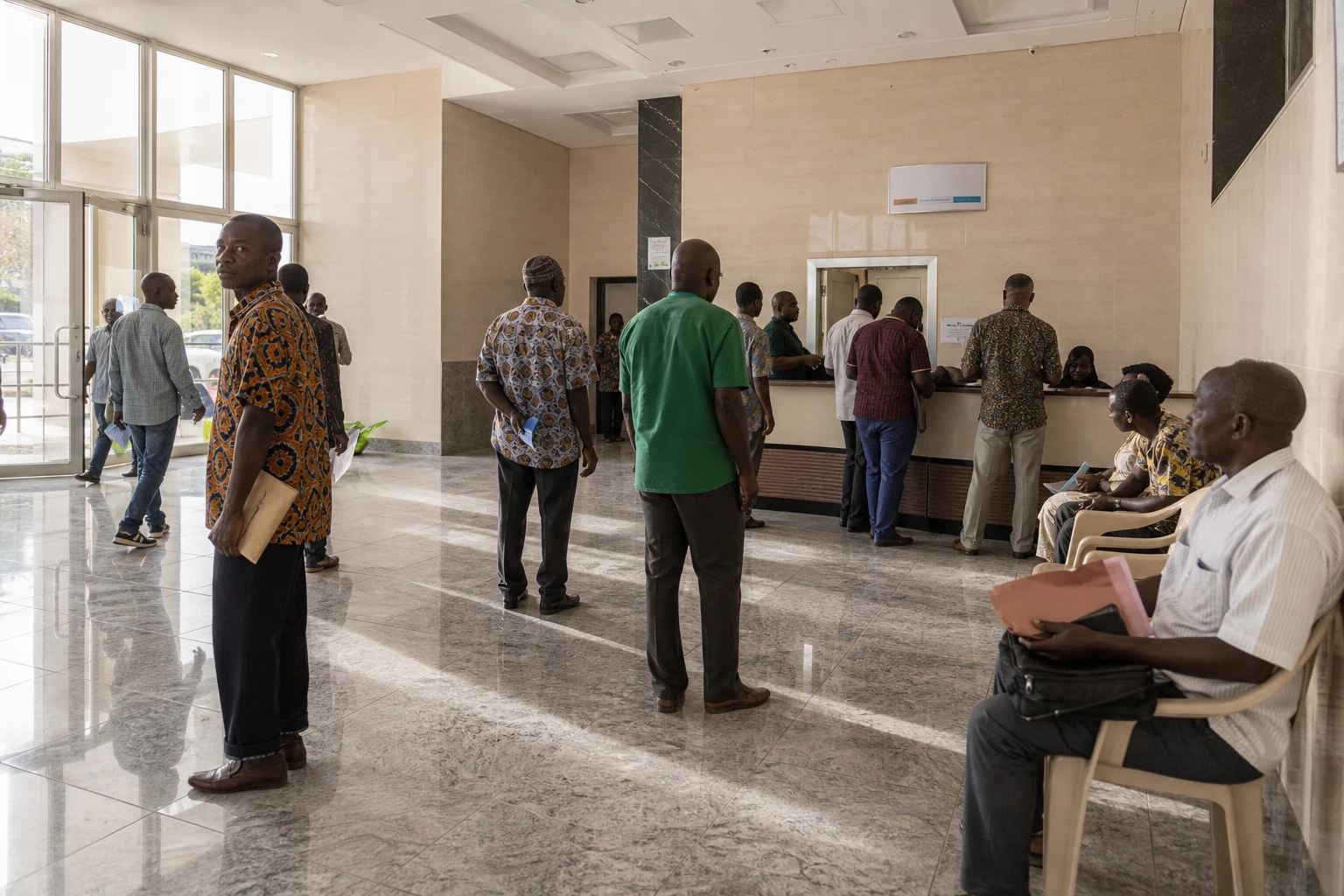
When cocoa prices shift in Côte d’Ivoire, it is not only farmers who react. An entire rural economy adjusts, from payments to agricultural workers and school fees to household spending in producing villages. Cocoa remains a strategic crop in the country: Côte d’Ivoire is the world’s leading producer, accounting for around 41% of global supply, and about 4 to 5 million people depend directly or indirectly on the sector.
The current anger has not come out of nowhere. It comes amid the 2026-2027 season, which opened on 1 September 2026 in Abidjan with the farmgate price for cocoa set at 1,200 CFA francs per kilogram, compared with 1,300 CFA francs for coffee. The government said the figure reflected decisions made in response to volatile international prices and Côte d’Ivoire’s forward-sales system.
In the cocoa belt, the official price and the price farmers actually receive do not always tell the same story
The issue extends beyond the sector itself. In Côte d’Ivoire, cocoa accounts for a major share of export earnings and nearly 20% of GDP, according to the country’s official economic portal. It is also a pillar of the West African Economic and Monetary Union (UEMOA) and the Economic Community of West African States (ECOWAS), with Abidjan remaining one of the region’s most influential agricultural hubs. In other words, any shock to cocoa affects household finances, domestic trade and trust between the state, cooperatives and producers.
Côte d’Ivoire’s system of regulation is distinctive. The Coffee-Cocoa Council oversees domestic marketing, monitors flows and ensures compliance with the guaranteed price. But several factors can reduce farmers’ actual income on the ground: bean quality, collection costs, intermediary practices, payment delays or difficulties with producer cards. The price announced in Abidjan does not automatically translate into net income in producing areas.
This is precisely where the dispute took hold. The National Agricultural Union for Progress in Côte d’Ivoire (SYNAP-CI) launched an indefinite strike on 16 September 2026 after issuing an ultimatum. Its spokesperson says farmers refuse to work under the current conditions and are demanding a price review, as well as answers on how the sector is managed. Other organisations have opted for dialogue and are calling above all for the announced price to be applied in practice.
The facts: an indefinite strike, a price held firm and producers challenging how value is shared
The sequence is clear. On 1 September 2026, the Ivorian government kept the cocoa price at 1,200 CFA francs per kilogram for the main 2026-2027 season. On 13 September, producers meeting in Daloa under the SYNAP-CI banner confirmed they would strike if their demands went unanswered. On 16 September, the union carried out its threat and announced an indefinite strike.
The heart of the dispute is the scale of the drop. The Ivorian Press Agency (AIP) noted that the price of 1,200 CFA francs per kilogram represents a fall of about 57% from the 2,800 CFA francs per kilogram set for the main 2025-2026 season. A farmer selling one tonne at today’s price therefore earns 1.2 million CFA francs, compared with 2.8 million CFA francs a year earlier. That difference immediately changes calculations for costs, debt repayments and family budgets.
At the same time, the authorities are holding their line. The Agriculture Ministry said the price was set using the forward-sales system, which is intended to cushion shocks on global markets. The Coffee-Cocoa Council, for its part, says it has a regulatory framework to monitor purchases and enforce the farmgate price. On paper, the model protects producers. In practice, it remains contested when it fails to turn the official price into income actually received.
What the crisis reveals: farmers’ incomes, sector governance and regional balance
The strike says more than a simple disagreement over prices. First, it exposes the fragility of a sector that sustains much of the social fabric in rural areas. When cocoa slows, schools, local markets, informal transport and part of the small-business economy feel the shock. Farmers are then left to bear the cost of price fluctuations decided far from their plots, in a system where risk is rarely shared equally.
It also highlights an issue that has become central in West Africa: added value. Côte d’Ivoire remains a cocoa giant, but it is also seeking to expand local processing in order to retain more wealth at home. Official policy points in this direction, emphasising quality, grinding and moving up the value chain. The labour dispute nevertheless serves as a reminder that no industrial strategy can endure if producers’ basic income is seen as inadequate or insecure.
The impact is regional too. Through cocoa, Abidjan influences part of West Africa’s agricultural balance, in a sub-region already facing climate pressures, food-security needs and debates over rural financing. ECOWAS and its agricultural instruments also stress that West Africa must reconcile productivity, climate resilience and the organisation of markets. Ivorian cocoa is no exception.
Finally, what happens next will depend on whether those involved can prevent the dispute from dragging on. If the strike continues, it could disrupt the commercial start of the 2026-2027 season in producing regions. If a compromise is reached, it will have to meet two demands: provide a clear price and ensure it is actually paid, all the way to the last link in the chain. In the cocoa sector, trust is built as much through official statements as through the receipt handed to the producer.