Algeria
 Egypt
 Libya
 Morocco
 Sudan
 Tunisia
 Benin
 Burkina Faso
 Cabo Verde
 Côte d'Ivoire
 Ghana
 Guinea
 Guinea-Bissau
 Liberia
 Mali
 Mauritania
 Niger
 Nigeria
 Senegal
 Sierra Leone
 The Gambia
 Togo
 Cameroon
 Central African Republic
 Chad
 DR Congo
 Equatorial Guinea
 Gabon
 Republic of the Congo
 São Tomé and Príncipe
 Burundi
 Comoros
 Djibouti
 Eritrea
 Ethiopia
 Kenya
 Malawi
 Mauritius
 Mozambique
 Rwanda
 Seychelles
 Somalia
 South Sudan
 Tanzania
 Uganda
 Angola
 Botswana
 Eswatini
 Lesotho
 Namibia
 South Africa
 Zambia
 Zimbabwe
When urban culture becomes a tool of diplomacy
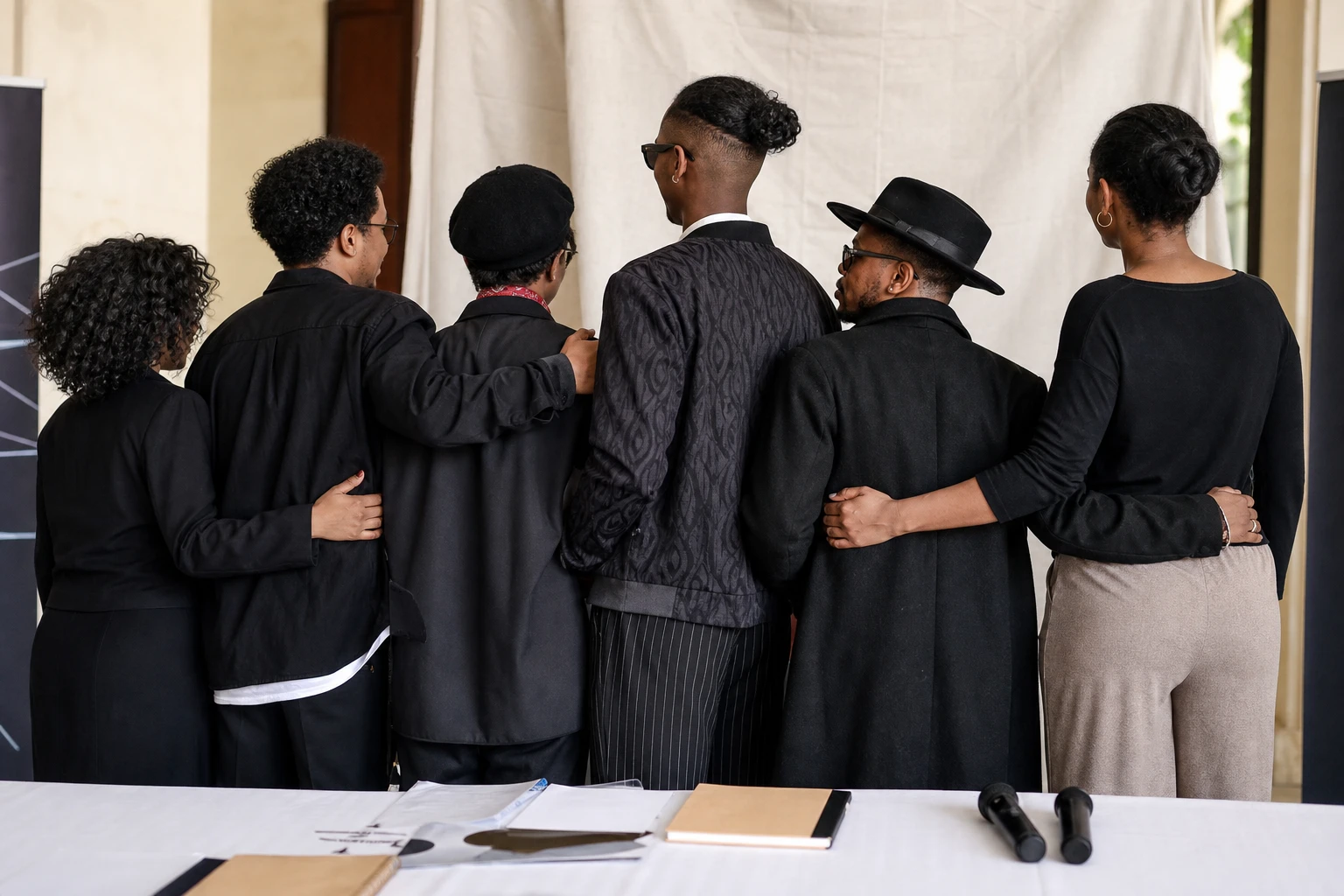
In Antananarivo, five young Malagasy people set off for Vladivostok with more than just an airline ticket in their pockets. They are carrying a scene, a set of codes and a generation seeking spaces for expression beyond Madagascar. In a country where artists often face travel costs, visa hurdles and a narrow local market, an international invitation can quickly become a means of gaining visibility as well as a political signal.
The trip comes at a particular moment for Madagascar. The island belongs to the Southern African Development Community, SADC, which brings together 16 states in southern Africa and the Indian Ocean, including Madagascar, Comoros, Mauritius, Seychelles and Tanzania. The region remains attentive to Madagascar’s institutional stability after recent political turmoil, and SADC continues to monitor the country closely. In this context, cultural exchanges with Russia take on a significance that goes beyond a simple arts competition.
Madagascar’s first appearance in a tightly structured Russian competition
The event is called KARDO. It is the final of an international competition dedicated to urban culture and street sports, held this year in Vladivostok, on Russky Island, from 16 to 20 September 2026. The project covers hip-hop, rap, graffiti, DJing, breaking and other street disciplines. The organisers say they have brought together hundreds of thousands of participants since the project was launched in 2018, with the final gathering the best contenders from dozens of countries.
In Madagascar’s case, the selection was narrowed down after a call that, according to the head of the national hip-hop and urban culture federation, drew about 400 applications. The artists chosen are expected to represent different facets of the local scene: a rapper from Mahajanga, a DJ based in Antananarivo, a graffiti artist from the capital and other urban creatives. This diversity says something about the vitality of Malagasy scenes, which are often better known for their constraints than for their ability to export their work.
The context is also diplomatic. The same man says he sees the participation as an opportunity to gain experience, build networks and develop new collaborations. Russia, meanwhile, has been stepping up its visibility initiatives aimed at Madagascar for more than a year, amid a bilateral rapprochement that officials in both countries have already extended to the military, education and economic fields. African media confirmed in 2026 that this co-operation was gaining momentum, notably after the Malagasy leader’s visit to Moscow and discussions on energy, agriculture and training.
What the trip says about Madagascar’s cultural market
The case of the five artists highlights a practical reality: for many Malagasy creatives, international opportunities remain hard to access. Travel is expensive. Distribution channels are limited. And administrative procedures can stall emerging careers. In this context, being selected abroad is not just a symbolic prize. It is a rare gateway to fees, stages, contacts and sometimes artist residencies. The potential benefit is immediate for the artists; over time, it could also extend to Madagascar’s collectives, studios and cultural networks.
But the episode should also be viewed with caution. Russia is seeking to strengthen its influence in Africa through various channels, and urban culture is part of that image-building strategy. KARDO is presented by its organisers as a global project, but it also helps portray Russia as open, modern and connected to international youth. For Antananarivo, the challenge is therefore to make use of these openings without confusing cultural exchange with political alignment.
On the ground in Madagascar, the issue primarily concerns urban youth. In Antananarivo, Mahajanga, Toamasina and Toliara, hip-hop and graffiti scenes shape social ties, production networks and forms of expression rooted in everyday city life. In rural areas, however, where access to equipment, digital connections and rehearsal spaces remains more uneven, these opportunities are less visible. Culture circulates, but not at the same pace or with the same support across different regions. This is where the public policy challenge becomes clear: supporting creative work also means narrowing the gap in access to the stage.
A regional resonance extending well beyond the competition
Madagascar’s presence in Vladivostok also says something about the times. African states are no longer seeking partnerships solely through the traditional channels of diplomacy, raw materials or security. They are also investing in cultural, media and digital spaces where a country’s image is shaped. In Madagascar, this strategy is part of a broader effort to reassert the country internationally, as it seeks to consolidate relations with several centres of influence at once, from SADC to external partners such as Russia.
The key thing to watch next is simple: how the artists are received, filmed, promoted and potentially rewarded in Vladivostok. A memorable performance can open doors, but it can also serve as a political showcase for the organiser. Either way, Madagascar gains rare exposure. And if the experience becomes a lasting bridge, it could matter more than the competition result itself.