Algeria
 Egypt
 Libya
 Morocco
 Sudan
 Tunisia
 Benin
 Burkina Faso
 Cabo Verde
 Côte d'Ivoire
 Ghana
 Guinea
 Guinea-Bissau
 Liberia
 Mali
 Mauritania
 Nigeria
 Senegal
 Sierra Leone
 The Gambia
 Togo
 Cameroon
 Central African Republic
 Chad
 DR Congo
 Equatorial Guinea
 Gabon
 Republic of the Congo
 São Tomé and Príncipe
 Burundi
 Comoros
 Djibouti
 Eritrea
 Ethiopia
 Kenya
 Madagascar
 Malawi
 Mauritius
 Mozambique
 Rwanda
 Seychelles
 Somalia
 South Sudan
 Tanzania
 Uganda
 Angola
 Botswana
 Eswatini
 Lesotho
 Namibia
 South Africa
 Zambia
 Zimbabwe
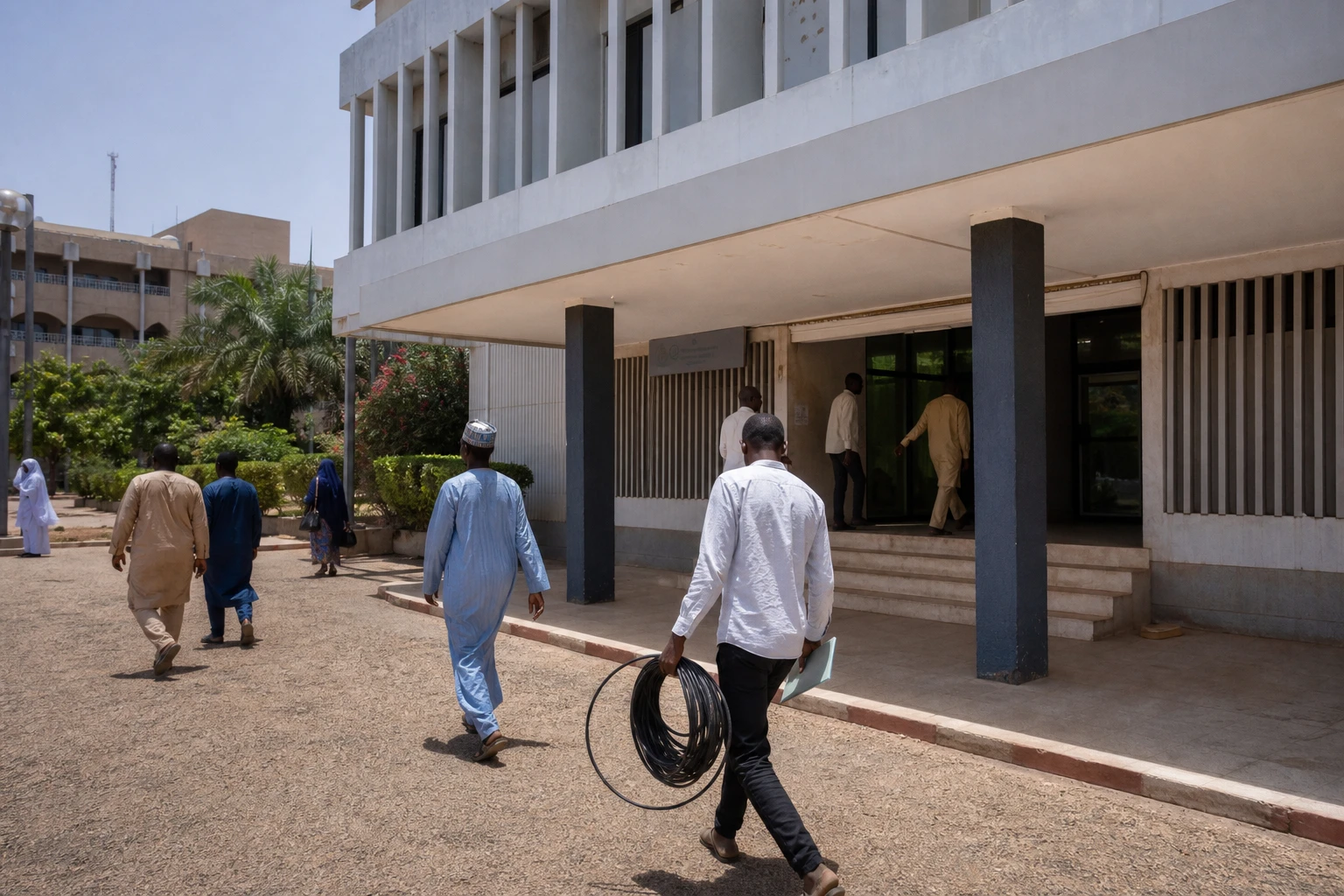
A sensitive portfolio in a country where electricity remains scarce
In Niamey, energy is about more than a line in the budget. It affects schools, health centres, workshops, small businesses and households that still face frequent power cuts or have no connection at all. In Niger, access to electricity remains a basic issue because it shapes both everyday life and the performance of the economy. The government has set an ambitious target: to raise the national access rate to 60% by 2030, from 21.9% in the figures cited by the authorities.
This target did not come out of nowhere. It is part of Niger’s energy compact adopted under Mission 300, an initiative led by the World Bank and the African Development Bank that aims to connect 300 million Africans to electricity by 2030. In Niger’s case, the first-quarter 2026 monitoring document reiterates the goal of reaching 60% access, mobilising about $527 million in private investment and increasing the share of renewable energy in the electricity mix.
Government reshuffle puts energy at the centre
On Tuesday 15 September 2026, Niger’s president, Army General Abdourahamane Tiani, signed a decree making a technical reshuffle of the government. Lieutenant-Colonel Seyni Alzouma was appointed energy minister, replacing Amadou Haoua. The same decree also affected three other portfolios: Agriculture and Livestock; Refoundation and the Promotion of Social Values; and Communication and New Technologies. The Nigerien government now has 26 members, according to the official portal.
The appointment comes a few days after another change at the top of the security apparatus. On 11 September 2026, General Mamane Sani Kiaou was appointed chief of the defence staff, replacing General Moussa Salaou Barmou, according to press reports and an analysis carried by the Associated Press. In a country where security remains a defining issue, these successive changes point to an effort to tighten control of areas the authorities regard as strategic.
The challenge facing the new minister is a practical one. The country has significant solar potential, but turning that potential into infrastructure requires networks, financing, maintenance and clear rules. The energy ministry already lists several projects: network expansion, rural electrification, decentralised solar power plants and major initiatives such as NELACEP, which is intended to extend access in urban centres and some rural areas. Another programme, RANA, funded by the African Development Bank, also aims to improve access through solar power.
What the appointment means for Nigeriens
A change of minister will not, on its own, solve the electricity problem. But it signals the political importance this issue has acquired. In the big cities, households and traders are above all looking for a more reliable and affordable supply. In rural areas, the priority remains extending the grid or introducing decentralised solutions, often solar-powered, to supply villages, pumps, health posts and basic equipment. The difference between the capital, Niamey, and more remote regions is stark: electrification there often advances through individual projects rather than a continuous service.
The authorities also want to reduce dependence on electricity imports and diversify the energy mix. The country’s plan envisages renewables making up 30% of the mix by 2030, with solar and hybrid projects already included in the national compact. This direction matters for a Sahelian state facing rising demand, limited infrastructure and severe budget constraints. It also matters to businesses, since costly or unreliable energy weighs on production, cold chains, digital services and informal employment.
The social impact is just as important. When electricity is scarce, everyday costs rise: food storage, charging phones, lighting, minor repairs and small-scale irrigation all become more expensive. In a country where part of the population depends on agriculture, small-scale trade and crafts, every kilowatt-hour available can transform local economic activity. The public projects cited by the ministry are specifically intended to expand the network and connect more subscribers, which explains the central place given to this portfolio in the government reshuffle.
A development to watch across the Sahel and Africa
The issue extends beyond Niger’s borders. Across the Sahel, several states are seeking to combine energy sovereignty, lower costs and greater use of solar power. Niger’s case is also part of a broader continental effort to close the electricity access gap, led by the African Development Bank and the World Bank through Mission 300. In June 2026, the two institutions announced that they had already connected more than 50 million people across Africa, giving a sense of the scale of the work under way.
For Niamey, the next step will therefore be less political than practical: turning an announced target into connections, functioning power plants, more reliable networks and affordable tariffs. The credibility of the new energy minister will depend on his ability to move visible projects forward, from urban centres to the most remote communities, on a tight timetable leading up to 2030.