Algeria
 Egypt
 Morocco
 Sudan
 Tunisia
 Benin
 Burkina Faso
 Cabo Verde
 Côte d'Ivoire
 Ghana
 Guinea
 Guinea-Bissau
 Liberia
 Mali
 Mauritania
 Niger
 Nigeria
 Senegal
 Sierra Leone
 The Gambia
 Togo
 Cameroon
 Central African Republic
 Chad
 DR Congo
 Equatorial Guinea
 Gabon
 Republic of the Congo
 São Tomé and Príncipe
 Burundi
 Comoros
 Djibouti
 Eritrea
 Ethiopia
 Kenya
 Madagascar
 Malawi
 Mauritius
 Mozambique
 Rwanda
 Seychelles
 Somalia
 South Sudan
 Tanzania
 Uganda
 Angola
 Botswana
 Eswatini
 Lesotho
 Namibia
 South Africa
 Zambia
 Zimbabwe
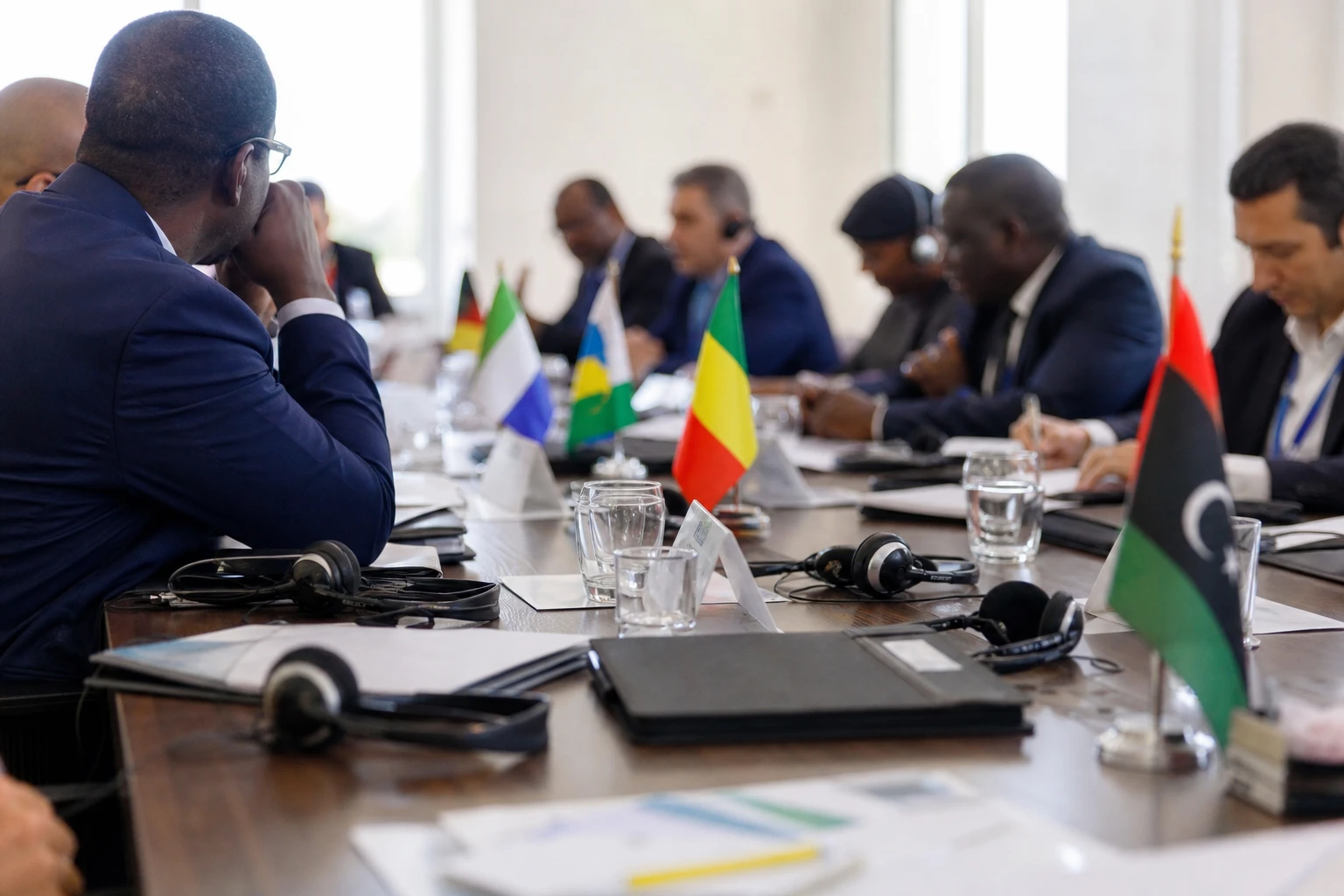
Localised closure highlights national vulnerability
In Libya, a technical manoeuvre can be enough to revive an old vulnerability. When a valve on a major oil pipeline closes, it is not just one production site that stops. An economy heavily dependent on crude is exposed in its entirety, from Tripoli to the coastal terminals and the state’s coffers.
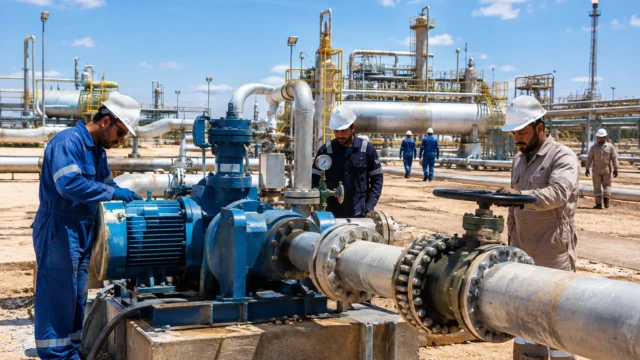
On 15 September 2026, Libya’s National Oil Corporation said a group of Petroleum Facilities Guards had shut without authorisation the main valve connecting the Hamada fields to Zawiya, in the west of the country. Three sites — Hamada, Al-Tahara and the NC5 station — were shut down after a sudden rise in pressure on the line. The state-owned company said it feared it would have to declare force majeure if the blockage persisted.
In Tripoli, the Libyan state remains dependent on hydrocarbons
This episode follows a familiar pattern in Libya. Since 2011, the country has lived with fragmented institutions, shifting power dynamics and energy infrastructure often caught up in local disputes. In this landscape, the National Oil Corporation, based in Tripoli, remains one of the few administrative pillars able to speak for a strategic sector that funds most public spending.
The September crisis also comes as Libyan production had returned to a high level. Reuters reported on the same day that production had not been “strongly affected” and remained at around 1.4 million barrels per day. This relative stability should not obscure the system’s fragility: at the first incident, transport, refining and exports can quickly be disrupted.
South-western Libya, where the Hamada fields are located, is central to these balances. The Petroleum Facilities Guards, whose role is in theory to protect the sites, regularly find themselves at the centre of social and pay demands. The 15 September blockade fits this pattern of pressure, which has been seen several times in the country at oilfields and terminals.
What the Hamada shutdown means in practice
In the immediate term, the shutdown of the Hamada and Al-Tahara fields and the NC5 station primarily affects the volumes available to the Zawiya refinery, one of the country’s main refineries. It then affects delivery contracts, export planning and the state’s ability to collect regular revenues. In a country where hydrocarbons dominate public finances, every interruption quickly puts pressure on public-sector salaries, imports and cash flow.
The threat of force majeure is not an abstract term. It serves to protect the National Oil Corporation legally if it cannot meet its delivery commitments because of a blockage beyond its control. In practice, it signals to trading partners that Libya cannot guarantee the continuity of its flows under normal conditions. The message therefore weighs on buyers as much as on the Libyan authorities, who are under pressure to restore order around the facilities.
The Libyan government, based in Tripoli under the authority of a UN-recognised executive, once again faces a familiar dilemma: respond quickly to technical staff’s demands without giving the impression that a blockade is enough to secure concessions. Such episodes feed a vicious circle. Protests lead to shutdowns. Shutdowns undermine revenues. Budgetary weakness then fuels further tensions over salaries, bonuses and working conditions.
The economic context explains why the issue goes beyond industry alone. Both the World Bank and the African Development Bank note that Libyan growth remains largely driven by oil, while diversification is slow. According to the African Development Bank, growth is estimated at 12.4% in 2025, then between 4.3% and 6.5% in 2026–2027, mainly thanks to the recovery in oil production. In other words, when the pipeline is blocked, the main engine of recovery stalls.
A Libyan warning for the whole of North Africa
The implications extend beyond Libya’s borders. Libya, in North Africa, belongs to neither ECOWAS nor CEMAC, but it affects the Mediterranean energy balance, trade flows to Europe and investor perceptions across Africa. Every interruption is also a reminder that a country rich in reserves can remain vulnerable if its institutions, security and budgetary governance do not hold together.
The precedent is well known. In March 2026, the National Oil Corporation had already announced the full restoration of production at the Sharara and El Feel fields after technical and security incidents on the line to Zawiya. In December 2024, clashes near the refinery had also led to a state of emergency at the Zawiya complex. The sector therefore operates under near-constant alert, with industrial infrastructure closely tied to local stability.
On the global market, the reaction is almost automatic. Reuters reported on 15 September that the price of a barrel had risen by about three dollars amid an already tense climate caused by other supply disruptions. Libya therefore remains a country capable of quickly influencing prices whenever a logistical bottleneck is blocked. For North Africa and the continent as a whole, the issue is clear: abundant resources do not protect against a crisis if production and transit routes remain politically unstable.
This latest episode is also a reminder of a broader reality. In producer countries, the real battle is not only over what lies beneath the ground, but over the ability to protect infrastructure, arbitrate social demands and ensure transparent management of revenues. In Libya, that equation remains unresolved. And until it is stabilised, the closing of a single valve will continue to have consequences far beyond the desert where it is located.