Algeria
 Egypt
 Libya
 Morocco
 Sudan
 Tunisia
 Benin
 Cabo Verde
 Côte d'Ivoire
 Ghana
 Guinea
 Guinea-Bissau
 Liberia
 Mali
 Mauritania
 Niger
 Nigeria
 Senegal
 Sierra Leone
 The Gambia
 Togo
 Cameroon
 Central African Republic
 Chad
 DR Congo
 Equatorial Guinea
 Gabon
 Republic of the Congo
 São Tomé and Príncipe
 Burundi
 Comoros
 Djibouti
 Eritrea
 Ethiopia
 Kenya
 Madagascar
 Malawi
 Mauritius
 Mozambique
 Rwanda
 Seychelles
 Somalia
 South Sudan
 Tanzania
 Uganda
 Angola
 Botswana
 Eswatini
 Lesotho
 Namibia
 South Africa
 Zambia
 Zimbabwe
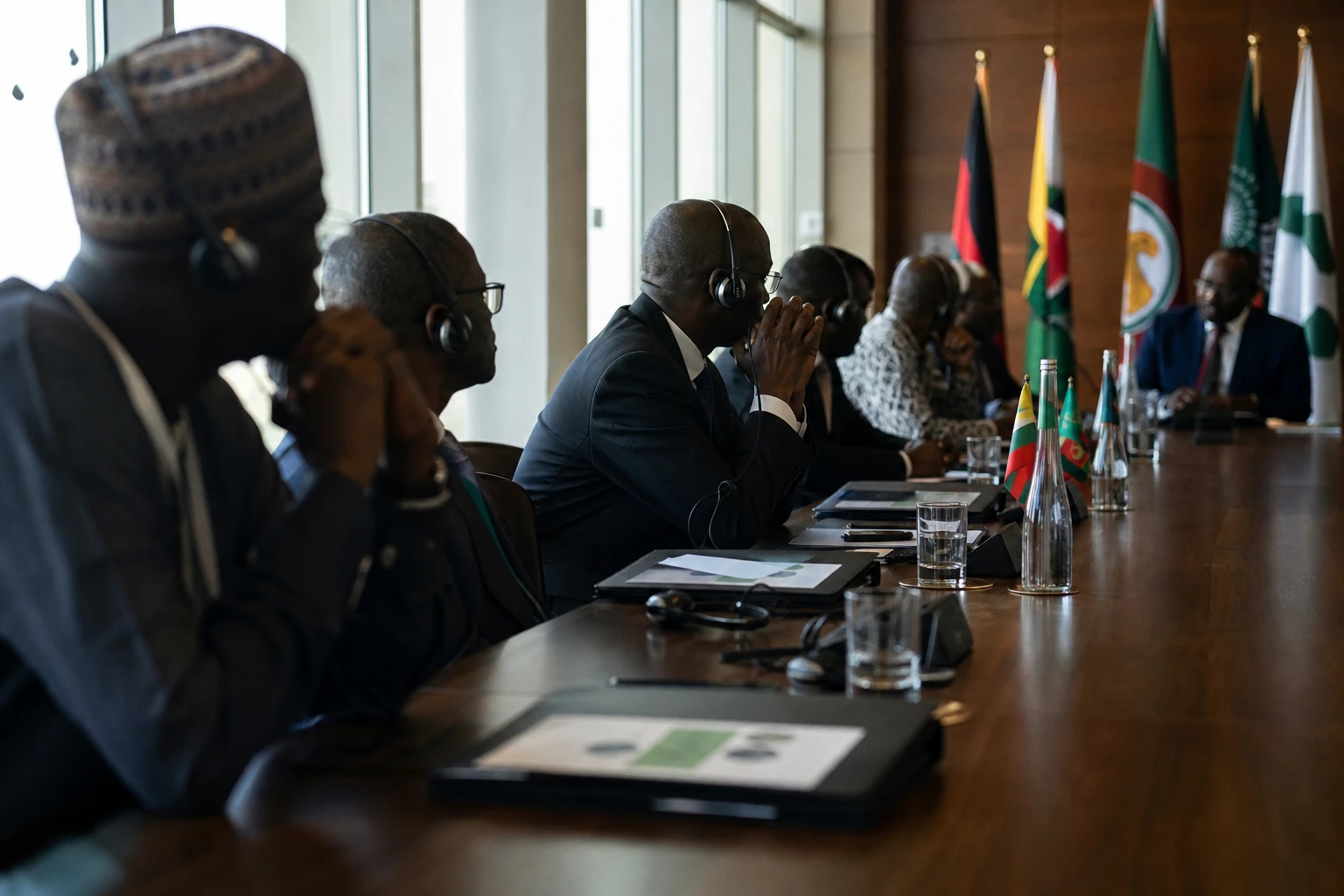
When political autonomy runs up against the logistics lifeline
For landlocked Sahelian countries, sovereignty is not measured only in speeches, alliances or uniforms. It is also measured by the ability to transport fuel, store it and pay for it at the right time. This is where a truth that is often overlooked comes back into focus: without secure corridors, a state remains exposed to decisions by its coastal neighbours and to tensions in the global market.
The cases of Mali, Burkina Faso and Niger illustrate this structural dependence. These three Sahelian countries remain reliant on ports in the Gulf of Guinea and their road networks to import petroleum products, despite their diplomatic realignments and the creation of the Alliance of Sahel States, which became a Confederation in July 2024 after they announced their withdrawal from ECOWAS, the Economic Community of West African States. On the ground, geography weighs more heavily than the political narrative.
Accra protects its market as Bamako and Ouagadougou absorb the shock
Since August, Ghana’s state-owned distributor BOST Energies has reduced its diesel and petrol deliveries to Mali and Burkina Faso, according to information reported on the basis of comments by its managing director, Afetsi Awoonor, on the sidelines of an energy conference in Bangkok. The company says it prioritised domestic demand in Ghana, where it holds about 30% of the market and where diesel accounts for nearly two-thirds of its volumes.
The figures speak for themselves. Burkina Faso received just 40,000 tonnes of the 80,000 it requested for July and August. Mali, meanwhile, obtained 10,000 tonnes, while Bamako had asked for an additional 40,000 tonnes for August and September. These volumes do not merely indicate a fall in exports. They show the strain on a system in which a coastal public-sector player must balance the needs of its neighbours against its own domestic stability.
Accra has not presented this reduction as a political move against AES. The signal is commercial and domestic. But its effects are undoubtedly geopolitical. Ghana is facing a combination of pressures: rising consumption, higher oil prices, market volatility and the need to contain pump prices. Fuel remains available, BOST has said, but at a high cost. In this context, the Ghanaian state has logically prioritised its own consumers.
Regional infrastructure remains incomplete
The paradox is well known across the region. Burkina Faso says it wants to reduce its dependence, yet its supply still relies heavily on the infrastructure and roads of neighbouring countries. SONABHY, Burkina Faso’s national hydrocarbons company, has a legal monopoly on fuel imports and storage within the country. That does not, however, free it from reliance on coastal terminals, cross-border depots and private hauliers.
Ghanaian and Burkinabè authorities have indeed sent repeated signals of cooperation. Ghana’s petroleum regulator has referred to a Ghana-Burkina pipeline project, a complementary railway system and shared storage solutions. BOST and SONABHY also announced in 2025 that they would strengthen their partnership, with Bolgatanga on the Ghanaian side and the Blue Ocean terminal at Tema as key components of the arrangement. These are useful advances, but they remain unfinished.
In other words, Sahelian energy sovereignty depends less on an abrupt break than on a more robust logistics framework. Stocks, depots, stable contracts and several corridors instead of just one are needed. Without them, decisions made in Accra, Abidjan, Lomé or Dakar will continue to weigh on the energy security of Bamako and Ouagadougou.
Mali, currently the most vulnerable link
In Mali, the decline in Ghanaian deliveries comes amid an already deteriorating situation. Since 3 September 2025, JNIM, the Group for the Support of Islam and Muslims, an al-Qaeda affiliate, has targeted fuel convoys and supply routes to Bamako. The UN has reported tanker-truck escorts between Abidjan, Bamako and Dakar in an attempt to counter this economic blockade. The AP has also confirmed the burning of trucks coming from Côte d’Ivoire and an intensification of attacks in the south of the country.
This pressure is changing daily life. Fuel powers urban transport, generators, agricultural machinery, hospitals, small businesses and the security apparatus. When it is scarce, queues grow longer, prices rise and economic activity slows. In rural areas and in the capitals alike, the impact differs but is just as tangible: less mobility, fewer goods and fewer services. UN observers and humanitarian organisations have already described disruptions to access to fuel, food and healthcare.
Burkina Faso is not spared, even if its immediate exposure is different. For several years, Ouagadougou has maintained active energy cooperation with Accra, to the extent of backing pipeline and electricity-trading projects. The country wants to secure its supplies by making use of its proximity to northern Ghana. But proximity does not eliminate dependence; it simply makes it more manageable when conditions are stable. As soon as the market tightens, being neighbours becomes as much a source of vulnerability as a lever.
A broader lesson for AES and all of West Africa
The current episode is a reminder of a simple regional lesson: sovereignty is not opposed to interdependence; it must organise it. AES has built much of its legitimacy on breaking with external dependencies and promising to regain control of strategic resources. But energy realities do not follow slogans. Relations with Russia, China and Algeria widen diplomatic room for manoeuvre without erasing the constraints of geography.
In this context, Niger occupies a particular position. Its rapprochement with Algiers and discussions around north-south routes offer another perspective on Sahelian energy security. A future trans-Saharan corridor could provide an alternative to Atlantic routes, provided it is designed to meet local needs, support storage and enable regional trade. Here again, the question is not simply how to transport fuel. It is how to build lasting resilience.
The coming month will show whether the reduction in Ghanaian deliveries remains a temporary adjustment or forms part of a deeper reshaping of energy priorities in West Africa. What is certain is that landlocked Sahelian states cannot build their autonomy on political will alone. They will have to multiply corridors, strengthen strategic stocks and secure lasting agreements with coastal countries. Otherwise, the market and the road will continue to set the limits of their sovereignty.