Algeria
 Egypt
 Libya
 Morocco
 Sudan
 Tunisia
 Benin
 Burkina Faso
 Cabo Verde
 Côte d'Ivoire
 Ghana
 Guinea
 Guinea-Bissau
 Liberia
 Mali
 Mauritania
 Niger
 Nigeria
 Senegal
 Sierra Leone
 The Gambia
 Togo
 Cameroon
 Central African Republic
 Chad
 DR Congo
 Equatorial Guinea
 Gabon
 Republic of the Congo
 São Tomé and Príncipe
 Burundi
 Comoros
 Djibouti
 Eritrea
 Ethiopia
 Kenya
 Malawi
 Mauritius
 Mozambique
 Rwanda
 Seychelles
 Somalia
 South Sudan
 Tanzania
 Uganda
 Angola
 Botswana
 Eswatini
 Lesotho
 Namibia
 South Africa
 Zambia
 Zimbabwe
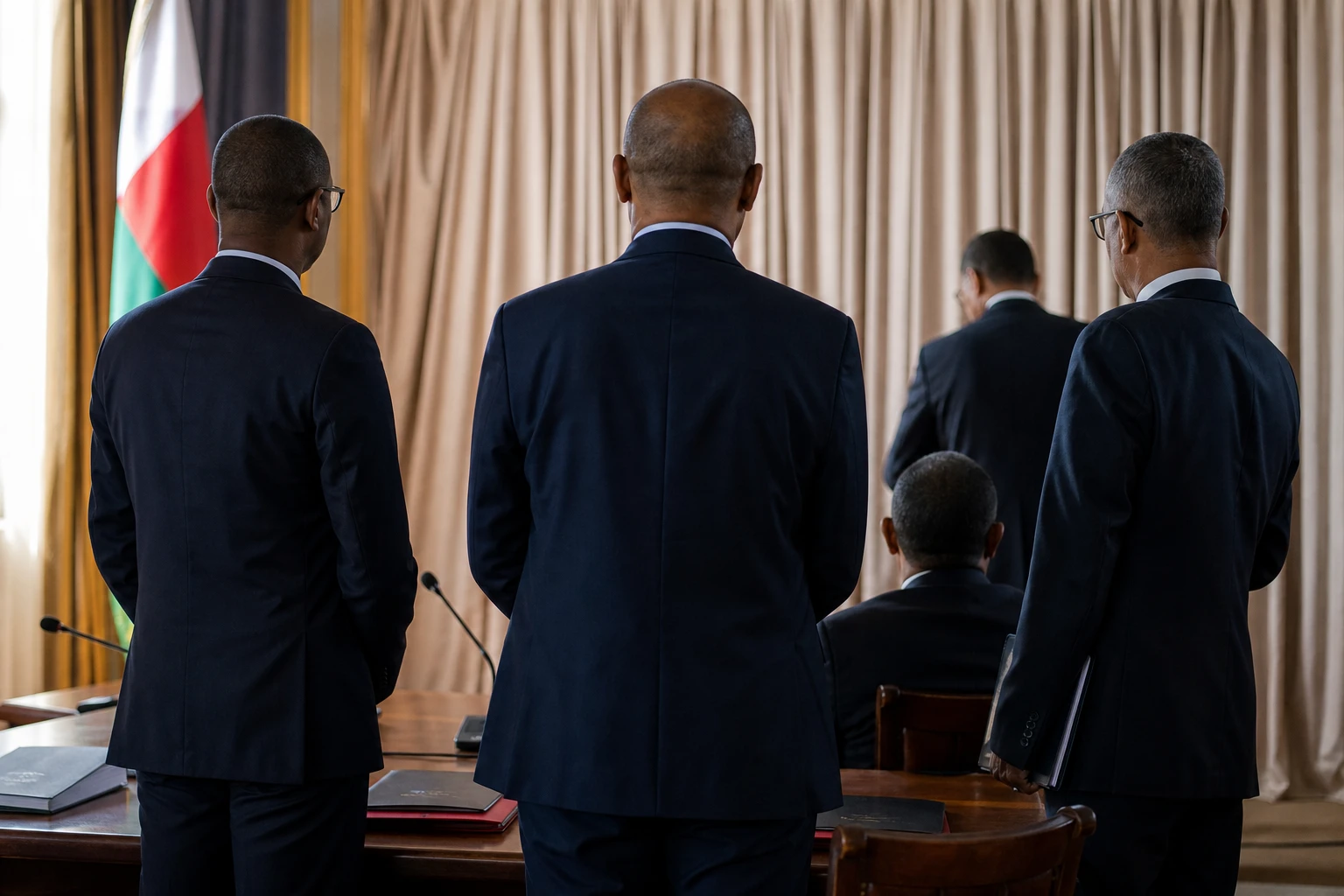
In Antananarivo, an old partnership is being reshaped without losing its weight
In Madagascar, diplomacy is no longer conducted only in palaces, but also through how the country engages with new balances of power. In recent months, the Malagasy authorities have sent a clear message: the Big Island wants to remain open to France, but no longer wants to depend on a single partner. This approach comes amid a period of political transition in which every foreign visit is also a test of method.
This repositioning matters all the more because Franco-Malagasy ties remain central. Paris points out that the two countries are linked by human, cultural, economic and security exchanges, with around 160,000 Malagasy people in France, 17,500 French nationals registered in Madagascar and bilateral trade worth about €1 billion a year. France also stresses that Madagascar remains its leading regional partner for French forces stationed in the southern Indian Ocean.
A transition shaped by regional organisations
Madagascar’s situation cannot be viewed through a bilateral lens alone. Since the political crisis that began in 2025, the Southern African Development Community, or SADC, has been supporting the Refoundation process. The organisation has called for inclusive national dialogue, a reform timetable and a return to constitutional order. It has also set specific milestones, including a preparatory report for the dialogue and a national roadmap.
The African Union, for its part, has reaffirmed its support for the transition led by the Malagasy authorities and for the new roadmap towards a return to constitutional order. In July 2026, the AU Commission welcomed the ongoing inclusive political dialogue and said it was ready to support the country. This sequence shows that Madagascar is not moving forward alone; it is doing so under regional scrutiny, with clear expectations on consultation, stability and the timetable.
Madagascar’s approach: open to all, but no monopoly
Against this backdrop, the visit by Bruno Fuchs, chair of the French National Assembly’s Foreign Affairs Committee, took on significance beyond a simple protocol exchange. At Tsimbazaza, the president of Madagascar’s National Assembly, Siteny Randrianasoloniaiko, said that Madagascar was “open to all relations”, cooperated with every country and did not reject France. He also emphasised the determination to put an end to any form of monopoly in foreign relations.
This position is consistent with the current strategy of the Refoundation authorities. Malagasy-French discussions now focus on national consultation, electoral reform, the transformation of the administration, transparency and the fight against corruption. In other words, cooperation is no longer presented merely as a historical legacy, but as a tool to be adapted to the country’s new political architecture.
Bruno Fuchs, for his part, defended a pragmatic approach to relations with transitional authorities. According to information reported locally, he said it was necessary to support a leader considered sincere rather than leave the field open to other actors. At the same time, he acknowledged that the diplomatic landscape had changed and that Paris had to accommodate Madagascar’s explicit diversification of partners, including Russia.
What this shift means for Madagascar
For the Malagasy authorities, this realignment offers room for manoeuvre. It allows them to negotiate more firmly, broaden sources of funding and stop depending on a single circle of influence. But it also demands greater political discipline. The more partners there are, the more visible the trade-offs become. Every contract, every budgetary support package and every infrastructure project becomes a signal of the transition’s real direction.
For the population, the stakes are more tangible. In Antananarivo and across the regions, priorities remain water, electricity, jobs, roads, price stability and access to public services that work. Diplomatic announcements matter only if they lead to tangible results. That is precisely why national consultation, institutional reform and transparency have returned to the centre of official discourse.
For France, the Madagascar file has become an exercise in adjustment. Paris wants to preserve close ties, but can no longer treat them as an automatic inheritance. Recent discussions have shown that sovereignty, diversification and more balanced cooperation must now be part of the conversation. Madagascar, for its part, wants to retain access to traditional support while broadening its options with other partners in Africa and beyond.
A development to watch across the Indian Ocean region
The significance of this sequence extends beyond Madagascar. In the Indian Ocean, the balance is also shaped by maritime cooperation, security, the movement of capital and parliamentary diplomacy. France, Madagascar, Réunion, Mayotte, the IOC and IORA are part of the same strategic space. If Madagascar’s transition succeeds in stabilising its institutions while maintaining several channels of cooperation, it will send a useful signal to other African countries undergoing periods of political realignment.
Three milestones should therefore be watched. First, the consolidation of inclusive political dialogue. Second, the effective implementation of the Refoundation roadmap, including its electoral and institutional reforms. Finally, the authorities’ ability to turn this diplomatic openness into visible results for the Malagasy people. The credibility of the new direction will be determined there, far beyond a single parliamentary visit.