Algeria
 Egypt
 Libya
 Morocco
 Sudan
 Tunisia
 Benin
 Burkina Faso
 Cabo Verde
 Côte d'Ivoire
 Ghana
 Guinea-Bissau
 Liberia
 Mali
 Mauritania
 Niger
 Nigeria
 Senegal
 Sierra Leone
 The Gambia
 Togo
 Cameroon
 Central African Republic
 Chad
 DR Congo
 Equatorial Guinea
 Gabon
 Republic of the Congo
 São Tomé and Príncipe
 Burundi
 Comoros
 Djibouti
 Eritrea
 Ethiopia
 Kenya
 Madagascar
 Malawi
 Mauritius
 Mozambique
 Rwanda
 Seychelles
 Somalia
 South Sudan
 Tanzania
 Uganda
 Angola
 Botswana
 Eswatini
 Lesotho
 Namibia
 South Africa
 Zambia
 Zimbabwe
A terminal under pressure at the heart of Guinea’s trade flows
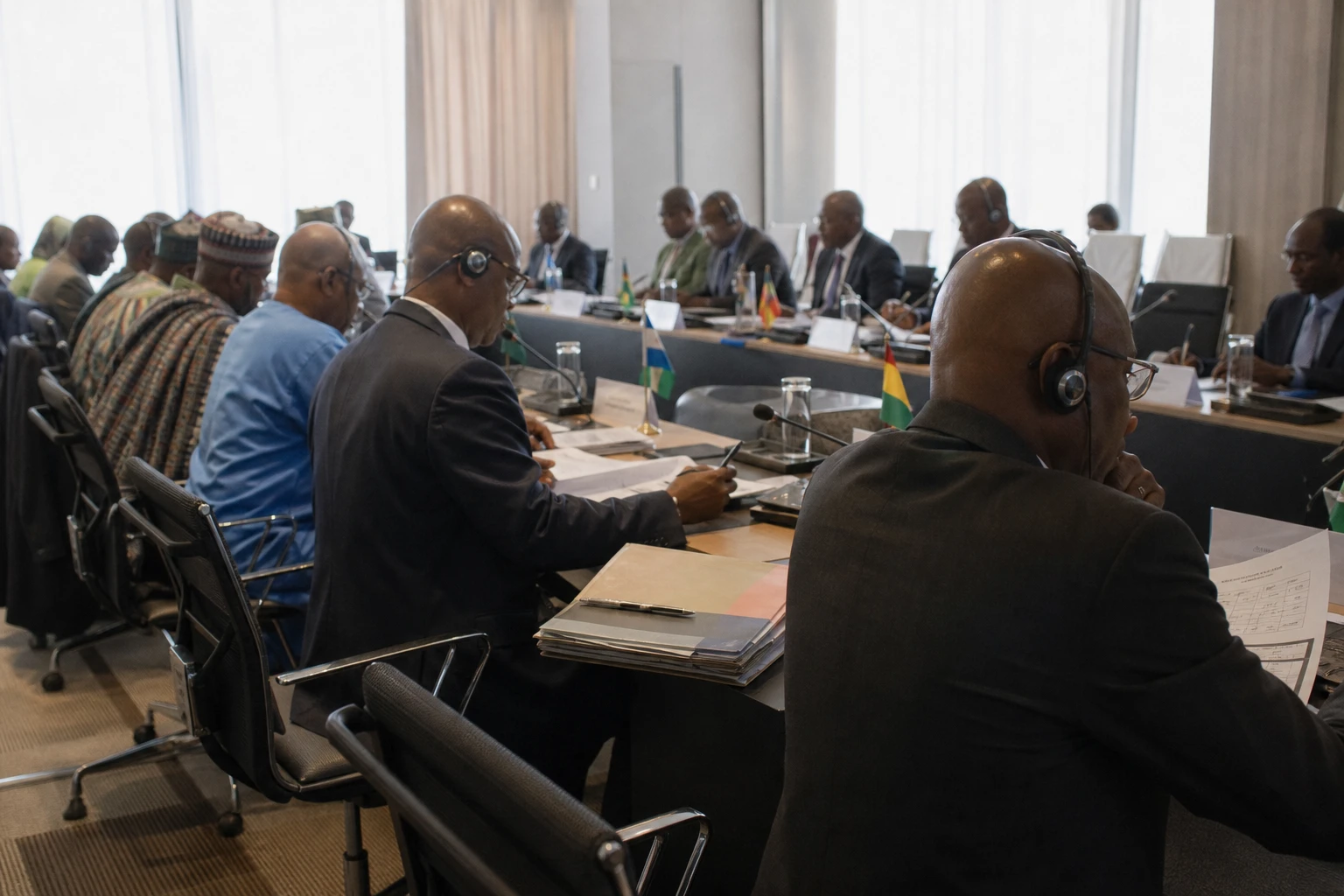
In Conakry, the pressure is no longer coming only from the quays. It is also felt in lorries, warehouses, roads and the time it takes for goods to leave the port. When a terminal handles in one year what it had expected to handle several years later, the entire logistics chain finds itself scrambling to keep up with traffic.
This situation says a great deal about Guinea today. The country depends on a single major maritime gateway, the Port of Conakry, which handles most imports of consumer goods, industrial inputs and equipment linked to the mining sector. Modernising this hub is therefore not just a matter for port operators. It also affects households, traders, manufacturers and exporters in the West African hinterland.
What the figures show
On 10 September 2026, Conakry Terminal announced the appointment of Édouard Léno as its chief executive. The message is clear: the company is entering a phase of expansion aimed at reaching one million containers a year by 2029-30. It says it handled 416,892 TEUs in 2025. TEU stands for “twenty-foot equivalent unit”, a standard measure used for containers.
Available data show rapid growth. In 2023, the terminal handled about 300,000 containers. In 2025, it exceeded 416,000 TEUs. At the end of February 2026, Guinea’s transport ministry said the quay’s capacity, originally projected for 2030, had already been reached. In April 2026, the same ministry noted that congestion seen for several months had eased, while calling for the measures taken to be consolidated.
Growth is not limited to volumes. The number of regular shipping services rose from three in 2023 to six in 2026, according to terminal officials. More regular ship calls mean more containers to unload, more storage areas to use and more movements to organise to prevent bottlenecks.
Modernising the port and its connections
The real issue goes beyond the quay. A container creates no value if it remains stuck at the port. It must be unloaded, stored, cleared through customs and then transported to its destination. This is where Guinea’s logistics chain is under strain, particularly in a capital where port traffic already intersects with urban traffic.
To ease the pressure, Conakry Terminal is pursuing several projects. The operator says it has already committed nearly €250 million, or about $288.5 million, to modernising equipment and developing the Kagbelen dry port. It also plans a new quay and more than 20 hectares of paved storage areas, with operations expected to begin in stages between late 2026 and early 2028. Its stated aim is to double the operational area.
Kagbelen is more than just a storage site. In Guinean public documents, the dry port is presented as a way to ease congestion and support industrial and mining projects. It is located in Dubréka, close to the main routes linking Conakry northwards to Guinea-Bissau and Senegal, eastwards to Côte d’Ivoire, Liberia and Mali, and southwards to Sierra Leone. For a country oriented towards regional corridors, this location matters as much as the size of the quay.
What this means for Guineans and the wider region
For businesses, a more efficient terminal reduces hidden costs. Less waiting means fewer penalties, lower storage costs and greater predictability. For hauliers and importers, it also means less time lost moving between the port, warehouses and Conakry’s markets. But if investment fails to keep pace with traffic, congestion can quickly return, with an immediate impact on prices and the availability of some goods.
For the Guinean state, the stakes are strategic. Conakry is not just a national infrastructure asset. It is also a regional hub for a West African economy shaped by formal and informal trade within the ECOWAS region. In this context, port performance affects Guinea’s competitiveness with its coastal neighbours and the appeal of trade routes to landlocked countries such as Mali.
The change of leadership at Conakry Terminal therefore comes at a sensitive moment. The new chief executive’s task is not simply to run a growing company. It is to bring equipment, road access, storage space and port coordination into line with traffic that has already exceeded initial projections. This is an industrial challenge, but also a test of governance.
The coming months will determine what happens next, as the new facilities come into operation and the port’s ability to avoid another cycle of congestion is put to the test. In Conakry, reaching one million containers will be more than a statistical milestone. It will show whether Guinea can turn logistical pressure into a lasting source of regional competitiveness.