Algeria
 Egypt
 Libya
 Morocco
 Sudan
 Tunisia
 Benin
 Burkina Faso
 Cabo Verde
 Côte d'Ivoire
 Ghana
 Guinea-Bissau
 Liberia
 Mali
 Mauritania
 Niger
 Nigeria
 Senegal
 Sierra Leone
 The Gambia
 Togo
 Cameroon
 Central African Republic
 Chad
 DR Congo
 Equatorial Guinea
 Gabon
 Republic of the Congo
 São Tomé and Príncipe
 Burundi
 Comoros
 Djibouti
 Eritrea
 Ethiopia
 Kenya
 Madagascar
 Malawi
 Mauritius
 Mozambique
 Rwanda
 Seychelles
 Somalia
 South Sudan
 Tanzania
 Uganda
 Angola
 Botswana
 Eswatini
 Lesotho
 Namibia
 South Africa
 Zambia
 Zimbabwe

Guinea’s bauxite sector seeks to harness its abundance
In Guinea, the question is no longer simply how to extract the ore. It is who sells it, on what terms and how much of its value stays in the country. In a sector where cargoes move quickly and contracts involve billions of dollars, every marketing agreement becomes an instrument of economic sovereignty as well as a financial tool.
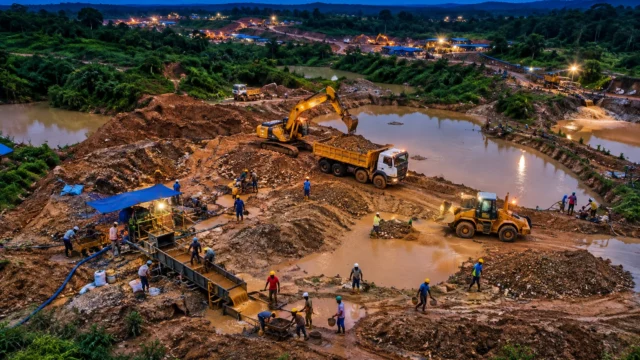
The debate resonates particularly in Conakry and the Boké region, the historic heart of Guinea’s bauxite industry. The country has consolidated its position as the world’s leading bauxite exporter, with volumes rising again in 2025, while China remains its main overseas market. The authorities are now advancing a more ambitious message: sell the ore, but also process more of it locally.
What the agreement involving Nimba Mining provides for
Nimba Mining Company, described by Guinea’s presidency as wholly Guinean-owned, began operations in November 2025 after already shipping an initial 200,000-tonne consignment from Kamsar. The same official source said a sales contract for 1.5 million tonnes had been signed on 15 October 2025.
The agreement with Glencore is part of this expansion. According to information made public, the Swiss trader is to market more than 10 million tonnes of bauxite a year for five years, or 50 to 60 million tonnes in total. The arrangement also includes more than $300 million in pre-financing. In a market where the price of a tonne of bauxite remains subject to industrial cycles, this type of contract gives the Guinean operator rare visibility over its volumes and future revenues.
The figure is significant. Guinea exported 182.8 million tonnes of bauxite in 2025, according to official data cited by Reuters, up 25% year on year. The country therefore remains at the centre of the global alumina market; alumina is the raw material that is then processed into aluminium. The issue is not the size of the pie, but how it is shared.
A financing strategy as well as an industrial wager
For the Guinean authorities, the value of such agreements goes beyond simply selling bauxite. They also help secure liquidity to fund industrial capacity, infrastructure and, in time, alumina refineries. The Ministry of Mines has also cited several local processing projects, including a refinery associated with SPIC, conceived as part of the Simandou 2040 programme.
This approach addresses a well-known weakness in Guinea’s mining model: the country exports vast quantities of an unprocessed resource but still captures too little local added value. Processing it into alumina and then aluminium requires energy, railways, ports, environmental standards and substantial financing. In other words, bauxite will change Guinea’s economy only if it ceases to be merely a cargo.
In this context, Glencore can act as trader, financier and intermediary buyer. China remains the main end-buyer of Guinean bauxite, but the agreement allows Conakry to work with more intermediaries and reduce its dependence on a single commercial channel. This diversification applies first and foremost to sources of financing, rather than to end markets.
What it means for the state, mining companies and communities
For the Guinean state, pre-financing on this scale improves cash flow and could accelerate public projects linked to the sector. For Nimba Mining, the benefits are twofold: securing sales volumes and smoothing revenue in an industry where prices and markets can change quickly. For Glencore, the deal opens access to highly sought-after bauxite in a country that has become central to the global aluminium industry.
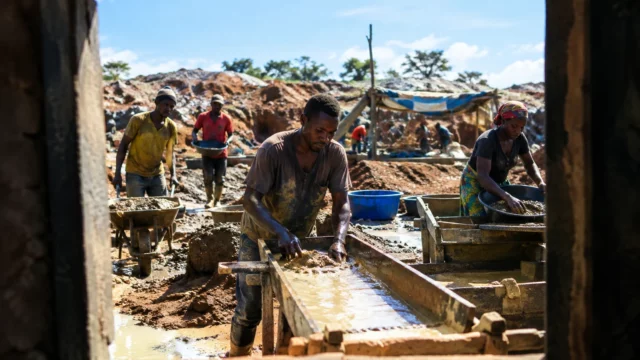
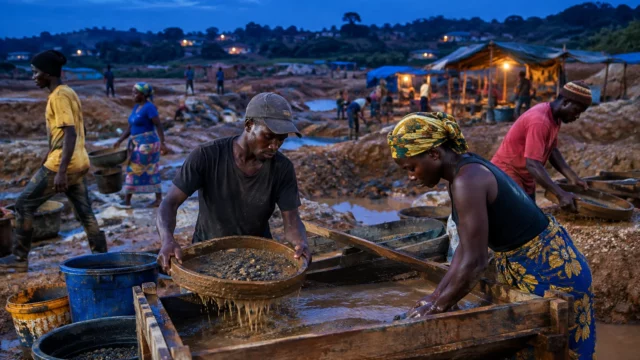
But increased exports will not solve everything. For years, the Boké region has lived with the effects of intensive extraction: pressure on roads, use of the coastline, land disputes and environmental concerns. The question of how benefits are shared locally remains pressing, encompassing mining revenues, direct jobs, subcontracting and the costs borne by neighbouring communities. Mining development gains in scale when revenues reach the regions, not just the capital’s accounts.
Politically, the agreement also comes at a time when the transition authorities have tightened their control over the extractive sector. Several mining deals have been renegotiated or suspended in recent months in the name of better industrial compliance and local processing. This gives the state greater leverage, but also greater responsibility: to turn that bargaining power into stable revenues, lasting jobs and visible infrastructure.
A Guinean deal, but a West African signal
At the regional level, the case is a reminder that West Africa remains a major source of raw materials, but is often organised around exports of unprocessed goods. ECOWAS, which oversees the sub-region’s economic framework, monitors these developments but cannot, on its own, redirect value chains. Guinea, given the scale of its mining industry, could nevertheless wield greater influence if it manages to secure contracts that also finance industrialisation.
The challenge in the coming months will be to see whether the agreement with Glencore remains simply a marketing tool or becomes a stepping stone towards a more integrated industry. Guinea has no shortage of bauxite. What it still lacks is a processing chain capable of retaining more value in Conakry, in mining areas and, more broadly, in the Guinean economy.