
 Algeria
 Libya
 Morocco
 Sudan
 Tunisia
 Benin
 Burkina Faso
 Cabo Verde
 Côte d'Ivoire
 Ghana
 Guinea
 Guinea-Bissau
 Liberia
 Mali
 Mauritania
 Niger
 Nigeria
 Senegal
 Sierra Leone
 The Gambia
 Togo
 Cameroon
 Central African Republic
 Chad
 DR Congo
 Equatorial Guinea
 Gabon
 Republic of the Congo
 São Tomé and Príncipe
 Burundi
 Comoros
 Djibouti
 Eritrea
 Ethiopia
 Kenya
 Madagascar
 Malawi
 Mauritius
 Mozambique
 Rwanda
 Seychelles
 Somalia
 South Sudan
 Tanzania
 Uganda
 Angola
 Botswana
 Eswatini
 Lesotho
 Namibia
 South Africa
 Zambia
 Zimbabwe
A maritime corridor whose importance extends far beyond the Red Sea
When tensions rise in the Red Sea, Egypt looks beyond ship traffic. Cairo is also watching its revenues, diplomatic balance and position in trade between Asia, the Gulf and the Mediterranean. For Saudi Arabia, the stakes are just as direct: the security of maritime routes affects some of its energy exports, especially when passage through Bab el-Mandeb becomes uncertain.
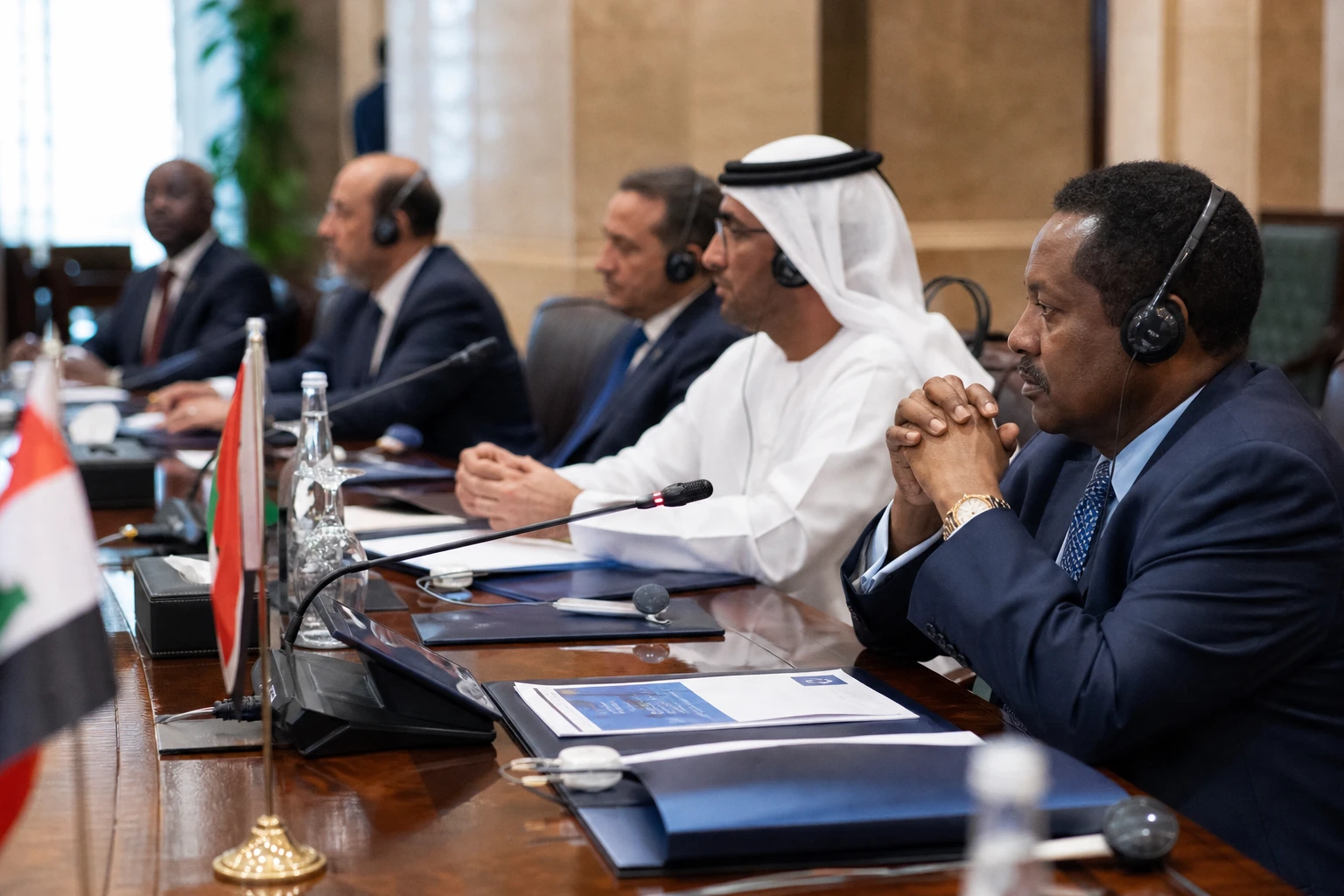
On 15 September 2026, Egyptian President Abdel Fattah al-Sisi and Saudi Crown Prince Mohammed bin Salman reaffirmed in Cairo the need to guarantee freedom and security of navigation in the Bab el-Mandeb strait and the Red Sea. The Egyptian presidency said the discussions took place during a working visit by the Saudi leader and formed part of broader coordination between the two countries in response to regional developments.
This kind of message is not insignificant. Bab el-Mandeb is one of the main passageways for global trade. It links the Red Sea to the Gulf of Aden and determines access to the Suez Canal for some Asian and European traffic. When this route becomes less secure, shipping companies take longer routes, costs rise and the countries along its shores lose some of their economic leverage.
The Suez Canal, the first barometer of regional tensions
For Egypt, the issue is not only strategic. It is also a matter of public finances. The Suez Canal Authority said disruptions in the Red Sea had weighed on traffic in 2024, with annual revenues falling to $3.991bn from $10.25bn in 2023. The institution later reported signs of a gradual recovery in 2025 and 2026, with an increase in transits and revenues in the first half of the 2025/2026 financial year.
These figures shed light on the real significance of the Cairo meeting. When Cairo and Riyadh talk about freedom of navigation, they are also talking about port jobs, logistics, foreign currency and macroeconomic stability. The Suez Canal remains a vital artery for Egypt, while the southern Red Sea coast remains a sensitive area for flows of oil and goods from the Gulf.
Egypt has also sent a series of diplomatic signals along the same lines. Cairo recently reaffirmed its solidarity with Riyadh in the face of threats to commercial shipping and civilian facilities in the Red Sea. This stance is consistent with a longstanding bilateral relationship shaped by shared security interests and a common view of stability in the Gulf and the Arabian Peninsula.
What the Red Sea means in practice for Cairo and Riyadh
Egypt’s view of the issue is clear: protecting Bab el-Mandeb means protecting commercial traffic to the Suez Canal. Saudi Arabia’s position is just as direct: securing the Red Sea means preventing energy exports from depending on a single maritime corridor exposed to military and political pressure. The two countries therefore share an interest in containing instability around Yemen and preserving freedom of transit.
On the ground, the effects vary. For governments, the issue touches on diplomacy, public revenues and strategic credibility. For shipping companies, it affects routes, insurance and delivery times. For populations, the impact is less visible, but eventually shows up in the cost of imports, pressure on some supply chains and strain on public finances.
In this context, Egypt plays a particular role. It is neither a mere bystander nor the sole beneficiary of these flows. The country is at once a coastal state, the manager of a key passage and a diplomatic actor seeking to preserve room for manoeuvre in an environment where maritime security and regional stability are intertwined. This position explains Cairo’s caution, as well as its insistence on talking about “free and safe” navigation rather than simply a military issue.
A test for the region’s balance
Beyond the Egyptian-Saudi partnership, the issue of Bab el-Mandeb concerns North Africa, the Horn of Africa and the Indian Ocean as a whole. A lasting deterioration in maritime security would affect Egypt, as well as Djibouti, Sudan, Somalia and, more broadly, the corridors linking Africa to Asia. At continental level, the issue echoes the African Union’s concerns about the security of maritime routes and the protection of trade.
The pan-African significance is therefore clear. When a passage such as Bab el-Mandeb comes under strain, the entire Red Sea–Suez Canal–Mediterranean route is put under pressure. The coming months will show whether the signs of recovery reported by the Suez Canal Authority are confirmed or whether military tensions in the area force shipping companies to take new detours and regional states to make new trade-offs.



