Algeria
 Egypt
 Libya
 Morocco
 Sudan
 Tunisia
 Benin
 Burkina Faso
 Cabo Verde
 Côte d'Ivoire
 Ghana
 Guinea
 Guinea-Bissau
 Liberia
 Mali
 Mauritania
 Nigeria
 Senegal
 Sierra Leone
 The Gambia
 Togo
 Cameroon
 Central African Republic
 Chad
 DR Congo
 Equatorial Guinea
 Gabon
 Republic of the Congo
 São Tomé and Príncipe
 Burundi
 Comoros
 Djibouti
 Eritrea
 Ethiopia
 Kenya
 Madagascar
 Malawi
 Mauritius
 Mozambique
 Rwanda
 Seychelles
 Somalia
 South Sudan
 Tanzania
 Uganda
 Angola
 Botswana
 Eswatini
 Lesotho
 Namibia
 South Africa
 Zambia
 Zimbabwe
Tension in Niamey, and in the press
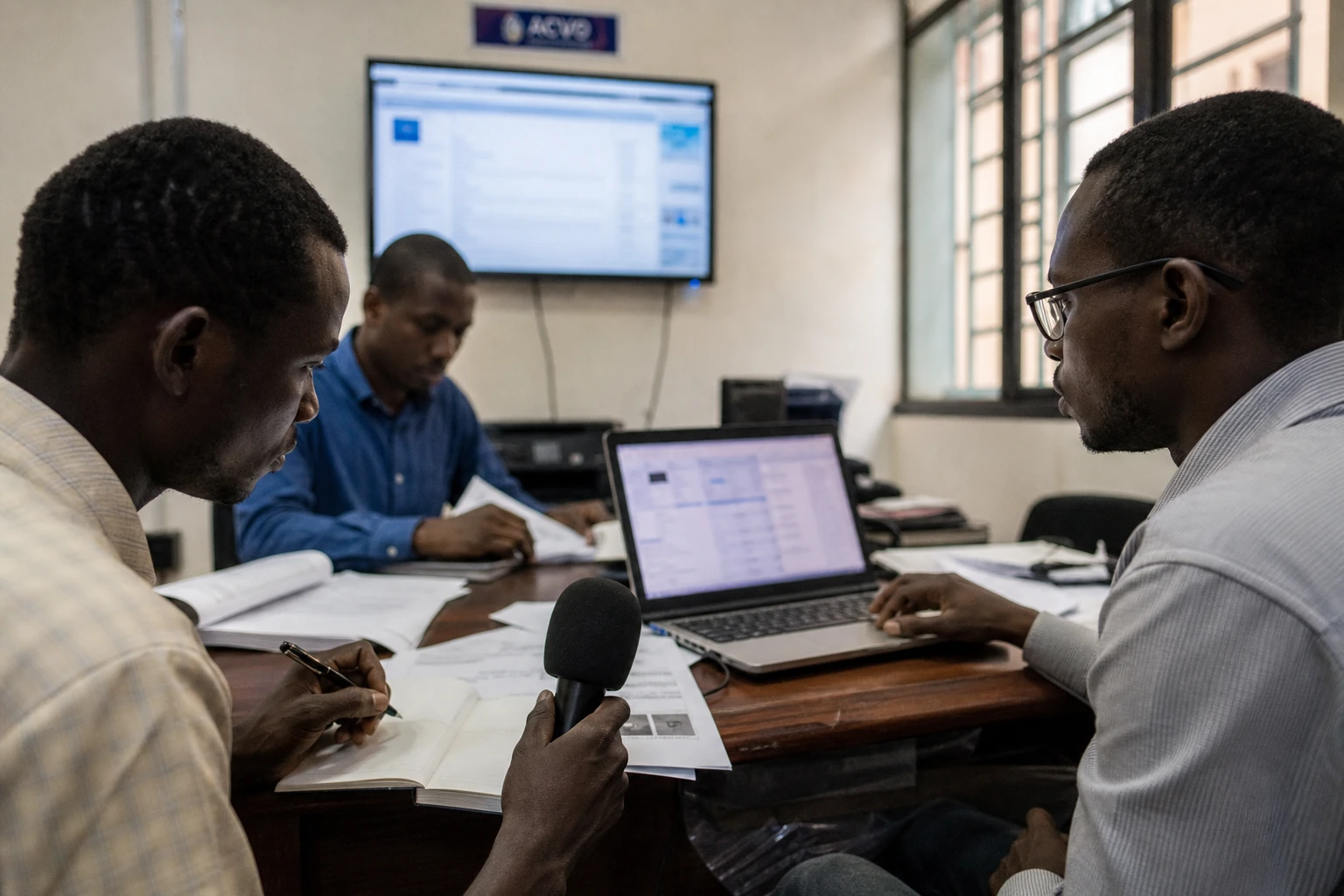
In Niamey, the question is no longer just about sources of information. It has become a question of the very right to inform. When a leading figure in Nigerien journalism disappears after leaving his office, the signal goes far beyond an individual case. It says something about a climate in which newsroom work is becoming riskier, more closely monitored and often more solitary.
Since the coup d’état of 26 July 2023, Niger has been going through a period of acute political and security tensions. General Abdourahamane Tiani leads the country, while Mohamed Bazoum remains detained since his overthrow. At the same time, the country has moved away from ECOWAS, the Economic Community of West African States, following its effective withdrawal on 29 January 2025. This regional realignment is affecting diplomatic balances, as well as the media ecosystem, already weakened by the security crisis in the Sahel.
Moussa Kaka’s disappearance: a familiar name in the profession
Moussa Kaka, director-general of Radio-Télévision Saraounia, has not been heard from since 31 August 2026. According to several press freedom organisations, he left his office in Niamey at around 7pm to go home, but never reached his destination. His colleagues and relatives then turned to the judicial police to request that an investigation be opened.
Moussa Kaka’s profile explains the concern prompted by his disappearance. He is a veteran figure in Nigerien journalism, long associated with coverage of the country’s political and security affairs. This is therefore no ordinary news story. It is a test for the authorities, who are now expected to do one specific thing: locate the journalist, clarify the circumstances of his disappearance and ensure that no pressure linked to his profession is involved. At this stage, calls for an investigation have come from several organisations, including the CPJ, MFWA and RSF.
The case comes days after an attempted destabilisation in Niamey was thwarted by the forces in power, and amid a reshuffle at the top of the army. On 11 September 2026, the authorities appointed a new chief of the defence staff, a decision showing that the security situation remains tense at the highest levels of government. In such an environment, the flow of information quickly becomes a matter of sovereignty, as well as control.
A closing media space
Moussa Kaka’s disappearance is part of a broader deterioration. In 2026, Reporters Without Borders ranked Niger 120th worldwide for press freedom, a fall of 37 places and the steepest drop in that year’s ranking. The organisation links the decline to a growing number of threats against journalists, arbitrary detentions and the impact of more restrictive laws.
The legal framework matters, and Niger’s government knows it. On 10 September 2026, the Council of Ministers presented two bills to regulate online media and foreign media correspondents. The government says it wants to address the internationalisation of information flows, the digital transformation of the media and the risks of disinformation. In practice, this drive to regulate can also narrow the space available to newsrooms, especially when the authorities already have tools to suspend media outlets and control accreditation.
There have been many recent examples. In May 2026, nine French media outlets were suspended by the National Communication Observatory, Niger’s regulator, over content deemed contrary to public order and national security. The decision illustrated the authorities’ current approach: less tolerance for media considered critical, and greater control over information flows from abroad. This trend is not unique to the Sahel, but in Niger it has taken on particular significance because it coincides with intense security pressure and an economically weakened media landscape.
Cybercrime is also central to the issue. In recent years, several Nigerien journalists have been arrested or prosecuted on this basis, with some later released. Ibro Chaibou, editor-in-chief of Saraounia, was released on 28 August 2026, after nearly ten months in pre-trial detention. Other colleagues, including Youssouf Sériba and Oumarou Kané, had also been detained and then released earlier in the year. This series of cases has fostered self-censorship in newsrooms, particularly on issues related to security, governance and the army.
What this means for Niger and the region
The effects at home are tangible. For journalists, every sensitive investigation carries greater personal risk. For media outlets, financial margins are shrinking, as suspensions, prosecutions and court delays undermine revenue and access to audiences. For the public, the result is simple: less pluralism, less cross-checking and more rumours in a country already under intense security pressure.
Niger is not alone. Its media trajectory echoes that of several Sahelian countries where military juntas invoke national security to tighten controls on the press. RSF notes that Niger, Burkina Faso and Mali have all fallen in its 2026 ranking, in a context where attacks by armed groups are compounded by restrictions on independent information. At the regional level, this trend also raises questions about the ability of African institutions to defend a common baseline of protections for journalists, whatever the political character of the governments in power.
What happens next will depend on two very specific timelines. First, the investigation into Moussa Kaka, whose progress the authorities must clarify without delay. Second, the new regulatory framework announced for online media and foreign correspondents, which will show whether Niamey simply wants to organise the sector more effectively or to tighten its political grip on information. In both cases, Niger is sending a message to the rest of the continent: the battle for civic space is fought not only at the ballot box or in government palaces, but also in newsrooms, studios and on the evening journeys between the office and home.