Algeria
 Egypt
 Libya
 Morocco
 Sudan
 Tunisia
 Benin
 Burkina Faso
 Cabo Verde
 Côte d'Ivoire
 Ghana
 Guinea
 Guinea-Bissau
 Liberia
 Mali
 Mauritania
 Niger
 Nigeria
 Senegal
 Sierra Leone
 The Gambia
 Togo
 Cameroon
 Central African Republic
 Chad
 DR Congo
 Equatorial Guinea
 Gabon
 Republic of the Congo
 São Tomé and Príncipe
 Burundi
 Comoros
 Djibouti
 Eritrea
 Ethiopia
 Kenya
 Malawi
 Mauritius
 Mozambique
 Rwanda
 Seychelles
 Somalia
 South Sudan
 Tanzania
 Uganda
 Angola
 Botswana
 Eswatini
 Lesotho
 Namibia
 South Africa
 Zambia
 Zimbabwe
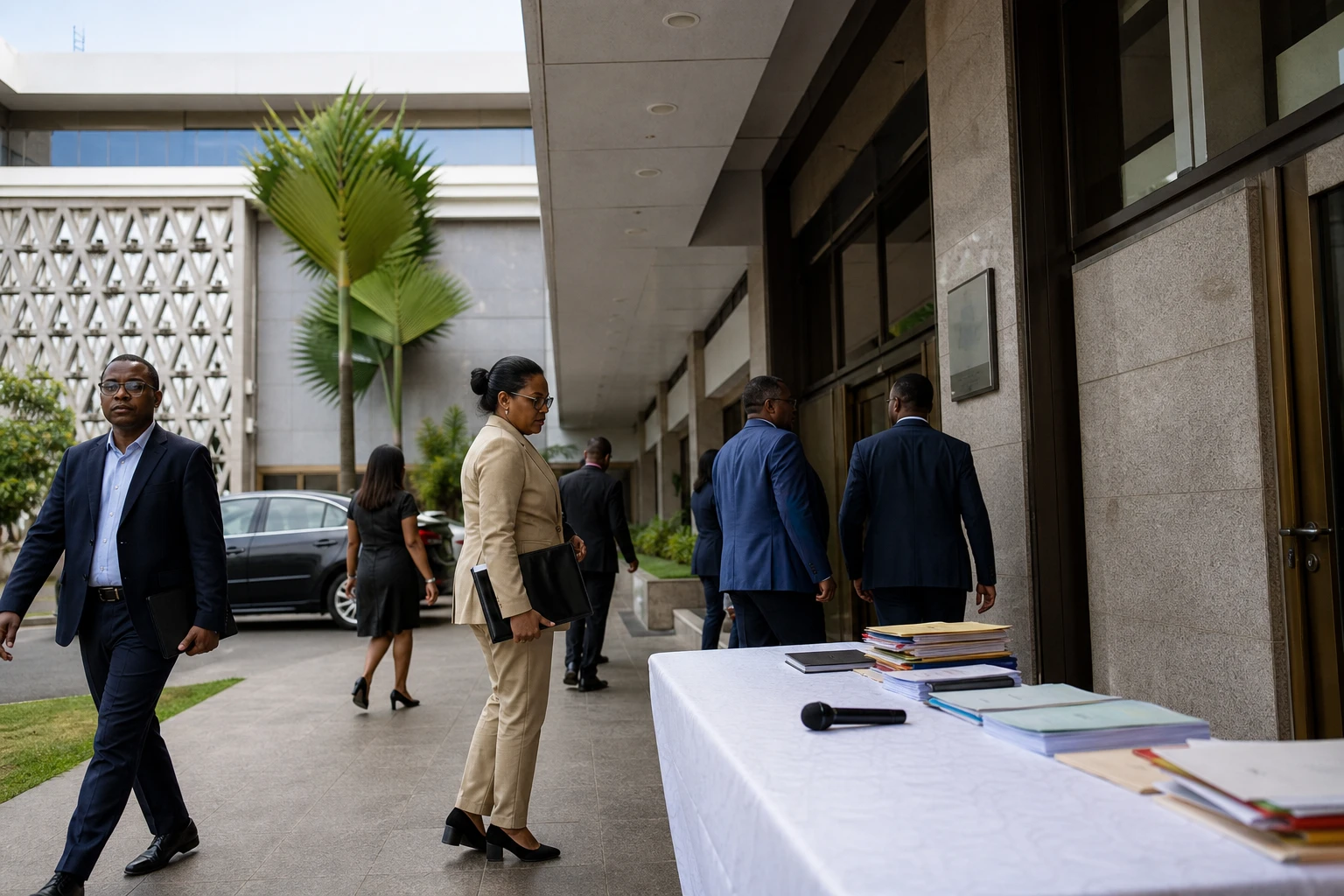
In Antananarivo, the government seeks support without being boxed in
In Madagascar, every diplomatic gesture carries more weight than elsewhere. Since the political upheaval of 2025, the country has been walking a narrow line: regaining international recognition, reassuring economic partners and preventing the transition from turning into lasting isolation. The meeting between Michaël Randrianirina and Emmanuel Macron in Paris on 10 September 2026 comes at this moment of recalibration.
The Malagasy president has already begun a series of exchanges with major capitals. Paris is therefore not a starting point, but a step in a broader strategy. For the authorities at the Élysée, the aim is clear: to keep a political channel open with Antananarivo as Madagascar adjusts its diplomacy and seeks room for manoeuvre. For the Malagasy people, the stakes are more tangible: energy, jobs, public services and the institutional timetable.
A transition still under regional scrutiny
Madagascar remains at the centre of attention of the Southern African Development Community, or SADC, the regional organisation that has been monitoring the country’s political trajectory since the 2025 crisis. In its communiqué of 17 August 2026, SADC urged Malagasy actors to preserve relative calm and prioritise dialogue. In December 2025, it had already encouraged the transitional government led by Colonel Michael Randrianirina to begin an inclusive national dialogue and prepare a roadmap.
The continental framework is also sensitive. The African Union’s Peace and Security Council suspended Madagascar from its activities following the 2025 change of power, pending the restoration of constitutional order. The suspension placed Antananarivo in an uncomfortable diplomatic position, between the pursuit of domestic legitimacy and external pressure for credible normalisation.
In this context, France is not dealing with a purely bilateral relationship. It is also looking at Madagascar’s position in the Indian Ocean, an area where rivalries for influence remain discreet but real. Emmanuel Macron’s official visit to Madagascar in April 2025 had already laid the foundations for cooperation on economic, cultural and regional issues. The Paris meeting on 10 September 2026 extends that sequence.
What is at stake for Paris and Antananarivo
The meeting on 10 September 2026 confirmed one simple thing: both capitals want to maintain dialogue, despite a relationship that has become more complex since Michaël Randrianirina came to power. The Élysée listed the bilateral meeting on the presidential agenda, alongside other high-level meetings held that same day. The two men had already met in Paris on 24 February 2026, making this the second known meeting since Madagascar’s transition.
France’s caution is also explained by Madagascar’s diversification of its partnerships. In February 2026, Michaël Randrianirina travelled to Moscow and was received by Vladimir Putin. International media and press sources reported that this opening to Russia concerned, in particular, energy and military cooperation. This direction does not rule out other partners, but it changes the balance of relations. It signals that Antananarivo wants to engage with several powers at once, without returning to dependence on a single one.
For Paris, the issue is less ideological than strategic. France retains historical, human and economic interests in Madagascar, but it knows that influence can no longer be preserved by default. It has to be negotiated, project by project. For Antananarivo, the benefit is clear: having more partners makes it possible to negotiate better terms, particularly in sectors where the need is urgent, such as electricity, infrastructure, civil protection and budget recovery. The country remains weakened by the aftermath of the political crisis and recent climate shocks, with cyclones underscoring the vulnerability of coastal cities and transport networks.
The transitional government also wants to show that it is keeping the machinery of state running. An official document from the Malagasy presidency refers to a programme of « refondation » and notes that the High Constitutional Court declared the presidency vacant in October 2025 before inviting the military authority embodied by Michaël Randrianirina to exercise the functions of head of state. This is a fragile institutional basis, but it provides a framework for the transition.
A significance extending beyond Madagascar
The visit to Paris says something broader about Madagascar and, beyond it, southern Africa and the Indian Ocean. States in the region are now watching how a military transition can seek to regain international credibility while redefining its alliances. SADC, which has taken a hands-on approach to the issue, is testing its ability to support an exit from crisis without endorsing instability as a method of government.
At continental level, the episode also shows that African diplomacy is not played out only at major conferences. It is built in capitals, in decisions on aid, in discussions on security and in the ability of governments to set out a clear political timetable. Madagascar, an Indian Ocean country and a member of SADC, stands at the crossroads of these demands. If the Paris visit opens a more structured phase of work, the decisive issue will lie elsewhere: in the credibility of the transition process, in the follow-up to regional recommendations and in Antananarivo’s ability to move beyond the interim period without falling back into crisis.