Algeria
 Egypt
 Libya
 Morocco
 Sudan
 Tunisia
 Benin
 Burkina Faso
 Cabo Verde
 Ghana
 Guinea
 Guinea-Bissau
 Liberia
 Mali
 Mauritania
 Niger
 Nigeria
 Senegal
 Sierra Leone
 The Gambia
 Togo
 Cameroon
 Central African Republic
 Chad
 DR Congo
 Equatorial Guinea
 Gabon
 Republic of the Congo
 São Tomé and Príncipe
 Burundi
 Comoros
 Djibouti
 Eritrea
 Ethiopia
 Kenya
 Madagascar
 Malawi
 Mauritius
 Mozambique
 Rwanda
 Seychelles
 Somalia
 South Sudan
 Tanzania
 Uganda
 Angola
 Botswana
 Eswatini
 Lesotho
 Namibia
 South Africa
 Zambia
 Zimbabwe
A short visit, but a clear political signal
In Abidjan, an official visit is rarely measured by the length of the stay. It is read above all in the message sent to markets, borders and diplomatic missions. Between Côte d’Ivoire and Guinea, the stakes go beyond diplomatic courtesy: they concern the movement of people, West African trade and the security of a regional space that remains fragile.
Mamadi Doumbouya’s visit to Côte d’Ivoire is also part of a broader sequence. In West Africa, states are seeking to preserve channels of dialogue despite political tensions, internal realignments and security challenges. In this context, Abidjan remains a central diplomatic hub, and Conakry a counterpart with which the Ivorian capital maintains regular exchanges. Côte d’Ivoire has also recently highlighted, in its presidential agenda, its extensive work on cooperation and development issues.
Economic cooperation and security top the agenda in Abidjan
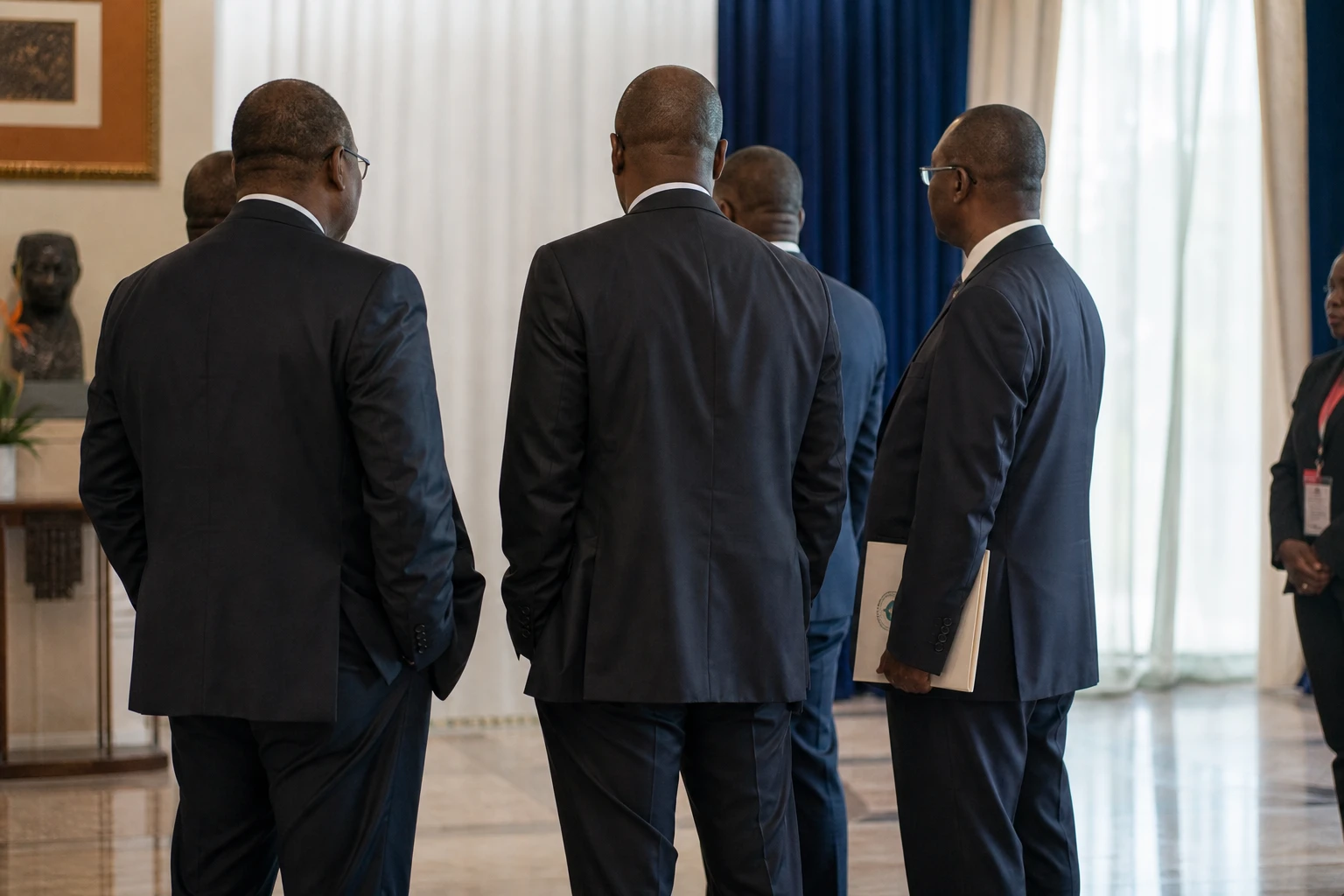
On Sunday 13 September 2026, Alassane Ouattara received his Guinean counterpart, Mamadi Doumbouya, in Abidjan. The two leaders praised the quality of relations between their countries and voiced their determination to strengthen them in several areas: economic, commercial, political, security and training. This is significant. It shows that bilateral relations go beyond protocol diplomacy. They are aimed at very practical sectors that matter to government departments, businesses and security forces.
The visit also gave the Guinean president an opportunity to publicly thank his host for the support he provided during the electoral process that brought him to the highest office. This detail sheds light on the political dimension of the exchange. It is a reminder that relations between West African neighbours are not only about trade. They also involve gestures of recognition, caution and diplomatic alignment. The Guinean head of state also praised the welcome given to the Guinean military detachment during Côte d’Ivoire’s Independence Day celebrations on 7 August 2026.
Another signal: Mamadi Doumbouya invited Côte d’Ivoire to Guinea’s October 2026 national day celebrations as a guest of honour, alongside Rwanda. Such an invitation is never insignificant. It consolidates ties between states and gives Guinea diplomatic visibility at a time when Conakry is seeking to project an image of stability, openness and institutional continuity after the period that began in 2021.
What the visit says about the regional balance of power
Côte d’Ivoire and Guinea are both members of ECOWAS, the Economic Community of West African States, which brings together 15 countries in the region. The organisation places cooperation, peace, regional security and free movement at the heart of its work. In a region where political crises have sometimes held back integration, every bilateral meeting between heads of state has practical value: it reduces misunderstandings and keeps bridges open between government departments, security forces and businesses.
Guinea’s context also matters. Mamadi Doumbouya’s official biography states that he took power on 5 September 2021, was then elected president in December 2025 and sworn in on 17 January 2026 for a seven-year term. This trajectory explains the particular place the Guinean president now occupies in regional exchanges: he is no longer merely a transitional leader, but a head of state seeking diplomatic backing and economic room for manoeuvre. His visit to Abidjan is part of that strategy.
Relations between the two countries have already provided a setting for other political gestures. In June 2025, Guinea’s presidency described Mamadi Doumbouya’s visit to Côte d’Ivoire as an opportunity to strengthen historical ties, cooperation and consultation. There is also a useful regional precedent: in March 2026, Côte d’Ivoire was involved as an observer country in a tripartite summit on the border dispute between Guinea, Sierra Leone and Liberia. In other words, Conakry sees Abidjan as a credible partner capable of engaging on sensitive issues.
For Ivorians and Guineans living on either side of the administrative border or in the region’s major cities, the stakes are very tangible. Families, traders, transport operators and students depend on this West African continuity. When heads of state talk to one another, it can help facilitate trade routes, protect citizens abroad and foster police cooperation. When they do not, administrative hurdles and political tensions quickly spill over into markets.
A sequence to watch in the months ahead
The visit comes at a time when Côte d’Ivoire is preparing to pursue its development priorities, while Guinea is seeking to turn its announcements into visible results. For Abidjan, relations with Conakry are part of a neighbourhood diplomacy intended to support trade, stability and the country’s appeal. For Conakry, they help consolidate a network of regional alliances as the government seeks to show it has regained its place in the region.
On a pan-African level, the message is broader. At a time when several West African capitals are reassessing their alliances, relations between Abidjan and Conakry are a reminder that strong bilateral cooperation remains one of the few immediate levers for preserving regional integration. What happens next will depend on turning the announcements into concrete action: technical meetings, sectoral agreements, safer corridors and reciprocal political gestures at the next key moments in Guinea and across ECOWAS.