Algeria
 Egypt
 Libya
 Morocco
 Sudan
 Tunisia
 Benin
 Burkina Faso
 Cabo Verde
 Ghana
 Guinea
 Guinea-Bissau
 Liberia
 Mali
 Mauritania
 Niger
 Nigeria
 Senegal
 Sierra Leone
 The Gambia
 Togo
 Cameroon
 Central African Republic
 Chad
 DR Congo
 Equatorial Guinea
 Gabon
 Republic of the Congo
 São Tomé and Príncipe
 Burundi
 Comoros
 Djibouti
 Eritrea
 Ethiopia
 Kenya
 Madagascar
 Malawi
 Mauritius
 Mozambique
 Rwanda
 Seychelles
 Somalia
 South Sudan
 Tanzania
 Uganda
 Angola
 Botswana
 Eswatini
 Lesotho
 Namibia
 South Africa
 Zambia
 Zimbabwe
A departure that says something about Ivory Coast’s golden generation
When a key player hangs up his boots at 31, the question goes beyond the individual case. In Ivory Coast, Seko Fofana’s decision closes a very short but highly eventful chapter in the recent history of the Elephants. It also reflects a reality of contemporary African football: international careers are now shaped by the competing demands of clubs, FIFA international windows, continental competitions and fans who want to see their best players available at the right time.
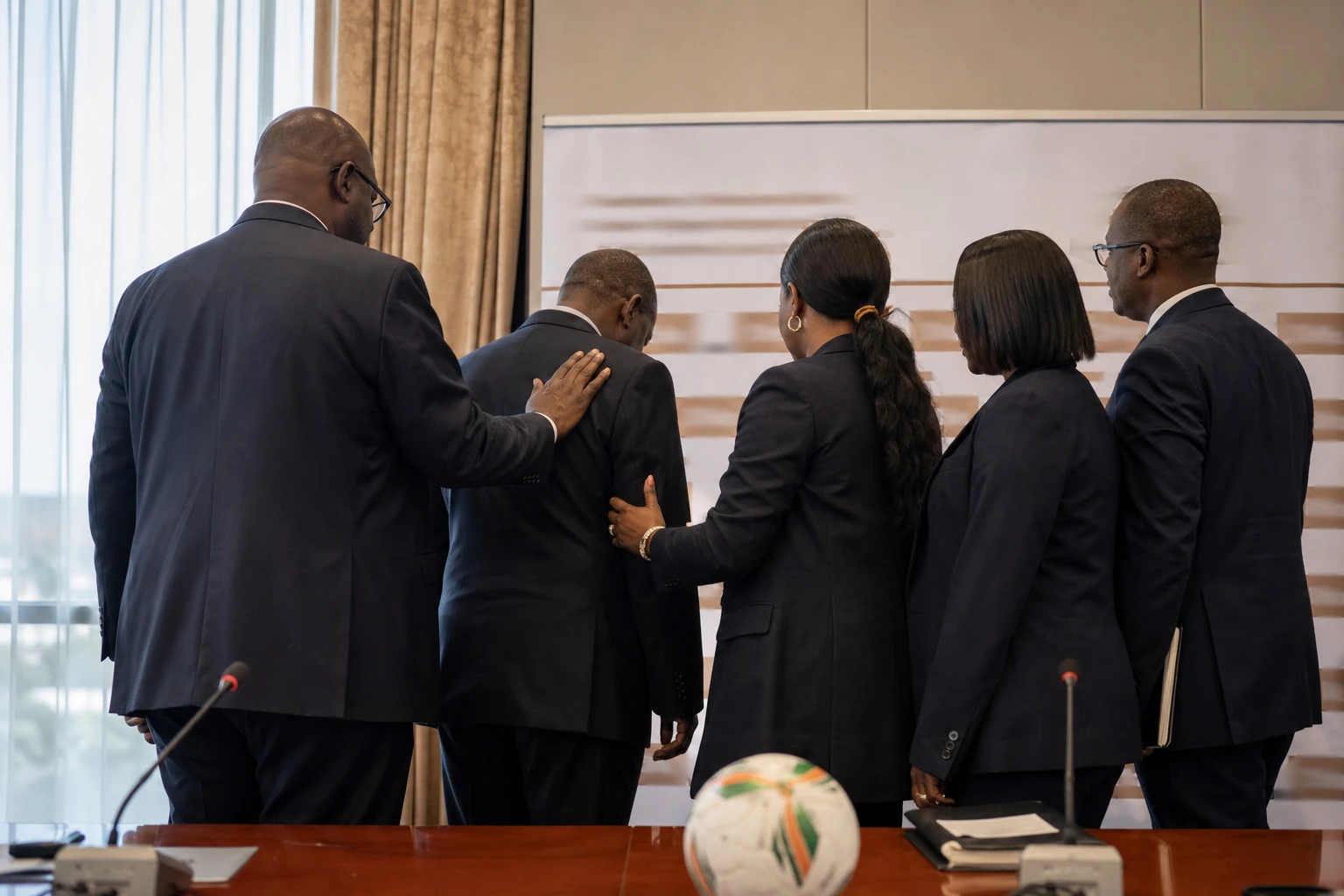
The Ivorian midfielder announced on Monday 14 September 2026 that he was ending his international career. The message, posted on his social media accounts, was relayed from Abidjan. The player said he wanted to “turn the page” after experiencing the 2024 continental title on home soil, in a country whose political capital is Yamoussoukro, while Abidjan remains the economic and media centre of national football.
Ivory Coast, between football capitals and regional responsibilities
Fofana’s departure comes at a particular moment for Ivorian football. The national team won the 2023 Africa Cup of Nations on home soil, after a tournament that rekindled popular enthusiasm for the Elephants. Since then, Ivory Coast has regained a more secure place among the continent’s elite, with a team closely followed in the ECOWAS region, where football remains a strong marker of shared identity and the movement of talent.
The national sporting context also matters. The Elephants are no longer defined by a handful of isolated names. The squad has been reorganised around players established in Europe, the Middle East and major African leagues. In this landscape, retirements are not simply the end of a career. They redraw the pecking order in the dressing room and oblige the Ivorian Football Federation to speed up the transition between established leaders and new faces.
Fofana joined the Ivorian national team after representing France at youth level, then chose Ivory Coast in 2017. His career reflects current African trajectories: players developed in Europe who, at a pivotal moment, choose to represent the country of their family and emotional roots.
A brief record, but a decisive one in major tournaments
The figures give a sense of his time with the national team. Ivorian sports media report 35 matches, seven goals and nine years on the international stage. CAF confirms in its match documents and competition records that he was one of the key figures at the 2023 Africa Cup of Nations and scored the tournament’s very first goal, against Guinea-Bissau in Abidjan.
That opening goal was more than symbolic. It launched a tournament that Ivory Coast turned into a home triumph, under intense public pressure. The national team then experienced highs and lows before building momentum towards the title. In that story, Fofana made his mark with his work rate, long-range shooting and ability to break lines in midfield.
His influence was not limited to the Africa Cup of Nations. CAF also notes that he played in qualifying campaigns and recent competitions as an experienced link player. As Ivory Coast secured qualification for the 2026 World Cup, his name was still appearing in the squads selected by Emerse Faé. This shows that his international retirement is not a sign of a sudden decline, but rather a personal decision taken out of step with the sporting calendar, while the global cycle continues.
His club career also helps explain his departure. After Lens, where he reached a high standard in Ligue 1 and won the Marc-Vivien Foé Prize, he continued his career in Saudi Arabia, then at Rennes and Porto, where he has been on loan since February 2026. For an African international, this kind of trajectory affects availability, rhythm and priorities. Modern football leaves little room for long spells with the national team when clubs impose very tight schedules.
What his decision means for the Elephants
The first impact is sporting. Ivory Coast loses a midfielder capable of offering shooting, forward runs and a quiet form of leadership. But it is not just a player the team is losing. It is losing a reference point in an area of the pitch where balance depends as much on positioning as on temperament. In an African champion side, this kind of player often serves as a bridge between generations.
The second impact is symbolic. Fofana had chosen the Ivorian national team at a time when many still doubted his long-term availability. He later stepped away, returned, and then reaffirmed his commitment to the Elephants ahead of the 2023 Africa Cup of Nations. His departure therefore illustrates a modern, sometimes uneasy relationship between club careers and national commitment. It takes nothing away from the pride of the 2024 title. It simply highlights that continuity at international level has become more fragile than before.
For the Ivorian public, the stakes are different. In Abidjan and other major cities across the country, winning the Africa Cup of Nations at home has created new expectations. Supporters now want a team that wins, but also one that renews itself without losing its identity. Fofana’s retirement therefore obliges the coaching staff to strengthen the midfield with players such as Franck Kessié, Ibrahim Sangaré and Jean-Michaël Seri, while giving younger players expected to take over more playing time sooner.
An Ivorian chapter, but also an African signal
Across the continent, Seko Fofana’s story illustrates the new economics of African football. National teams want to keep their best players for longer. Players, meanwhile, weigh up international careers, club ambitions, physical health and global visibility. This tension is not unique to Ivory Coast. It runs through all the continent’s major footballing nations, from North Africa to southern Africa, and across West Africa.
It also raises a broader question for the Confederation of African Football and national federations: how can competitive teams be built over several cycles without relying too heavily on a few key players? The answer lies in development, planned succession and better coordination between the continental calendar and the demands on players based abroad. In this context, Fofana’s retirement is not merely an individual announcement. It is another marker of the rapid transformation of African football.
For Ivory Coast, the goal remains clear: defend a continental title, strengthen its position in World Cup qualifying and sustain the momentum born of its home triumph. Seko Fofana’s departure closes one story, but also leaves a tangible legacy—in his play, his experience and the way he wore the national shirt at the highest level.