Egypt
 Libya
 Morocco
 Sudan
 Tunisia
 Benin
 Burkina Faso
 Cabo Verde
 Côte d'Ivoire
 Ghana
 Guinea
 Guinea-Bissau
 Liberia
 Mali
 Mauritania
 Niger
 Nigeria
 Senegal
 Sierra Leone
 The Gambia
 Togo
 Cameroon
 Central African Republic
 Chad
 DR Congo
 Equatorial Guinea
 Gabon
 Republic of the Congo
 São Tomé and Príncipe
 Burundi
 Comoros
 Djibouti
 Eritrea
 Ethiopia
 Kenya
 Madagascar
 Malawi
 Mauritius
 Mozambique
 Rwanda
 Seychelles
 Somalia
 South Sudan
 Tanzania
 Uganda
 Angola
 Botswana
 Eswatini
 Lesotho
 Namibia
 South Africa
 Zambia
 Zimbabwe
A rapprochement with weight in the Sahel
In Bamako, diplomatic gestures are never purely symbolic. They often show whether two neighbours are choosing conciliation, caution or a renewed effort to take control of an issue that has become too sensitive. Between Mali and Algeria, the sequence launched in August and then September 2026 clearly reflects a desire to reopen a direct channel after a long period of strain.
For Mali, a Sahelian country oriented both towards the Maghreb and West Africa, relations with Algiers go beyond diplomatic courtesies. They touch on border security, trans-Saharan trade, political dialogue and the stabilisation of a region where balances remain fragile. Algeria, for its part, continues to present itself as a regional actor capable of influencing issues concerning the Sahara and the Sahel.
What happened in Bamako
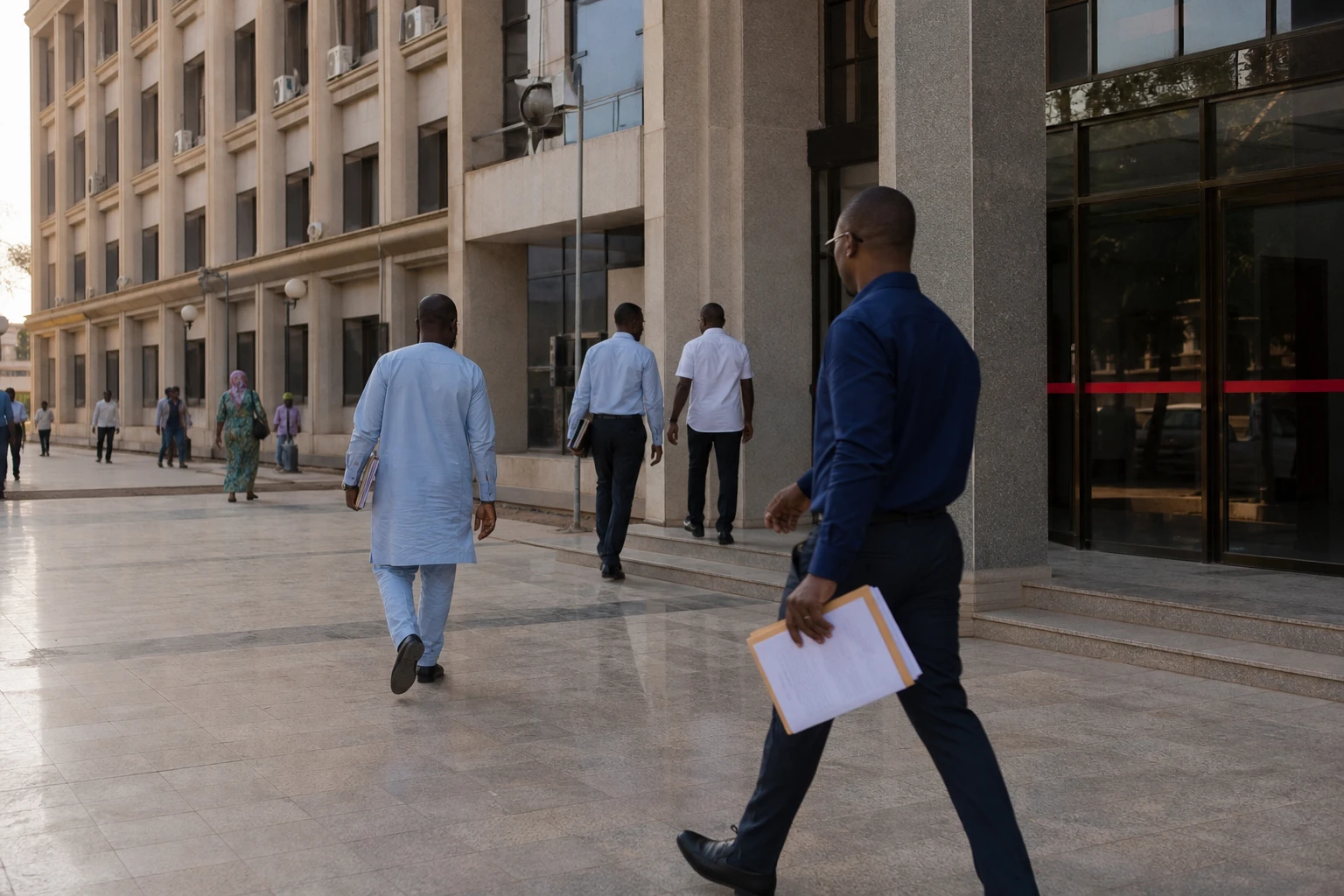
On Monday 14 September 2026, Algerian Prime Minister Sifi Ghrieb arrived in Bamako on a friendship visit. He was received by his Malian counterpart, General Abdoulaye Maïga, and then by the President of the Transition, Army General Assimi Goïta. Algiers said the mission was carried out on the instructions of President Abdelmadjid Tebboune.
The two delegations then began discussions aimed at identifying priority areas for cooperation and preparing a joint roadmap. According to information made public, the roadmap is intended to inform Assimi Goïta’s next visit to Algeria, the date of which has not yet been set. Algerian authorities also say they want to reactivate institutional cooperation mechanisms, including the Algeria-Mali Joint Commission.
The visit did not take place in isolation. It came three weeks after Abdoulaye Maïga’s trip to Algiers on 24 August 2026, where he was received by Sifi Ghrieb and then met by Abdelmadjid Tebboune. Even then, Bamako and Algiers had signalled their desire to put a damaged relationship back on track after more than a year of tensions.
The resumption of diplomatic exchanges is significant because the crisis that began in 2025 had taken a serious turn. After a Malian drone was destroyed near Tinzaouaten, on the Saharan-Sahelian border, the two capitals closed their airspace to each other, while Mali and its allies Burkina Faso and Niger recalled their ambassadors from Algiers. The International Court of Justice subsequently confirmed that it had received an application from Mali against Algeria.
Why this sequence matters for Bamako and the region
The issue is broader than a simple border incident. For years, Algeria served as a central interlocutor in Mali’s political balances, particularly through mediation efforts related to the country’s north. But since the military coups in Mali in 2020 and 2021, followed by political realignment in the Sahel, relations between Bamako and Algiers have shifted towards a tougher, more sovereigntist and sometimes more distrustful approach.
This shift also says something about the Sahel’s new landscape. Mali, Burkina Faso and Niger have left ECOWAS, the Economic Community of West African States, and built their own framework, the Alliance of Sahel States, before deepening separate security and political cooperation. In this context, any rapprochement with Algeria is not merely a bilateral matter. It touches on the regional architecture itself.
For the Malian authorities, restoring dialogue with Algiers could open several doors. First, security, through better information-sharing on border areas. Next, transport and trade, although tangible results will depend on trust being restored between administrations. Finally, diplomatic legitimacy, as Bamako seeks to show that it can talk to its neighbours without abandoning its current political line.
For the population, the stakes are more immediate. In northern Mali, any lasting easing of tensions could facilitate movement, calm the borderlands where traders, transport operators and cross-border families live, and reduce the hidden costs of a tense border. In Bamako and across the regions, it could also affect transport costs, supplies and the movement of some goods carried along Saharan routes. The impact will not be immediate, but it could be real if diplomacy leads to concrete measures.
Triumphalism should nevertheless be avoided. The tensions of 2025 have left deep scars. Mutual accusations, proceedings before international courts and hard-line rhetoric have created a climate of mistrust that will not disappear after a single meeting. The resumption of contact should therefore be seen as the beginning of stabilisation, not as a reconciliation already achieved.
What to watch next
The next step will depend on the two capitals’ ability to turn an exchange of visits into regular working mechanisms. If the promised roadmap comes to fruition, it could clarify shared priorities: cross-border security, diplomatic exchanges, economic coordination and an update of the bilateral legal framework. If it remains a dead letter, the current rapprochement will prove only a brief interlude.
At continental level, this case is also a reminder of a simple fact: in the Sahel, bilateral crises quickly spill across borders. They intersect with the choices of regional organisations, the reshaping of alliances and power dynamics between African capitals. The stakes between Bamako and Algiers therefore go beyond the relationship between two governments. They concern how West and North Africa are learning, or failing, to cooperate without an intermediary.