Algeria
 Egypt
 Libya
 Morocco
 Sudan
 Tunisia
 Benin
 Burkina Faso
 Cabo Verde
 Ghana
 Guinea
 Guinea-Bissau
 Liberia
 Mali
 Mauritania
 Niger
 Nigeria
 Senegal
 Sierra Leone
 The Gambia
 Togo
 Cameroon
 Central African Republic
 Chad
 DR Congo
 Equatorial Guinea
 Gabon
 Republic of the Congo
 São Tomé and Príncipe
 Burundi
 Comoros
 Djibouti
 Eritrea
 Ethiopia
 Kenya
 Madagascar
 Malawi
 Mauritius
 Mozambique
 Rwanda
 Seychelles
 Somalia
 South Sudan
 Tanzania
 Uganda
 Angola
 Botswana
 Eswatini
 Lesotho
 Namibia
 South Africa
 Zambia
 Zimbabwe
Ivorian microfinance enters sustainable finance
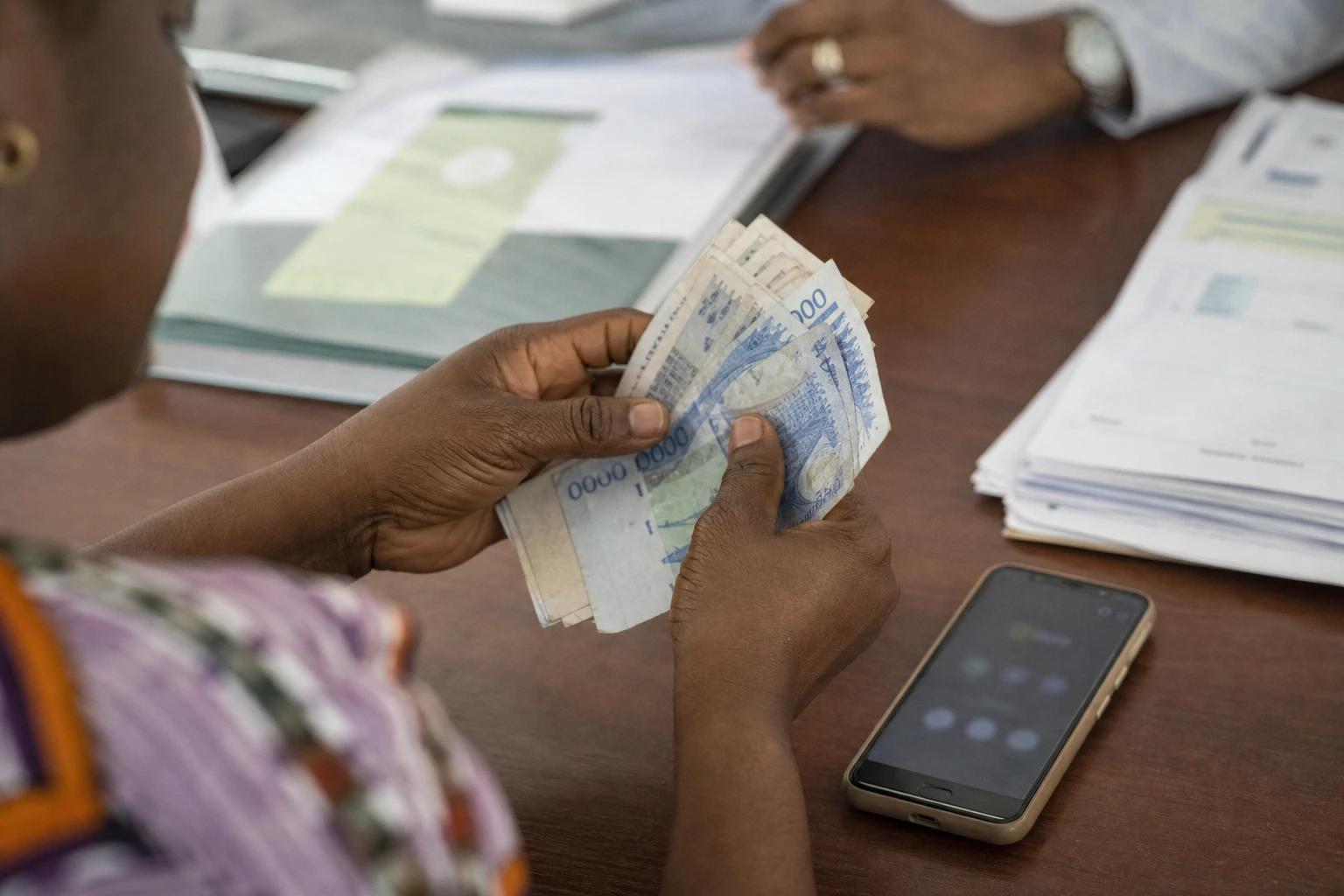
In Abidjan, microfinance is no longer just about providing retail loans. It is now testing instruments previously reserved for large banks and governments: sustainability-linked bonds. This is an important signal for Côte d’Ivoire, where financing small businesses remains a practical challenge for women entrepreneurs, rural areas and businesses in informal trade and agriculture.
In this context, the WAEMU regional financial market, overseen by AMF-UMOA and operated by the BRVM in Abidjan, is becoming an increasingly visible testing ground for innovation. The region has already seen a proliferation of “green”, social and sustainable instruments, and Baobab Côte d’Ivoire is now joining this trend with an issue targeting clearly defined social and environmental uses.
CFAF 20 billion issue open until 24 September
Baobab Côte d’Ivoire opened subscriptions from 10 to 24 September 2026 for a CFAF 20 billion bond issue called “GSS BAOBAB CI 6,80% 2026-2031”. The bond offers an annual gross rate of 6.80% and has a five-year term, with a one-year deferral on repayment of principal. The nominal value is set at CFAF 10,000 per bond.
The operation is presented as the first sustainability-linked bond issue by a microfinance institution on the WAEMU regional financial market. Baobab Côte d’Ivoire describes it as its first bond issue of this kind, with funds intended mainly for micro, small and medium-sized enterprises led by women, education and green finance.
The placement is arranged by CGF Bourse, with subscriptions open through the placement syndicate. The company is also highlighting an anchor investor, IFC, a member of the World Bank Group, which has for several years supported SME financing and women’s entrepreneurship in several African countries, including Côte d’Ivoire.
What this type of issue means for an MFI
A Sustainability-Linked Bond does not just finance a specific project. It also ties the bond’s terms to the achievement of measurable sustainability performance targets, verified by an independent third party. In other words, the issuer’s credibility rests not only on its balance sheet, but also on its ability to meet verifiable social or environmental commitments.
For a microfinance institution, the stakes are twofold. On the one hand, it diversifies its funding sources, which matters in a sector that often depends on bank credit lines or short-term resources. On the other, it sharpens its commercial proposition: lending to women entrepreneurs, small traders, farmers and local businesses, while setting out clear non-financial criteria for investors.
IFC has already supported Baobab Côte d’Ivoire through risk-sharing and SME support programmes, particularly for businesses owned and managed by women. This continuity matters: it shows that this is not an isolated publicity stunt, but a gradual move towards more sophisticated financing tools.
An established player in the Ivorian market
Baobab Côte d’Ivoire says it has more than 320,000 clients, total assets of CFAF 238.4 billion, net income of CFAF 10.7 billion and a 30-day portfolio-at-risk ratio of 1.9% at the end of 2025. The institution also says it has 38 branches and more than 330 correspondents. These figures point to a player that has become a key part of Ivorian microfinance.
This scale changes the significance of the operation. For clients, the benefit is indirect but tangible: a more stable funding base can support lending to very small businesses, traders, farmers and service providers. For the institution, the challenge is to turn its reputation for close customer relationships into a sustainable capacity to refinance itself on the regional market.
The example of Baobab Senegal helps put this development in context. In 2024, the group had already raised CFAF 20 billion through a GSS instrument, and that issue was followed by a listing on the regional market. Côte d’Ivoire is therefore part of a period of maturation for the group and, more broadly, of the growth of sustainable instruments in West Africa.
Why this operation matters beyond Abidjan
For Côte d’Ivoire, the issue comes amid a landscape in which the authorities and multilateral partners are expanding innovative sustainability-linked financing frameworks. The country launched a sustainable financing framework with the World Bank in 2025, and the IMF recently noted that Côte d’Ivoire had already mobilised several innovative debt and guarantee instruments. In this landscape, Baobab’s initiative shows that sustainable finance is not limited to central government.
Across WAEMU, the operation strengthens an important trend: the regional market is becoming a source of funding for mid-sized players, not just sovereigns and large companies. This could widen access to capital for institutions rooted in the real economy, provided transparency and impact measurement standards are maintained.
The continent-wide significance is clear. African banks, MFIs and fintechs are increasingly seeking to attract capital aligned with social, climate and financial inclusion goals. If Baobab Côte d’Ivoire’s operation goes ahead as planned, it will serve as a reference for other West African players seeking to raise funds without giving up an impact-driven approach. The key indicator to watch will be simple: the pace of subscriptions and the regional market’s ability to absorb this type of instrument on a sustained basis.