Algeria
 Egypt
 Libya
 Morocco
 Sudan
 Tunisia
 Benin
 Burkina Faso
 Cabo Verde
 Ghana
 Guinea
 Guinea-Bissau
 Liberia
 Mali
 Mauritania
 Niger
 Nigeria
 Senegal
 Sierra Leone
 The Gambia
 Togo
 Cameroon
 Central African Republic
 Chad
 DR Congo
 Equatorial Guinea
 Gabon
 Republic of the Congo
 São Tomé and Príncipe
 Burundi
 Comoros
 Djibouti
 Eritrea
 Ethiopia
 Kenya
 Madagascar
 Malawi
 Mauritius
 Mozambique
 Rwanda
 Seychelles
 Somalia
 South Sudan
 Tanzania
 Uganda
 Angola
 Botswana
 Eswatini
 Lesotho
 Namibia
 South Africa
 Zambia
 Zimbabwe
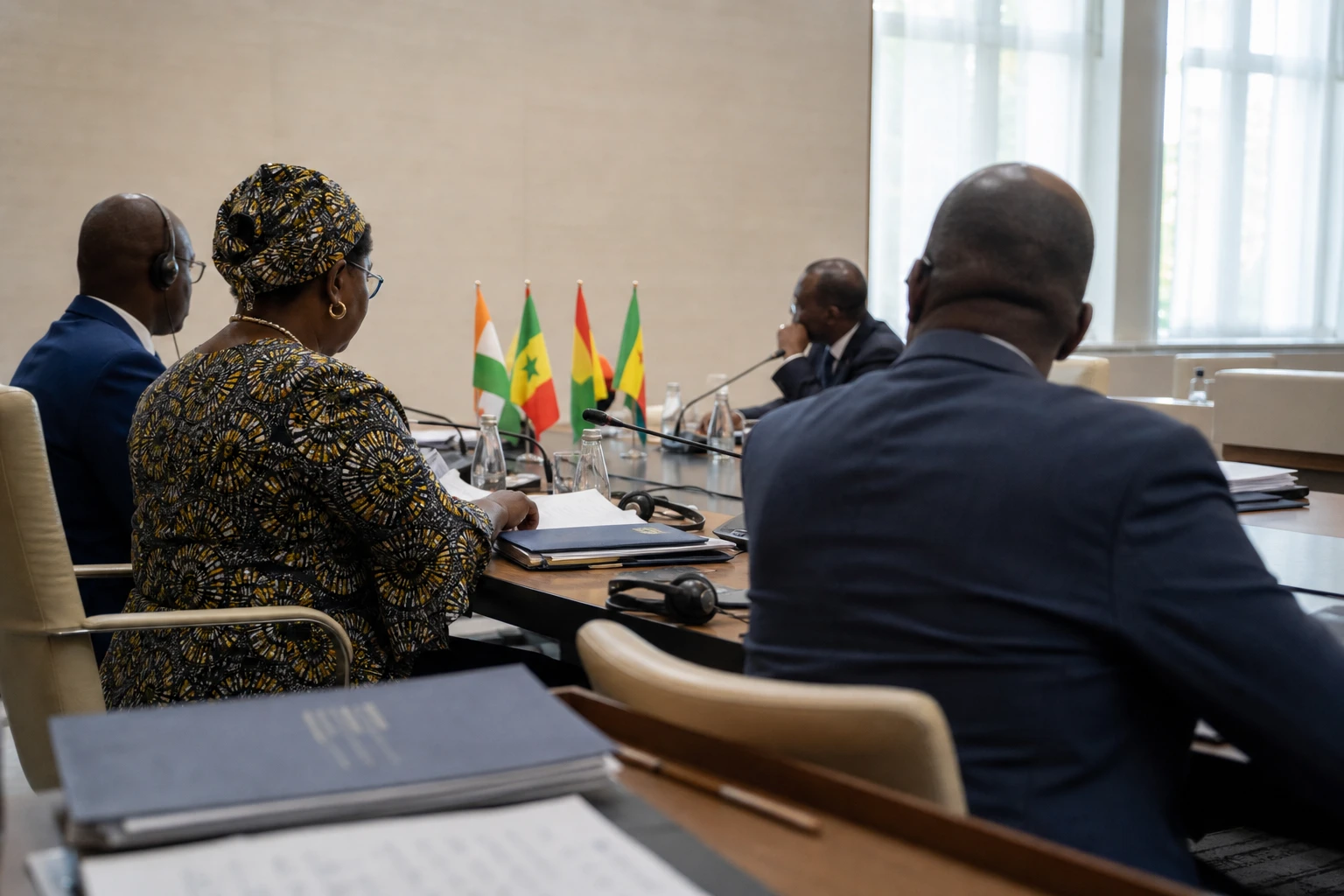
Electoral reform goes beyond technicalities
In Côte d’Ivoire, the battle over the future body responsible for elections is not just about seats and acronyms. It touches on a broader question: who arbitrates political competition, and with what safeguards for parties, voters and institutions.
The discussion comes at a time when the electoral calendar remains sensitive in the country, because the credibility of the voting system directly affects political stability, civic participation and confidence in the results. In Yamoussoukro, the political capital of the Republic, the debate is therefore far more than an administrative matter.
The issue also resonates across West Africa. ECOWAS, which has 12 member states, has made democracy and good governance central to its texts, notably through its Protocol on Democracy and Good Governance. Across the region, every electoral reform is watched as a test of both process and political will.
After the CEI’s dissolution, opposition seeks common position
On 6 May 2026, the Ivorian government announced the dissolution of the Independent Electoral Commission, saying it wanted to pave the way for a system for managing elections that would inspire greater confidence among political actors and Ivorians. The decision was justified by reservations and criticism directed at the institution at the end of the last electoral cycle.
Since then, several opposition parties have held consultations to present a joint proposal to the government. On 1 September 2026, major parties met at the PPA-CI headquarters to harmonise their demands for future electoral governance. A further meeting on 9 September 2026 confirmed their intention to speak with one voice before entering negotiations with the executive.
According to information published in the Ivorian press, the opposition coalition wants to avoid a fragmented set of demands. Its aim is simple: to influence the drafting of the new electoral framework rather than be subjected to a structure decided without its input. The fault lines are familiar: the body’s composition, its actual level of independence, the balance between the government and opposition, and the transparency of electoral rolls.
What the opposition wants, and what the state seeks to preserve
The opposition’s demand has not come out of nowhere. In Côte d’Ivoire, electoral issues have long been associated with periods of tension, because confidence in the referee determines whether results are accepted. In this context, calling for a more balanced body means demanding a system capable of reducing suspicions of bias and preventing disputes before they arise.
For the government, the challenge is different. It must rebuild a system without appearing to relinquish control over institutional sovereignty. It must also adhere to the political timetable. A prolonged vacuum in the organisation of elections could undermine preparations for upcoming polls, delay technical decisions and fuel speculation in the public arena.
The precedent matters. As early as 2020, during discussions on electoral reform, disagreements had already centred on representation on the commission, the financing of the process and the procedure for appointing commissioners. In other words, the current debate revisits old questions, but in a more pressing context, because the CEI’s dissolution has reopened the entire issue.
For citizens, the stakes are tangible. A contested electoral body fuels distrust, sometimes reduces participation and makes every result harder to accept. Conversely, a consensual structure can make the process clearer, including beyond Abidjan, in inland towns and rural areas where information travels more slowly and institutional trust is often built closest to local community leaders.
This is also a political process in the strict sense. Parties are seeking to consolidate their positions ahead of the next deadlines, while the executive wants to show that it has control over the system’s reconstruction. Between them, civil society, religious groups and civic organisations can play a balancing role, provided they are genuinely involved in the dialogue. Ivorian voices, including those reported by the national press, are already calling for broader consultations and a more inclusive electoral framework.
An Ivorian issue, but a regional signal
Côte d’Ivoire does not operate in isolation. Across the ECOWAS region, electoral transitions, commission reforms and disputes over results are closely monitored, because they influence confidence in regional institutions themselves. The commitment to democracy and good governance forms part of the Community’s normative foundations.
At continental level, the Ivorian debate is a reminder that successful electoral reform is measured not only by the adoption of a text. It is judged by its ability to produce a referee accepted by the actors, stabilise political competition and reduce disputes. This is what will be watched in the coming weeks: the final form of the opposition’s proposal, the government’s response and the real role given to other social forces.
The issue therefore goes beyond a dispute over the composition of a commission. It concerns how Côte d’Ivoire wants to organise future transfers of power, in a region where every electoral cycle quickly affects political, economic and security balances. In Yamoussoukro as in Abuja, in Dakar as in Accra, the same message is clear: without a credible referee, an election remains a moment of tension; with a recognised referee, it can once again become an instrument of stability.