Algeria
 Egypt
 Morocco
 Sudan
 Tunisia
 Benin
 Burkina Faso
 Cabo Verde
 Côte d'Ivoire
 Ghana
 Guinea
 Guinea-Bissau
 Liberia
 Mali
 Mauritania
 Niger
 Nigeria
 Senegal
 Sierra Leone
 The Gambia
 Togo
 Cameroon
 Central African Republic
 Chad
 DR Congo
 Equatorial Guinea
 Gabon
 Republic of the Congo
 São Tomé and Príncipe
 Burundi
 Comoros
 Djibouti
 Eritrea
 Ethiopia
 Kenya
 Madagascar
 Malawi
 Mauritius
 Mozambique
 Rwanda
 Seychelles
 Somalia
 South Sudan
 Tanzania
 Uganda
 Angola
 Botswana
 Eswatini
 Lesotho
 Namibia
 South Africa
 Zambia
 Zimbabwe
In Tibesti, gold has changed the balance without erasing the fault lines
In northern Chad, underground wealth is no mere mining asset. In Tibesti, it has become a factor in both stability and tension between the state, local communities and armed groups that have turned to the gold economy. This explains why N’Djamena is proceeding cautiously along a long, porous and strategically important Saharan border with neighbouring Libya.
The issue goes well beyond artisanal mining alone. For years, Tibesti has been at the heart of questions of sovereignty, cross-border movement and control of resources in Chad. The province lies in the Saharan area most exposed to trafficking, but also in a region where the informal economy sustains thousands of families. In a sub-region where CEMAC is seeking to strengthen security and freedom of movement, northern Chad remains a concrete test of public authority.
A fragile agreement born of a local balance of power
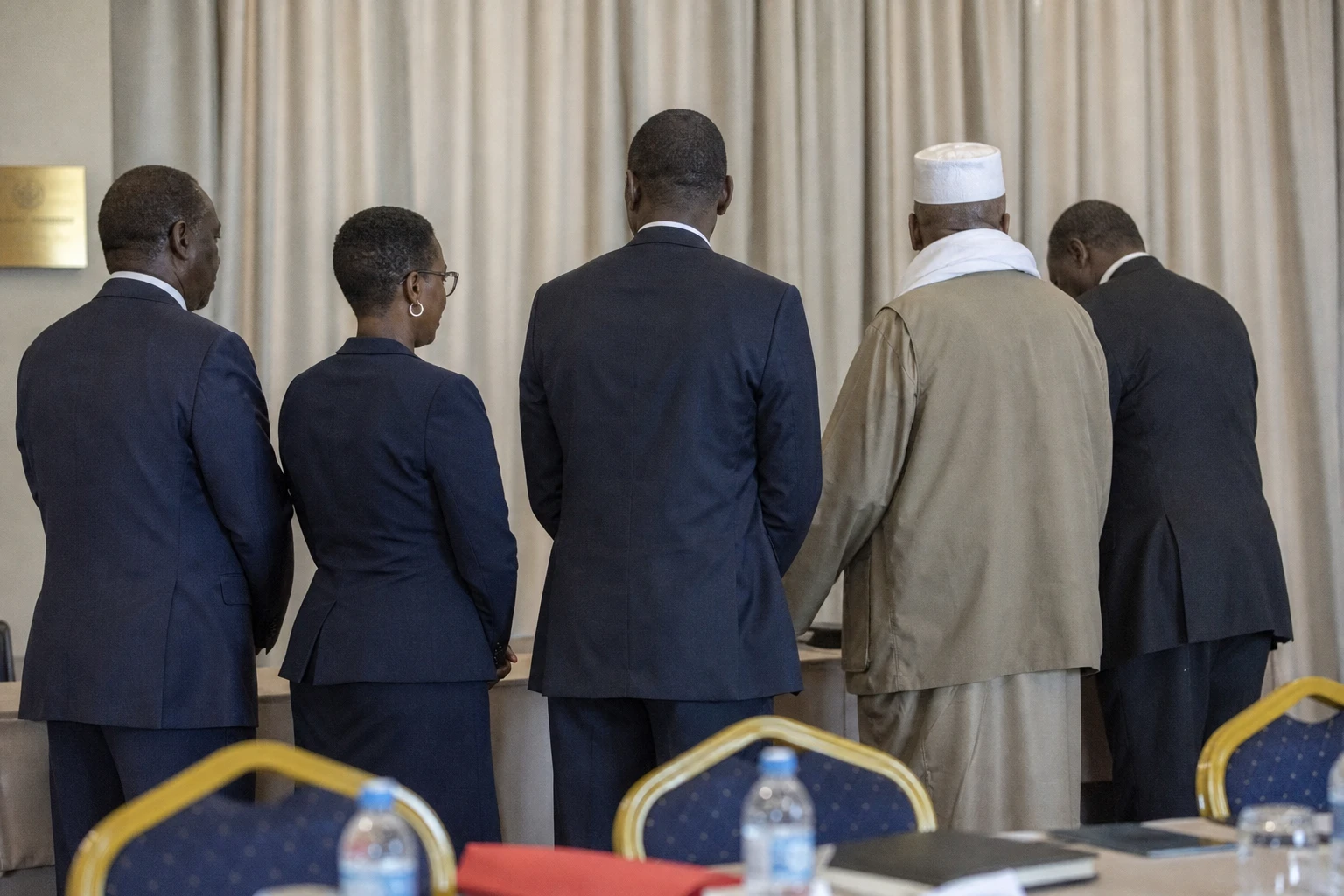
The most recent turning point came on 20 April 2025, when the Chadian government and the Miski Self-Defence Committee signed a peace agreement in Bardaï, the capital of Tibesti. The stated aim was to end several years of tensions over gold and restore a framework for coexistence in an area where artisanal mining had fuelled confrontation. African sources and regional monitoring documents confirmed the significance of the agreement, which was presented as a step towards de-escalation after a long period of local tensions.
This episode is part of a much longer history. Tibesti has long served as a refuge for rebel movements, and later as a retreat for armed actors taking advantage of the limits of state control. Since the gold rush of 2013, the mountains of northern Chad have become a source of economic opportunity, but also a theatre of rivalries over the distribution of profits, taxation, permits and security forces’ presence. Gold has therefore attracted more than just artisanal miners. It has also reshaped local alliances.
The Chadian government did not choose this path out of a sudden change of heart, but out of necessity. A purely coercive strategy would have been costly in a region that is difficult to access, far from major administrative centres and shaped by strong community dynamics. Dialogue with local actors, including those who challenge the established order, gives N’Djamena time, reduces the risk of open clashes and allows it to re-establish a foothold in a border area vital to national security.
Why Tibesti matters beyond Tibesti
Mining in northern Chad first and foremost affects local populations. For the people of Miski, Bardaï and the artisanal miners’ camps, the stakes are tangible: access to sites, security, income, the movement of goods, and the ability to work without fear of deposits being abruptly shut down. In an economy where the informal sector still dominates, gold can be a means of survival, even when redistribution is uneven and rules are subject to change.
But the impact is national too. Oil still weighs far more heavily than gold in Chad’s public revenues, while the mining sector remains poorly structured. Stabilising Tibesti therefore offers the prospect of gradual formalisation, provided the state can regulate flows, protect sites and establish rules that are accepted locally. Without this, gold will remain income captured by competing networks rather than a lever for territorial development.
The regional dimension is just as important. The border with Libya is not merely a line on a map. It is a corridor for movement, trade, smuggling and, at times, arms. Routes across the Sahara connect Tibesti to wider networks, through which precious metals can move alongside other sensitive goods. Chad therefore cannot treat this as an isolated mining issue. It must contend with the geopolitics of the desert and the persistent fragility of northern Libya.
Within CEMAC, this issue carries additional weight. The sub-region is seeking to strengthen cross-border cooperation, health security and the movement of people, while limiting pockets of instability that disrupt trade. Tibesti is a reminder that a secure border cannot be established by military posts alone. It is also built through local compromises, a credible administrative presence and resource governance that prevents every gold seam from becoming a battleground of rivalries.
What the Chadian case reveals about resources in Central Africa
The case of Tibesti says something broader about Central Africa: where the state is distant, resources quickly become a source of power. Gold attracts workers, but also intermediaries, protection groups, transport networks and operators able to secure the value chain. When rules are unclear, the line between the local economy and an economy of predation becomes a fine one.
Yet Chad’s trajectory shows that another path remains possible. Dialogue with local groups, even in a fragile framework, can reduce violence and reopen space for governance. But this peace remains conditional. It will depend on N’Djamena’s ability to turn an agreement of convenience into a lasting mechanism: an administrative presence, arbitration of land and mining disputes, control of routes, and a clearer sharing of benefits.
The stakes for the continent are clear. Securing gold-mining areas does not depend on force alone. It requires institutions capable of reconciling sovereignty, the local economy and regional cooperation. In Tibesti, this equation remains unresolved. That is precisely why the issue warrants close attention, far beyond northern Chad.