
 Algeria
 Egypt
 Libya
 Morocco
 Sudan
 Tunisia
 Benin
 Burkina Faso
 Cabo Verde
 Côte d'Ivoire
 Ghana
 Guinea
 Guinea-Bissau
 Liberia
 Mali
 Mauritania
 Niger
 Nigeria
 Senegal
 Sierra Leone
 The Gambia
 Togo
 Cameroon
 Central African Republic
 Chad
 Equatorial Guinea
 Gabon
 Republic of the Congo
 São Tomé and Príncipe
 Burundi
 Comoros
 Djibouti
 Eritrea
 Ethiopia
 Kenya
 Madagascar
 Malawi
 Mauritius
 Mozambique
 Rwanda
 Seychelles
 Somalia
 South Sudan
 Tanzania
 Uganda
 Angola
 Botswana
 Eswatini
 Lesotho
 Namibia
 South Africa
 Zambia
 Zimbabwe
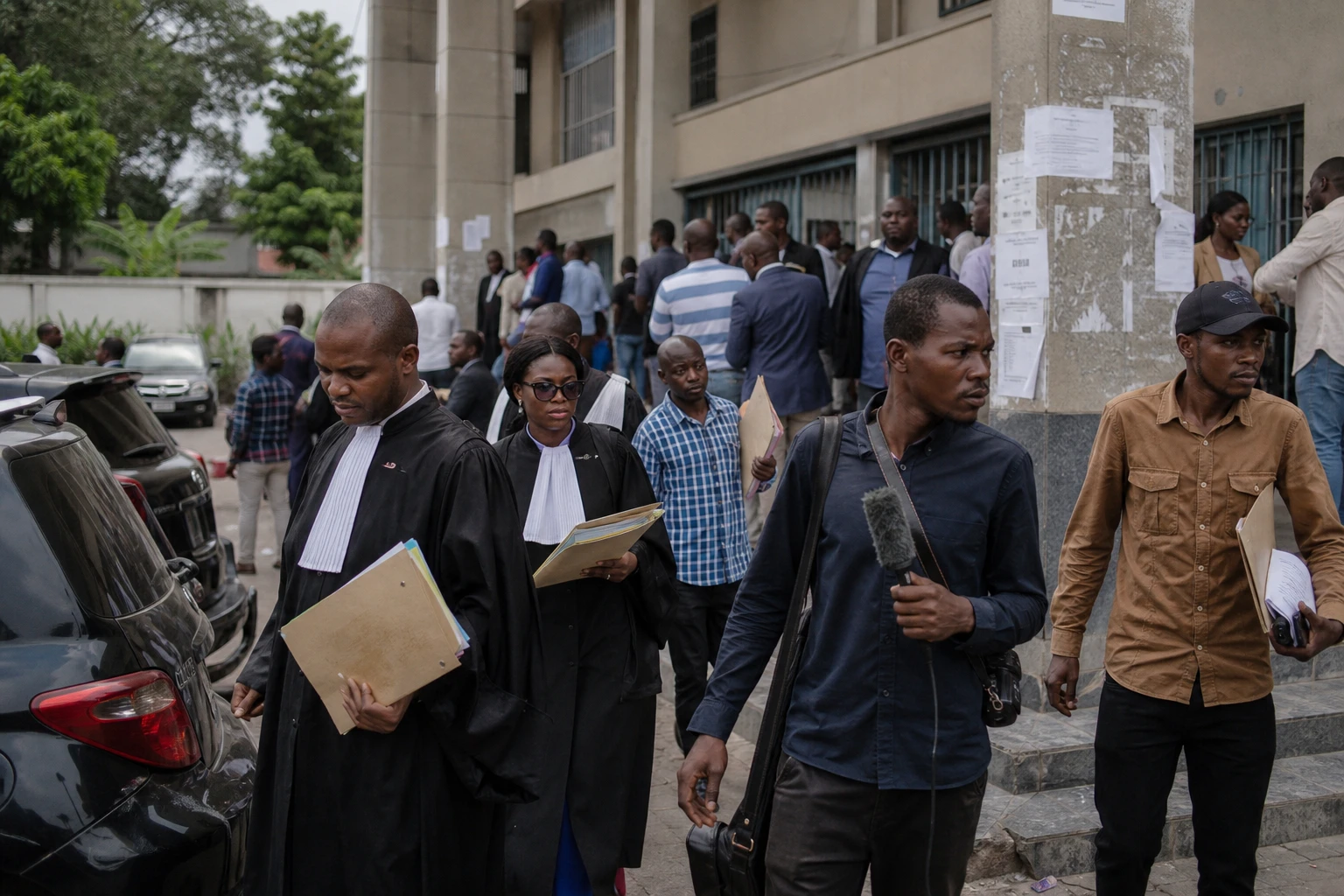
A sensitive case in a country where justice is under scrutiny
In Kinshasa, every postponement in a public embezzlement case goes beyond the courtroom. It touches on a broader expectation: that money intended for victims will reach them, without disappearing into administrative, political or banking channels. In the case of Constant Mutamba, the Democratic Republic of the Congo’s former justice minister, expectations are all the higher because the sums at stake come from a compensation mechanism created in response to an old regional conflict.
The debate is therefore not only about one man. It also concerns the ability of Congolese institutions to manage funds linked to reparations owed by Uganda for violations committed during the period of armed activities in the DRC, between 1998 and 2003. The International Court of Justice set those reparations at $325 million, to be paid in five annual instalments of $65 million.
What the case says, and why it matters
The ruling in the case against Constant Mutamba has been postponed to 18 September 2026 by the Superior Council of the Judiciary, after initially being scheduled for 9 September. Congolese media following the judicial case report that the former justice minister and Chançard Bolukola, then acting coordinator of FRIVAO, are facing prosecution in a case involving the alleged embezzlement of funds linked to compensation for victims.
FRIVAO, the Fund for the Repair and Indemnification of Victims of Illegal Activities by Uganda in the Democratic Republic of the Congo, was created in December 2019 to manage these reparations and compensate Congolese victims of abuses committed during the war. The ICJ confirmed the total amount of $325 million in February 2022, to be paid in five instalments of $65 million between 2022 and 2026. At the end of September 2026, Congolese authorities and media reported that Uganda had already paid about $260 million, while a final instalment remained due.
The Mutamba case comes amid an already heavy judicial climate. In September 2025, the Court of Cassation had sentenced him to three years’ hard labour in a separate case, this time involving a prison project in Kisangani and public funds valued at $19 million. That earlier conviction has heightened attention around the new trial, without prejudging its current outcome.
Beyond the trial, the question of public accountability
In a country where judicial infrastructure, public services and compensation for victims remain under pressure, the issue is not only whether to punish possible wrongdoing. It is also whether oversight mechanisms are actually working. When a compensation fund is intended to make amends to war victims, any lack of transparency fuels a double frustration: among citizens demanding accountability, and among victims waiting for tangible redress.
The issue also affects the image of a Congolese state seeking to project greater resolve in tackling embezzlement. In practice, that resolve must still prove itself on two fronts: transparency in financial flows and the genuine independence of judicial decisions. The verdict’s postponement therefore fuels both procedural caution and the impatience of public opinion, which is closely following cases involving prominent political figures.
For victims, the impact is immediate: every delay pushes back the prospect of effective compensation. For the state, the institutional challenge is to prove that a fund stemming from an international ruling can be administered transparently. For the judiciary, the case is a test of credibility in Kinshasa, a capital where embezzlement cases often carry political as well as legal significance.
A regional impact extending beyond the DRC
The FRIVAO case is a reminder that in Central Africa, the effects of regional wars continue to have legal and budgetary consequences years later. The ICJ’s decision on reparations owed by Uganda to the DRC shows that an armed conflict can lead, long after the fighting, to very tangible compensation mechanisms. But that promise is meaningful only if the money moves through a clear and verifiable process.
Across the continent, the case also speaks to other countries facing the same questions: how can reparations, reconstruction funds or compensation schemes be managed without allowing distrust to take hold? In the Great Lakes region and elsewhere, institutional credibility is often at stake in these technical cases, far removed from speeches but closely connected to victims’ everyday lives.
The next hearing announced for 18 September 2026 will show whether Congolese justice delivers a swift ruling or prolongs the wait. Either way, the heart of the case remains the same: the Democratic Republic of the Congo must show it can turn international reparations into real redress, rather than another episode of opacity.



