Algeria
 Egypt
 Libya
 Morocco
 Sudan
 Tunisia
 Benin
 Burkina Faso
 Cabo Verde
 Côte d'Ivoire
 Ghana
 Guinea
 Guinea-Bissau
 Liberia
 Mali
 Mauritania
 Niger
 Nigeria
 Senegal
 Sierra Leone
 The Gambia
 Togo
 Cameroon
 Central African Republic
 Chad
 DR Congo
 Equatorial Guinea
 Gabon
 Republic of the Congo
 São Tomé and Príncipe
 Comoros
 Djibouti
 Eritrea
 Ethiopia
 Kenya
 Madagascar
 Malawi
 Mauritius
 Mozambique
 Rwanda
 Seychelles
 Somalia
 South Sudan
 Tanzania
 Uganda
 Angola
 Botswana
 Eswatini
 Lesotho
 Namibia
 South Africa
 Zambia
 Zimbabwe
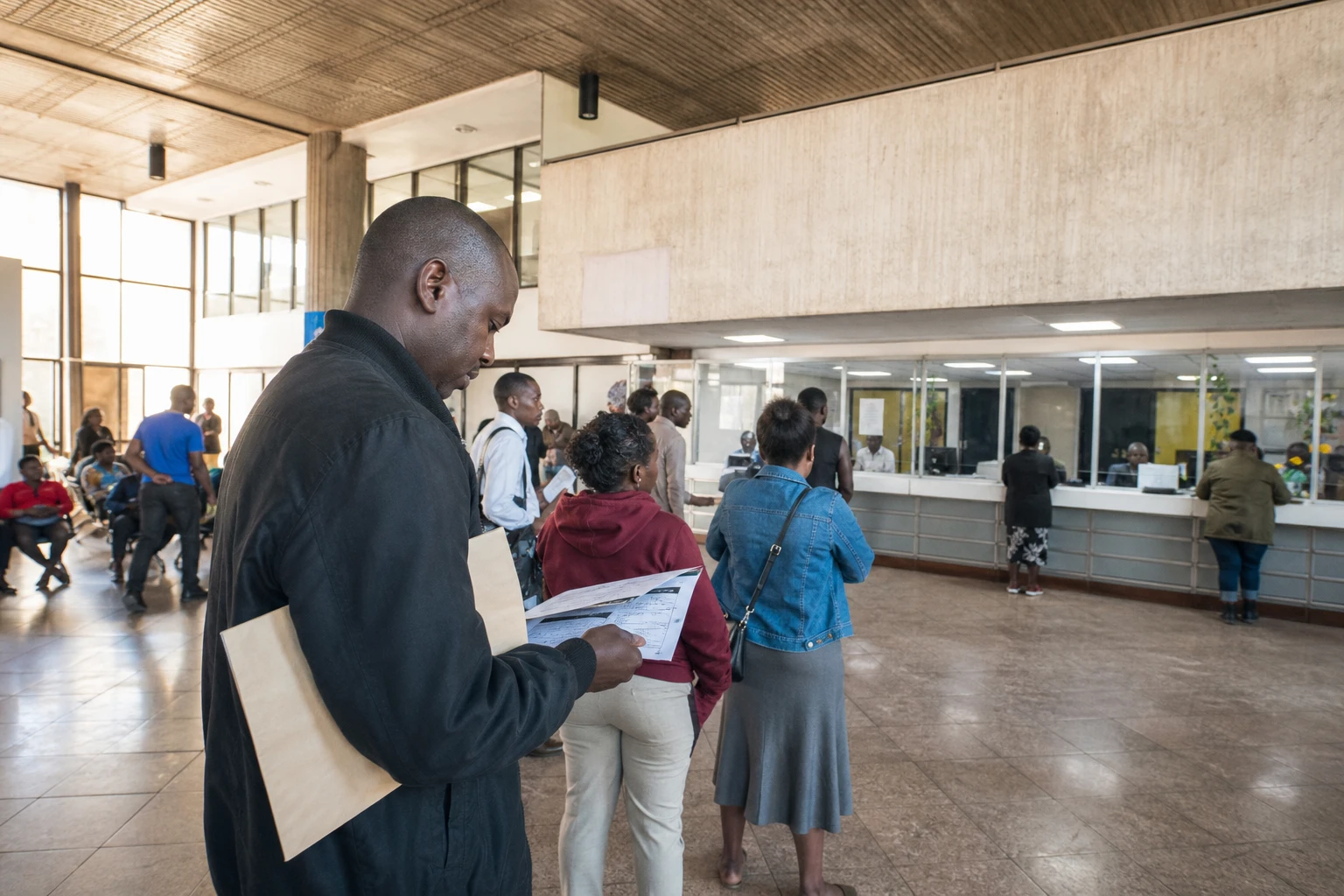
In Nairobi, regularisation suddenly takes a different tone
In Nairobi’s streets, an administrative announcement can quickly become a political signal. When small businesses run by foreigners are placed at the centre of public debate, it is not just paperwork that is at stake. So too are security, the right to work, and the place of neighbours from other East African countries.
Kenya, the region’s economic powerhouse, has long attracted traders, employees and investors. But pressure on the informal sector, which supports a large share of urban households, also fuels recurring tensions over competition, jobs and immigration controls. In this case, the regional framework matters as much as domestic policy: the East African Community, or EAC, guarantees in principle the free movement of people, labour, services and capital, while allowing states to impose restrictions for public order, security and public health.
What Nairobi decided, and why Burundi’s community was alarmed
On 2 September 2026, William Ruto called on foreigners running small businesses to close them, without clearly specifying the exact scope of the measure. In the days that followed, the Kenyan government turned this directive into a 90-day window to regularise immigration documents, work permits, business registrations and licences. The presidency also said that those in compliance would remain protected and that enforcement would be carried out by state agencies after the deadline.
This clarification was not enough to reassure everyone. In Nairobi, hundreds of Burundians went to their embassy to request travel documents or passes, fearing they could be targeted. Burundi has around 16,000 refugees and asylum seekers in Kenya, according to the initial material for the article, but the exact number of people affected by the presidential announcements remains difficult to establish independently. Several press reports have, however, confirmed the influx at the embassy and the fears of part of this community.
The Kenyan government, for its part, has stressed one point: this is not a collective expulsion, but a move to bring people into compliance. The Office of the President has reiterated that anyone conducting business in Kenya must meet immigration, work authorisation, registration and licensing requirements. This position is also defended by Kenyan public media, which have referred to a “regularisation period” before stricter checks.
The Kenya National Commission on Human Rights has called for the rules to be enforced on a human rights basis, saying it fears discriminatory effects and threats against foreigners. The institution has also reported cases of intimidation, discrimination and online attacks following the presidential statements.
A test for Kenya’s economic policy and regional integration
At its heart, the issue goes far beyond Burundian traders. Kenya has been debating a “local content” bill for several months, intended to better regulate foreign participation in certain parts of the economy and promote local procurement in supply chains. The Kenyan parliament has confirmed that the bill aims to create a framework ensuring investment generates more jobs and opportunities for domestic businesses.
But in Kenya, the balance is delicate. On one side, the government wants to respond to genuine anger among micro and small businesses, where many Kenyans say they are being outcompeted by foreign operators who are more mobile or better capitalised. On the other, an abrupt closure could erode trust, blur the line between regulation and stigmatisation, and put at risk families who depend on retail, services and the informal economy. In Nairobi’s low-income neighbourhoods, a poorly explained measure can immediately cause fear, while in the corridors of parliament it is presented as a compliance reform.
The EAC community framework further complicates the equation. The East African Community Common Market provides for non-discrimination against nationals of partner states and the right to enter, reside, work and establish a business, although these rights remain subject to national laws and grounds of security or public health. In practice, this means a state can check documents, but cannot turn a regularisation issue into a political signal against specific nationalities without creating regional friction.
Burundi, landlocked between Tanzania, Rwanda and the Democratic Republic of the Congo, is also monitoring the issue closely. For Bujumbura, this is not just a consular matter. It concerns the protection of its citizens, the movement of workers within East Africa and the ability of states to enforce—or not enforce—common rules. Burundi’s foreign minister has also publicly responded to threats against Burundians in Kenya, showing that the matter has already moved beyond the administrative sphere and into diplomatic relations.
At continental level, the episode is a reminder of a familiar tension in Africa: how to reconcile economic sovereignty, protection for small local operators and the freedom of movement sought by regional blocs and, more broadly, by the African Continental Free Trade Area. Kenya likes to present itself as a gateway to East Africa and beyond. But that gateway is credible only if regulation remains predictable, public communication is clear and people are fully protected.
What happens next will depend on two very concrete milestones: the end of the 90-day period set by the Kenyan government and how parliament translates—or does not translate—this political offensive into law. That is where the balance will be decided between protecting the local market, respecting regional commitments and ensuring the safety of foreign communities living in Nairobi, Mombasa and elsewhere in the country.