Algeria
 Egypt
 Libya
 Morocco
 Sudan
 Benin
 Burkina Faso
 Cabo Verde
 Côte d'Ivoire
 Ghana
 Guinea
 Guinea-Bissau
 Liberia
 Mali
 Mauritania
 Niger
 Nigeria
 Senegal
 Sierra Leone
 The Gambia
 Togo
 Cameroon
 Central African Republic
 Chad
 DR Congo
 Equatorial Guinea
 Gabon
 Republic of the Congo
 São Tomé and Príncipe
 Burundi
 Comoros
 Djibouti
 Eritrea
 Ethiopia
 Kenya
 Madagascar
 Malawi
 Mauritius
 Mozambique
 Rwanda
 Seychelles
 Somalia
 South Sudan
 Tanzania
 Uganda
 Angola
 Botswana
 Eswatini
 Lesotho
 Namibia
 South Africa
 Zambia
 Zimbabwe
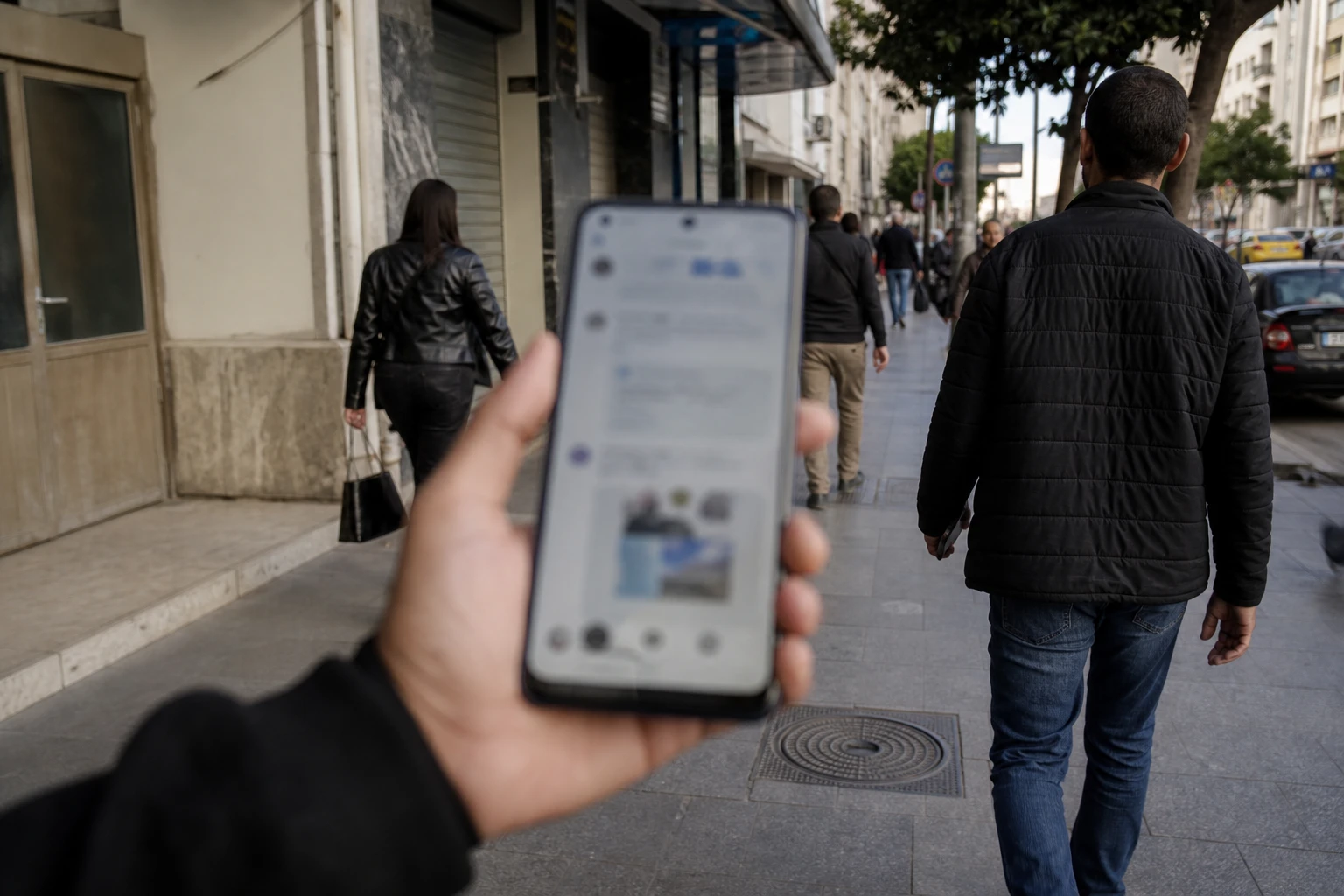
In Tunisia, a legal case says much more than an individual file
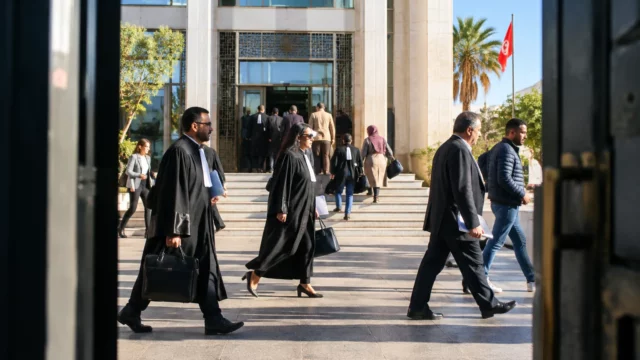
When a journalist ends up leaving his country because he risks prison for a publication, the debate goes beyond the individual. In Tunisia, Haythem El Mekki’s case raises a very concrete question: how far can judicial punishment go when a press or social media comment touches on power, institutions or public administration?
The answer can also be seen in the broader climate. Since 2022, Decree-Law 54, intended to regulate digital content and combat false information, has been regularly denounced by journalists and rights advocates as a tool for putting pressure on public expression. In a country where Tunis remains the nerve centre of the media, this tension weighs on the national press, as well as on the flow of information in the regions.
What is known about the sentence
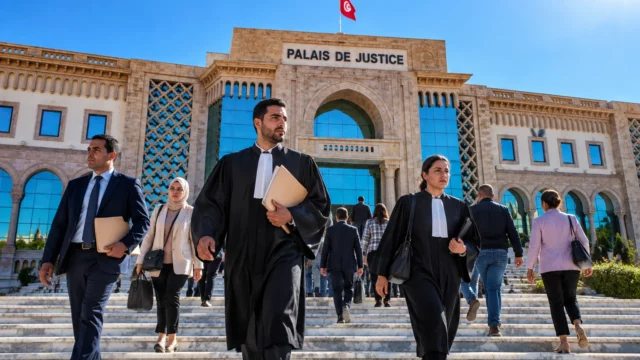
Haythem El Mekki, a Tunisian columnist and journalist, was sentenced on appeal to one year in prison by the Sfax Court of Appeal in July 2026, according to several press freedom and human rights organisations. Cross-checked sources indicate that the ruling concerns a social media post denouncing documented failings at Habib Bourguiba University Hospital in Sfax.
The journalist later explained that returning to Tunisia would expose him to serving the sentence. He chose exile in France, turning his case into a political signal as much as a personal one. His case joins a series of prosecutions targeting critical voices, in a context in which other Tunisian journalists and commentators have also faced questioning, arrest or conviction in recent months.
The issue is not only imprisonment. It also lies in the message sent to the entire profession: commenting on public affairs, pointing out a failing in a health service or sharing criticism on social media can now lead to court. In practice, this pushes newsrooms towards self-censorship, particularly when covering sensitive subjects such as security, public health or state affairs.
A country where press freedom is visibly in retreat
The El Mekki case is part of a broader sequence of events. RSF ranks Tunisia 137th out of 180 in its 2026 press freedom index, following a further deterioration in the media environment. The National Union of Tunisian Journalists has also warned of an unprecedented deterioration in working conditions between January 2025 and July 2026.
The crisis also affects the most ordinary issues in public life. In late August 2026, RSF reported that journalists covering the water crisis and social protests had faced obstruction. Such incidents show that pressure is not aimed only at editorial writers or well-known political figures. It also reaches field reporters, those who film, verify and report on citizens’ everyday lives.
In a country where Tunis concentrates most newsrooms, this tension is not confined to the capital. When the media retreat, areas far from major centres lose their ability to make local problems visible even more quickly. Health, water, public services, employment and prices then receive less coverage, even though they affect ordinary households first and foremost. This is where press freedom stops being an abstract issue.
What this means for Tunisians and the region
For the authorities, these prosecutions may appear to be a way of regaining control of the public sphere. But for society, they weaken an essential check on power. When journalists hesitate to cover a health scandal, an administrative decision or a local failure, Tunisians’ right to be informed is undermined. And without reliable information, public debate becomes poorer, slower and more vulnerable to rumours.
The judiciary is thus becoming a central battleground. Rights advocates denounce the use of laws relating to digital communications against statements that, in their view, amount to expressions of opinion or journalistic comment. In this context, Decree-Law 54 is at the heart of the controversy: the authorities present it as a regulatory instrument, while journalists see it as a tool of deterrence.
The implications are regional too. Tunisia continues to be watched across the Maghreb and beyond, because it was long seen as a laboratory for pluralism after 2011. The current retreat is a reminder that a democratic transition does not automatically protect freedom of information. On the contrary, gains can be rapidly undermined when checks and balances weaken and judicial proceedings replace public debate.
What to watch now
The next signal to watch is not just another verdict. It is whether the trend continues: more prosecutions of journalists, more frequent use of laws on digital content, and an even narrower public sphere in Tunis and the regions. In this context, Haythem El Mekki’s fate says less about one man’s path than about the state of a profession under pressure and a public debate still struggling to breathe.