Algeria
 Egypt
 Libya
 Morocco
 Sudan
 Tunisia
 Benin
 Burkina Faso
 Cabo Verde
 Ghana
 Guinea
 Guinea-Bissau
 Liberia
 Mali
 Mauritania
 Niger
 Nigeria
 Senegal
 Sierra Leone
 The Gambia
 Togo
 Cameroon
 Central African Republic
 Chad
 DR Congo
 Equatorial Guinea
 Gabon
 Republic of the Congo
 São Tomé and Príncipe
 Burundi
 Comoros
 Djibouti
 Eritrea
 Ethiopia
 Kenya
 Madagascar
 Malawi
 Mauritius
 Mozambique
 Rwanda
 Seychelles
 Somalia
 South Sudan
 Tanzania
 Uganda
 Angola
 Botswana
 Eswatini
 Lesotho
 Namibia
 South Africa
 Zambia
 Zimbabwe
Microfinance judged on its results on the ground
In Côte d’Ivoire, financial inclusion is no longer an abstract rallying cry. It is measured by whether a trader, a female farmer or a small workshop can obtain a straightforward loan, save without friction and move money without leaving their neighbourhood. This is precisely where microfinance comes into its own, according to the BCEAO, which defines it as a range of local services for people often distant from the traditional banking system.
Across the West African Economic and Monetary Union, the momentum has grown in scale. The Union’s Council of Ministers adopted a new regional financial inclusion framework for 2025-2030 on 3 April 2025. The BCEAO notes that the financial inclusion rate rose from 47% in 2016 to 72.3% at the end of 2023, with 196.4 million new bank, microfinance and electronic money accounts over the period.
Against this backdrop, the distinctions presented in Abidjan in June 2026 point to more than a simple league table. They show that institutions are now assessed on their ability to reach rural communities, women, small businesses and customers seeking digital services, as well as on their governance and transparency. This is a useful signal in a country where financing needs remain high, from central Abidjan to the agricultural regions inland.
What the five awards in Abidjan say
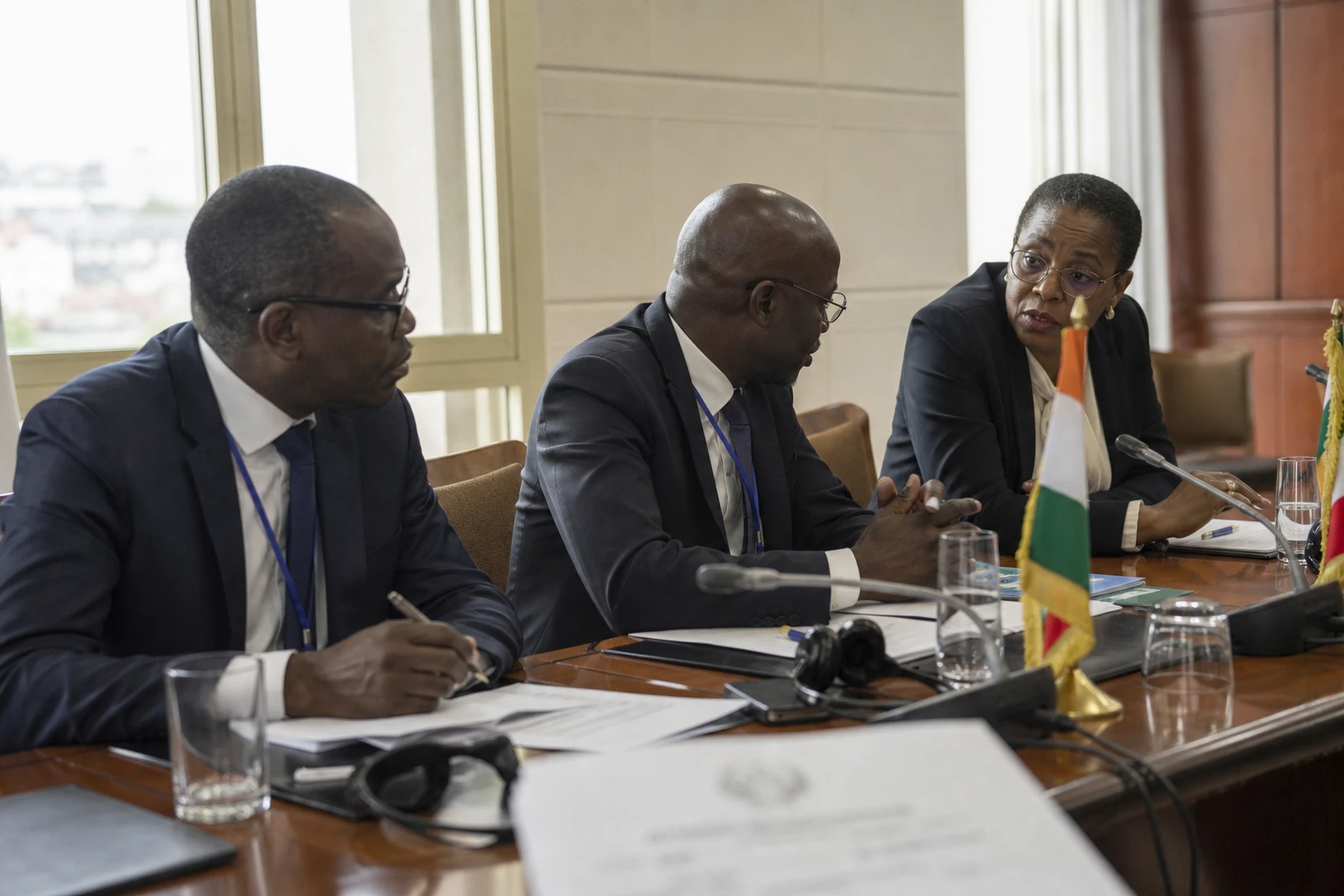
The 2026 National Microfinance Days were held on 25 and 26 June in Abidjan, under the theme of microfinance institutions’ contribution to financial inclusion and Côte d’Ivoire’s socio-economic development. The event brought together sector stakeholders at the CRRAE-UEMOA headquarters in Plateau. A delegation from the Ivorian Senate attended on 26 June 2026, a sign that the issue goes beyond the professional sphere.
On that occasion, Advans Côte d’Ivoire received five awards in the categories of financial inclusion, responsible finance, rural finance, institutional transparency and digital transformation. The information was confirmed by the group’s own communications, which also state that its Ivorian subsidiary received two awards highlighted on its institutional website in 2026: best microfinance institution for digital transformation and best microfinance institution for responsible finance.
The company says it has been present in Côte d’Ivoire since 2012. Its website lists a network of 27 branches and distribution points, more than 770 employees and over 250,000 clients, with an outstanding loan portfolio of more than CFA francs 85 billion. Another communication from the group, however, refers to more than 275,000 clients. The difference between these two figures calls for caution: it may reflect different measurement dates or a recent rounding adjustment.
The Advans group also says it is now focused on Africa and operates in Côte d’Ivoire, Cameroon, Ghana, the Democratic Republic of the Congo, Nigeria and Tunisia. This regional presence gives the awards won in Abidjan added significance. They recognise not just a local institution, but an operating model that seeks to combine national roots with group-wide discipline.
Why the awards matter to Côte d’Ivoire’s economy
The practical significance of these distinctions is first apparent from the clients’ perspective. A well-run microfinance institution is more than a loan counter. It must be able to finance short-term cash-flow cycles, support harvests, safeguard savings and reduce processing times. This is also the thinking behind Advans’s stated digital shift, with digital channels, a mobile app and partnerships with mobile money operators to bring services closer to customers. The group says these solutions are deployed in Côte d’Ivoire, Ghana and Nigeria, among other countries.
For rural communities, the issue is central. The BCEAO says the new regional financial inclusion strategy pays particular attention to women, young people, rural populations, SMEs and people with low levels of financial literacy. Côte d’Ivoire, meanwhile, remains dependent on agricultural value chains where the need for seasonal financing is high. In this context, the rural finance award presented in Abidjan is not a decorative label. It reflects an institution’s ability to respond to the realities of cocoa, cashew, rubber, palm oil or pineapple production, without requiring smallholders to provide guarantees beyond their reach.
In cities, the challenge is different but just as important. Small traders, artisans and informal entrepreneurs need flexible, fast and easy-to-understand tools. Microfinance then becomes both a buffer and a growth lever. At national level, its role complements that of the traditional banking system without replacing it. It can help channel local savings into productive activities rather than leave these flows outside the formal system.
These awards must also be viewed through the lens of governance. In a sector where trust is everything, institutional transparency is a strategic asset. The Advans group says it is committed to customer protection standards and aims to obtain certification for all its subsidiaries by the end of 2026. This approach matters in the competition between institutions, but above all for clients, who expect clear practices, transparent costs and better-explained lending processes.
A regional perspective beyond Côte d’Ivoire
Côte d’Ivoire holds a particular place in West African microfinance. The country combines a formal economy concentrated in Abidjan with a vibrant fabric of activity in secondary cities and agricultural regions. In such a setting, local institutions act as intermediaries between the banking world, telecoms operators and households. That is why the 2026 JNM, by focusing on financial inclusion and socio-economic development, resonated beyond the sector itself.
This period also says something about the balance of power in West Africa. Governments are pushing for greater access to financial services. Central banks want to strengthen stability. Microfinance institutions, for their part, are seeking to grow without losing their local reach. Between these three demands, the Advans Côte d’Ivoire awards illustrate a possible, but fragile, balance. The next stage will depend on execution: portfolio quality, risk management, the speed of digital services and the ability to reach customers outside major urban centres.
Across the continent, the challenge remains the same: to turn local finance into a tool for economic mobility, not merely a last resort. Microfinance cannot solve everything. But if it is well regulated, well governed and connected to digital technology, it can support thousands of small-scale activities that sustain African economies every day. The awards presented in Abidjan are a reminder that this effort is now being judged on performance, trust and the ability to serve customers long kept at a distance from the traditional financial system.