Algeria
 Egypt
 Libya
 Morocco
 Tunisia
 Benin
 Burkina Faso
 Cabo Verde
 Côte d'Ivoire
 Ghana
 Guinea
 Guinea-Bissau
 Liberia
 Mali
 Mauritania
 Niger
 Nigeria
 Senegal
 Sierra Leone
 The Gambia
 Togo
 Cameroon
 Central African Republic
 Chad
 DR Congo
 Equatorial Guinea
 Gabon
 Republic of the Congo
 São Tomé and Príncipe
 Burundi
 Comoros
 Djibouti
 Eritrea
 Ethiopia
 Kenya
 Madagascar
 Malawi
 Mauritius
 Mozambique
 Rwanda
 Seychelles
 Somalia
 South Sudan
 Tanzania
 Uganda
 Angola
 Botswana
 Eswatini
 Lesotho
 Namibia
 South Africa
 Zambia
 Zimbabwe
A country stripped of its bearings as war spills over
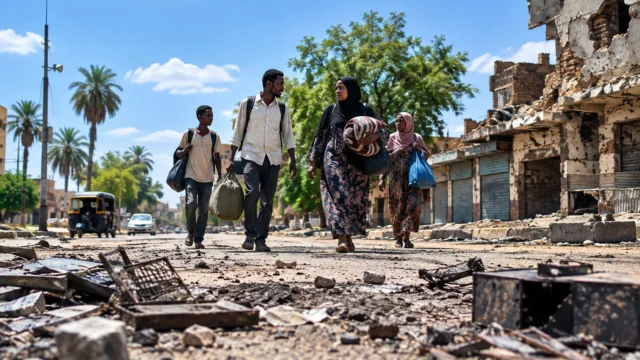
In Khartoum and across the rest of Sudan, the war can no longer be read solely on a military map. It is visible in closed schools, wrecked hospitals and families still forced to flee far from home, after more than three years of fighting between the Sudanese Armed Forces and the Rapid Support Forces. The scale of the shock is such that the country remains at the heart of the world’s gravest humanitarian crisis, with tens of millions of people in need of aid.
The Sudan file is also back at the centre of the human rights agenda in Geneva. Since 2024, the Human Rights Council has been examining the work of its independent fact-finding mission on Sudan, tasked with documenting violations committed since the conflict broke out in April 2023. The mission has already concluded that both parties violated international human rights law and international humanitarian law, with most of the reported acts amounting to war crimes.
From drone attacks to bombed hospitals
The latest alarm raised by the UN comes against this backdrop. Volker Türk, the UN High Commissioner for Human Rights, is calling for an immediate ceasefire, an end to external interference and a return to civilian rule. His warning is based on the fact-finding mission’s findings: the growing use of long-range drones, strikes against civilians and the destruction of property protected under the laws of war.
UN investigators describe a war that too often targets places where people live their everyday lives. They cite homes, schools, hospitals and markets hit by drone strikes. They attribute to the RSF, in particular, an attack on a kindergarten and a hospital in Kalogi that reportedly killed 114 people, including 60 children. In another case, they report that a Sudanese Armed Forces strike on Ad-Da’ein University Hospital allegedly killed at least 70 people. These figures remain estimates presented by investigators, but they convey the scale of violence inflicted on civilians.
In a broader report published in 2025, the UN mission also notes that both sides have been linked to repeated violations, including deliberate attacks on civilians and protected infrastructure. It also records an increase in RSF drone strikes on civilian areas, particularly in Port Sudan, in the Red Sea State. The Office of the High Commissioner considers that such patterns may amount to war crimes.
Khartoum pays the price of a dismantled health system
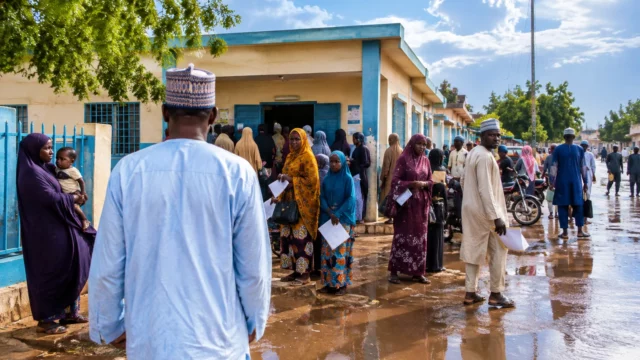
The health crisis adds another layer of vulnerability to a country already exhausted. The World Health Organization warns that Sudan’s health system has been severely degraded, with repeated attacks on facilities, staff and patients. In its 2026 assessment, WHO estimates that 34 million people need aid and 21 million lack access to health services. It also reports continuing outbreaks, from measles to malaria, in several states, including Khartoum.
In Khartoum, the country’s administrative and medical heart, the damage is profound. WHO recalls that Sudan’s health system depended heavily on the capital before the war, amplifying the domino effect when fighting took hold there. A 2025 report had already found that 38% of monitored health service delivery units in several states were completely damaged or out of service. Sudanese media later documented the slow reopening of some Khartoum hospitals, while Sudan’s Ministry of Health estimated that 90% of private hospitals in Khartoum State had been damaged.
This disruption to healthcare is changing daily life far beyond the front lines. It leaves displaced families more vulnerable, delays emergency treatment and encourages preventable diseases. It also weighs on urban household incomes, as families have to pay for care that is more expensive and harder to find, while informal work remains the main social safety net in many Sudanese cities.
Mass displacement, cautious returns and a protracted war
Sudan remains one of the world’s largest centres of forced displacement. The IOM reported a peak of 11.5 million internally displaced people in January 2025, followed by a decline linked to returns to some areas retaken by the army. As of 30 September 2025, the agency still counted about 9.6 million people displaced within the country. It also said in 2026 that the country had passed the threshold of 11.6 million displaced people at the height of the crisis, before numbers fluctuated with military developments.
These movements do not mean a return to normality. In several regions, families are going back to damaged homes without reliable electricity, safe water or dependable public services. WHO notes that cities such as Khartoum and towns in the east are receiving returnees in areas still contaminated with explosive remnants of war. The challenge is therefore not only military. It is also administrative, health-related and economic.
Neighbouring states are also feeling the conflict’s repercussions. Flows into Egypt, Chad, South Sudan and Ethiopia have put pressure on reception systems, border markets and public services. At continental level, the Sudan conflict weighs on the African Union’s priorities, regional diplomacy and the security of the Sahel-Sudan belt. The UN’s warning is a reminder that a ceasefire is not only a humanitarian imperative; it is also a condition for the institutional survival of a state whose capital, Khartoum, has been destabilised over the long term.
What happens next will depend on the warring parties’ ability to curb the use of drones, protect civilians and allow aid in. For now, reports from the United Nations, WHO and IOM paint the same picture: an exhausted country, a battered capital and a war that continues to erode Sudan’s social fabric, far beyond the front line.