Algeria
 Egypt
 Libya
 Morocco
 Sudan
 Tunisia
 Benin
 Burkina Faso
 Cabo Verde
 Côte d'Ivoire
 Ghana
 Guinea
 Guinea-Bissau
 Liberia
 Mali
 Mauritania
 Nigeria
 Senegal
 Sierra Leone
 The Gambia
 Togo
 Cameroon
 Central African Republic
 Chad
 DR Congo
 Equatorial Guinea
 Gabon
 Republic of the Congo
 São Tomé and Príncipe
 Burundi
 Comoros
 Djibouti
 Eritrea
 Ethiopia
 Kenya
 Madagascar
 Malawi
 Mauritius
 Mozambique
 Rwanda
 Seychelles
 Somalia
 South Sudan
 Tanzania
 Uganda
 Angola
 Botswana
 Eswatini
 Lesotho
 Namibia
 South Africa
 Zambia
 Zimbabwe
A case that above all exposes the fragility of the moment
In Niamey, an arrest can quickly go beyond the simple judicial sphere. When it targets a well-known political figure, in the aftermath of an armed episode in the capital, it immediately becomes a test of the chain of command, state transparency and public trust.
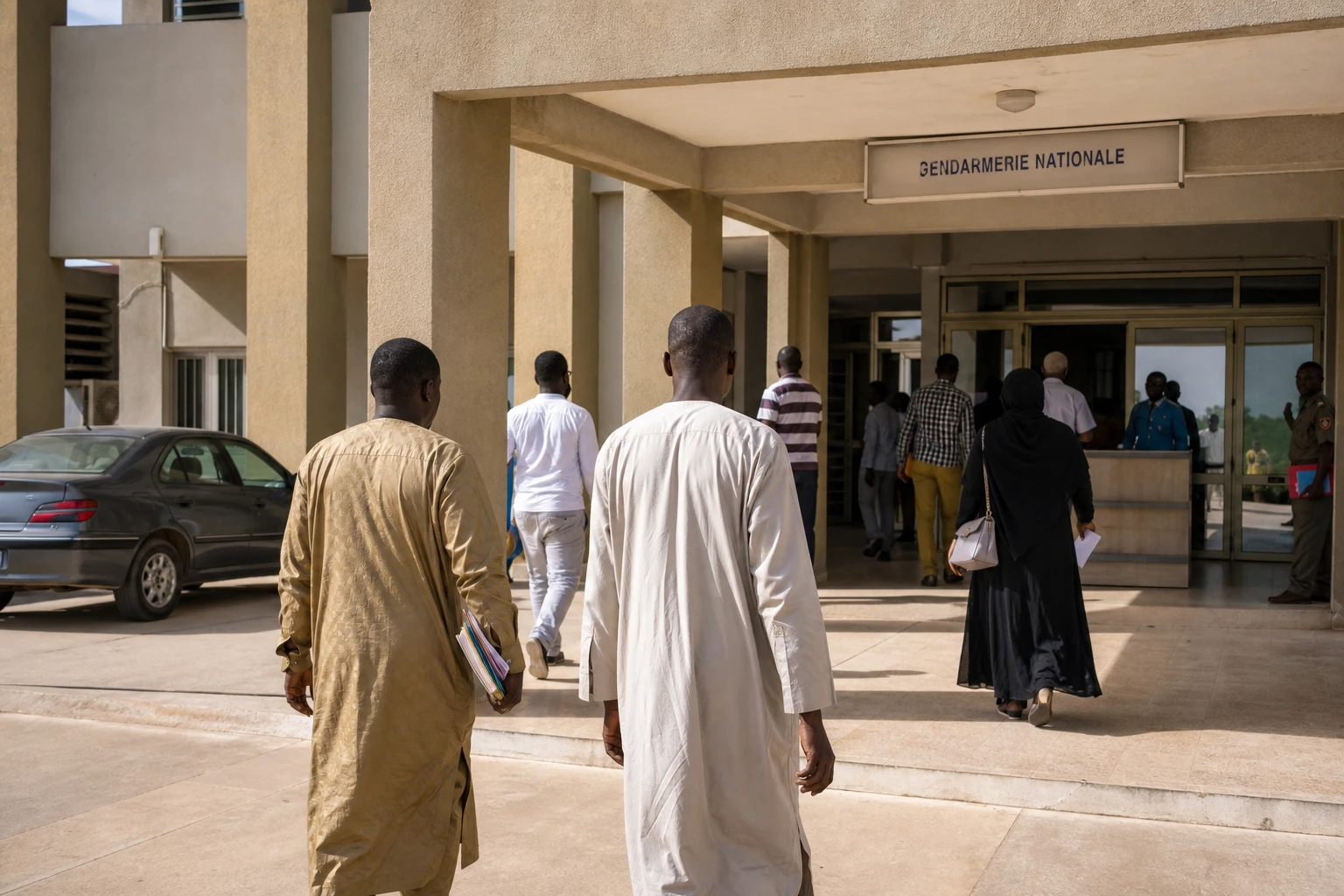
It was in this climate that Kalla Moutari, Niger’s former defence minister and former MP for Dakoro, was taken to the gendarmerie after being detained in Dakoro, in the Maradi region, and then transferred to Niamey. Several sources say he is well, but no official explanation has been made public so far.
A former pillar of power at the heart of a tense security landscape
Since the coup of 26 July 2023, Niger has been led by the National Council for the Safeguard of the Homeland, with a political agenda centred on sovereignty, domestic security and the reshaping of regional alliances. At the same time, the country left ECOWAS on 29 January 2025 and is now part of the Confederation of Sahel States, alongside Burkina Faso and Mali.
This regional shift matters. It changes diplomatic reference points, but does not resolve domestic fragilities. In Niamey, the authorities still have to deal with the effects of a more exposed army, a reshaped political scene and public opinion alert to the slightest case involving former officials of the overthrown civilian regime.
Kalla Moutari is no marginal figure in this story. He headed the Ministry of Defence between 2016 and 2019, under President Mahamadou Issoufou, after also holding other portfolios. In April 2025, he was among the civilian and military figures released following recommendations made by the national conference held in February that year, in the name of forgiveness and reconciliation among Nigeriens.
What is established and what remains unclear
The corroborated facts are straightforward. The arrest took place on 1 September 2026. It came a few days after the mutiny that took place on the night of 28 to 29 August in Niamey, around Base 101, near Diori Hamani International Airport. The Ministry of Defence spoke at the time of a “mood-driven protest” by soldiers who had attempted to hold their comrades hostage and fire shots at sensitive sites in the capital. The government later described the episode as an attempted destabilisation.
By contrast, no public link has been established between this military affair and Kalla Moutari’s fate. That is the heart of the problem. Until an official statement specifies the reasons for his arrest, any definitive interpretation would be premature. In such a tense context, the absence of an explanation fuels speculation, but does not justify certainty.
This caution is all the more necessary because, since 2023, Niger has already seen a succession of arrests, releases and political realignments involving figures from the former system. The release from prison of several former ministers in 2025 was presented as a gesture of political easing. Two years later, the reappearance of a former defence minister in a case whose details have not been disclosed shows that the past has not been entirely put behind the country.
Why this case goes beyond one man
For the authorities, this arrest may serve a dual purpose: to show that the security apparatus remains mobilised after the mutiny, and to remind people that former civilian power networks remain under scrutiny. For the public, it raises another, more concrete question: is the country entering a phase of institutional clarification, or a period of still opaque score-settling?
The answer will depend on three things. First, the state’s ability to communicate clearly about the facts. Second, how the judiciary or military apparatus handles the case. Finally, whether there is a link between this arrest and the tensions revealed in Niamey at the end of August. Without these elements, the case remains open.
It also sheds light on a broader balance of power. Since the reshaping of the Sahel region, Niamey has sought to project a line of sovereignty and firmness while stabilising its own domestic front. Yet in Sahelian capitals, external security and internal cohesion are now closely linked. A crisis in a barracks can quickly become a matter of state.
A developing story to follow in Niger and the Sahel
At the continental level, this case is a reminder that military transitions are shaped not only by speeches or regional alliances. They are also measured by how governments treat their former ministers, officers and opponents. Niger, whose recent trajectory has already affected the balance within ECOWAS, remains a political barometer for West Africa.
What happens next will be followed in Niamey, but also in Ouagadougou and Bamako, where the Confederation of Sahel States is seeking to build a common security framework. In this context, every signal sent by the Nigerien authorities on military discipline, justice and the handling of former officials will carry weight beyond the country’s borders.
For now, one fact stands out: Kalla Moutari is in the hands of the gendarmerie in Niamey, and the reasons for his arrest have not been made public. In a Niger marked by unstable balances, this silence weighs almost as heavily as the event itself.