
 Algeria
 Libya
 Morocco
 Sudan
 Tunisia
 Benin
 Burkina Faso
 Cabo Verde
 Côte d'Ivoire
 Ghana
 Guinea
 Guinea-Bissau
 Liberia
 Mali
 Mauritania
 Niger
 Nigeria
 Senegal
 Sierra Leone
 The Gambia
 Togo
 Cameroon
 Central African Republic
 Chad
 DR Congo
 Equatorial Guinea
 Gabon
 Republic of the Congo
 São Tomé and Príncipe
 Burundi
 Comoros
 Djibouti
 Eritrea
 Ethiopia
 Kenya
 Madagascar
 Malawi
 Mauritius
 Mozambique
 Rwanda
 Seychelles
 Somalia
 South Sudan
 Tanzania
 Uganda
 Angola
 Botswana
 Eswatini
 Lesotho
 Namibia
 South Africa
 Zambia
 Zimbabwe
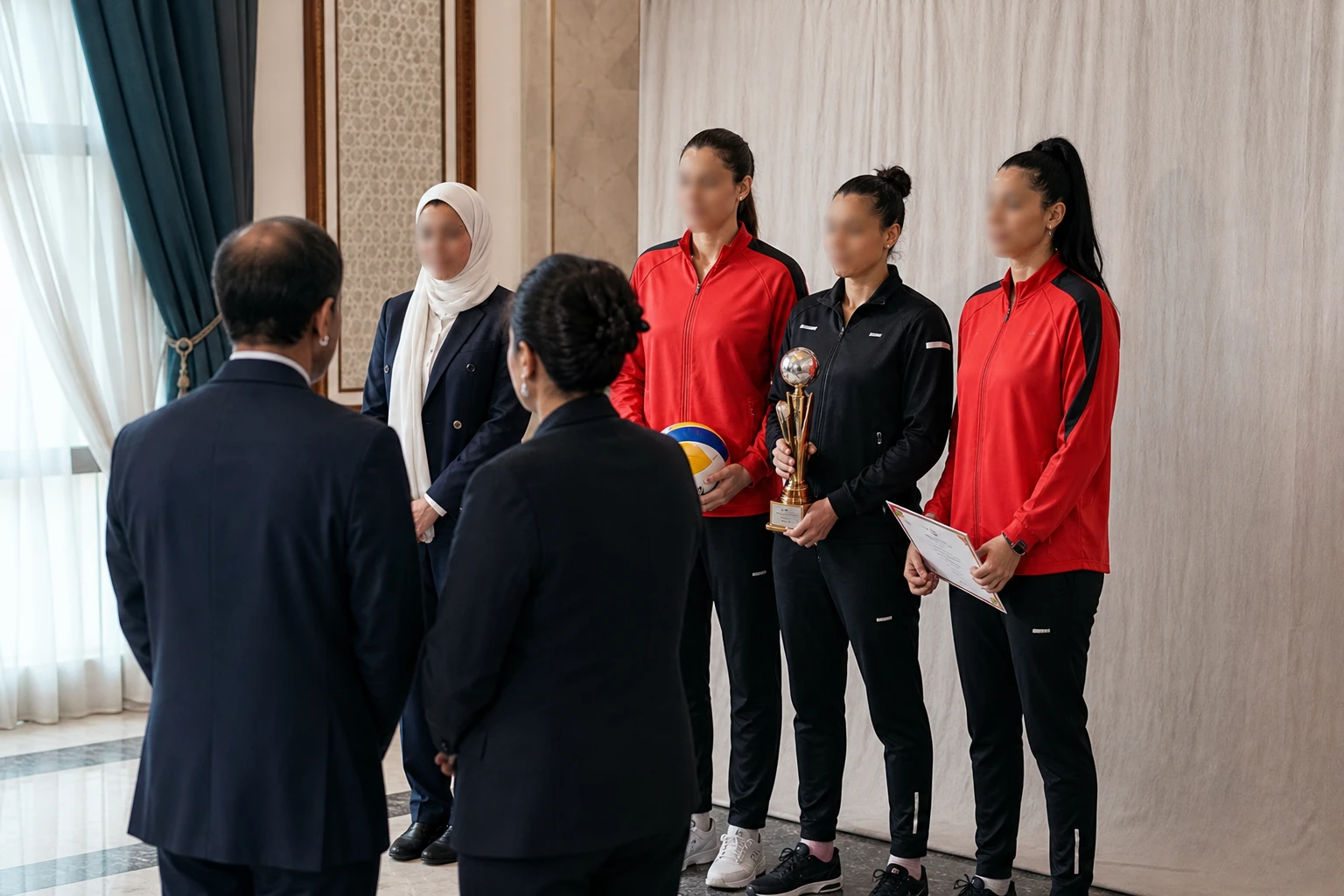
A final that said more than the score
In Nairobi, more than a continental title was at stake. There was also a place on the road to the Los Angeles 2028 Olympic Games and the 2027 Women’s World Cup. In that context, Egypt did far more than win: they delivered a display of control, finishing the tournament without losing a single set.
Egypt’s success takes on another dimension because it was built against Kenya, the host nation and a historic force in African women’s volleyball. The Kenyans remained the continent’s most decorated nation in the competition, with ten titles, while Egypt returned to the summit after consistent but less dominant campaigns since their last title in 2003.
The tournament also confirmed that African women’s volleyball has entered a more competitive phase. Official announcements said 16 teams were present in Nairobi, competing at two venues in the Kenyan capital, the Kasarani Indoor Arena and the Ulinzi Sports Complex. This increase in participation broadens the continent’s pool of competitors beyond the traditional contest between a few established powers.
Egypt, African champions and qualified for major events
In the final, Egypt beat Kenya 3-0, with scores of 25-22, 25-15 and 25-15. The victory capped a perfect campaign: six wins in six matches, according to results published by Volleyball World, all secured in three sets. The Egyptians’ fourth continental title, after those of 1976, 1989 and 2003, takes them directly to Los Angeles 2028 and also guarantees them a place at the 2027 Women’s World Cup.
This qualification is worth far more than a ticket. For an African national team, reaching these major stages means facing the tactical, physical and mental standards of the world’s elite more often. Egypt is therefore entering a cycle in which continental success becomes a springboard for international progress, rather than an end in itself.
The final also put the spotlight on Mariam Metwally, named the tournament’s best player. The Egyptian attacker summed up her ambition around one clear goal: the Olympic Games. Her individual award above all confirms the standing Egyptian players have earned at major African events, combining club experience with their growing influence in the national team.
A broader continent, a more contested hierarchy
Nairobi did not just crown a team. The tournament sent clear signals about the development of African women’s volleyball. Egypt, Kenya and Cameroon secured the continent’s three places at the 2027 Women’s World Cup. Cameroon took bronze, confirming the lasting presence of several centres of excellence across the continent.
Beyond this trio, other teams are making progress. Rwanda reached the semi-finals. Algeria, Tunisia, Ghana, Uganda, Burkina Faso, Burundi, Mali, Morocco, Nigeria, Senegal and Zambia were also in the official draw. This narrowing of the gap makes each edition less predictable and forces federations to strengthen preparation, domestic competition and technical coaching.
Egypt’s case is revealing. The country combines powerful clubs, a deep pool of technical talent and regular exposure to international competitions. This foundation helps players join the national team with a high tempo of play. It is an important advantage in a North African region where federations are seeking to turn club success into sustained performance at national-team level.
Kenya, for its part, remains a stronghold of African volleyball. Playing at home fuelled popular support for the Malkia Strikers, but the final showed the gap that still emerges when pressure is added to tactical demands. The result does not undermine their status; it simply shows that continental competition has intensified and that titles can no longer be won on reputation alone.
What Nairobi changes for African volleyball
The Nairobi tournament illustrates a broader shift in African sport: progress to a higher level depends on better-organised competitions, more modern tools and more regular movement of players between local leagues, continental clubs and national teams. Official reports highlighted the use of video challenge, live statistics and the e-score sheet, bringing refereeing and match tracking closer to international standards.
This progress also has institutional significance. The African Volleyball Confederation and the International Volleyball Federation are now working in a more continuous framework: zonal competitions, a continental tournament, then a pathway to global events. The challenge for Africa is clear. It is no longer just a matter of organising championships, but of building a performance pipeline that enables women’s teams to remain at the highest level.
In this context, Egypt is sending a strong signal across the continent. Their Nairobi title, won without dropping a single set, shows that an African national team can combine discipline, depth on the bench and global ambition. For the African Volleyball Confederation and national federations alike, the next step will be to turn this momentum into more consistent results against the leading nations of Asia, Europe and the Americas.
Finally, the continental significance is political in the sporting sense. Every global qualification, every African podium finish and every better-structured competition raises the profile of the continent’s women athletes. In Nairobi, African women’s volleyball showed that it is not merely growing. It is also beginning to organise itself to have a greater impact beyond its borders.



