Algeria
 Egypt
 Libya
 Morocco
 Sudan
 Tunisia
 Benin
 Burkina Faso
 Cabo Verde
 Côte d'Ivoire
 Ghana
 Guinea
 Guinea-Bissau
 Liberia
 Mali
 Mauritania
 Niger
 Nigeria
 Senegal
 Sierra Leone
 The Gambia
 Togo
 Cameroon
 Central African Republic
 Chad
 DR Congo
 Equatorial Guinea
 Gabon
 Republic of the Congo
 São Tomé and Príncipe
 Burundi
 Comoros
 Djibouti
 Eritrea
 Ethiopia
 Madagascar
 Malawi
 Mauritius
 Mozambique
 Rwanda
 Seychelles
 Somalia
 South Sudan
 Tanzania
 Uganda
 Angola
 Botswana
 Eswatini
 Lesotho
 Namibia
 South Africa
 Zambia
 Zimbabwe
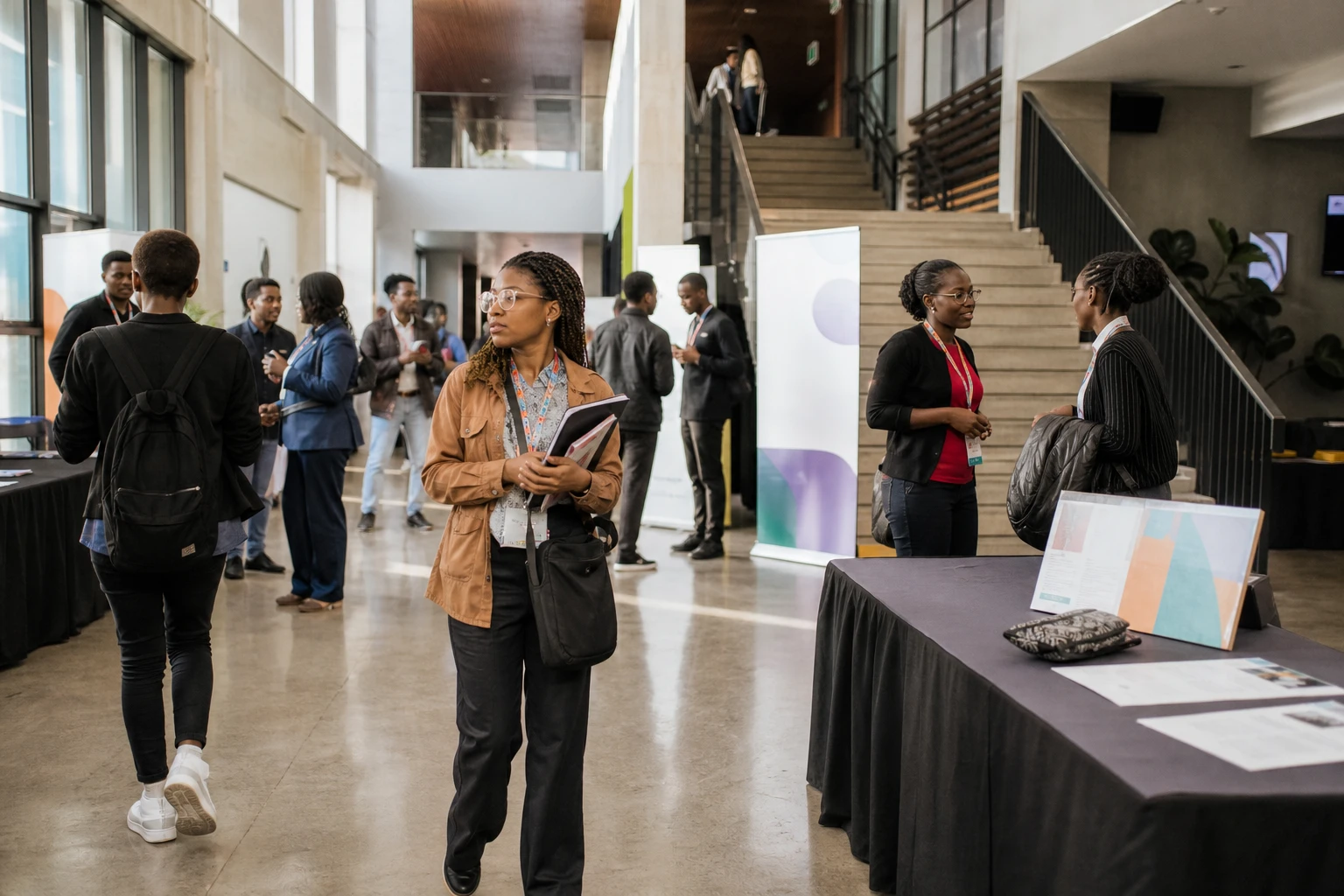
In Nairobi, the debate took a practical turn
In conference rooms and laboratories alike, the same question keeps coming up: how can more young African women be brought into science, and then encouraged to stay? In early September 2026, the Women in STEM Africa Summit put the issue back at the centre of the continental agenda in Nairobi, with more than 1,500 participants expected, workshops, meetings with recruiters and even a prize of 500,000 Kenyan shillings for the best project presented. Kenya’s choice as host was no accident. The country has established itself as an important innovation hub in East Africa, while regional institutions and UNESCO are stepping up initiatives on digital skills and scientific training.
The debate extends beyond the Kenyan capital. It concerns ECOWAS, SADC, ECCAS, the EAC and, more broadly, the African Union, which for several years has promoted a strategic view of STEM — science, technology, engineering and mathematics. From this perspective, girls are not a group to be “included” as a matter of moral principle. They represent a pool of skills for economies seeking to move up the value chain, create formal jobs and retain talent. The stakes are economic as well as social.
Strong educational attainment, followed by a sharp drop in careers
Available data reveal an African paradox. The continent has the world’s highest proportion of women graduating in STEM: 47%, compared with 42% in Europe and 39% in North America, according to a review cited by McKinsey, drawing on UNESCO and Times Higher Education. But this university advantage quickly fades. Women account for just 23% to 30% of tech jobs in sub-Saharan Africa. In leadership roles, their share falls to less than 12%.
| Indicator | Approximate figure | Source |
|---|---|---|
| Women among STEM graduates in Africa | 47% | McKinsey, based on UNESCO and Times Higher Education |
| Women in tech jobs in sub-Saharan Africa | 23% to 30% | McKinsey |
| Women in tech leadership roles | Less than 12% | McKinsey |
| African tech start-ups with a woman CEO | About 10% | McKinsey |
| Funding raised by women-led tech start-ups in 2024 | 1.0% | McKinsey / Africa: The Big Deal |
This gap does not stem from a single barrier. It starts early, often in primary school. UNESCO notes that gender stereotypes, a lack of visible role models and the weight of social norms still hold girls back from pursuing science. The organisation also highlights a very practical issue: in many settings, domestic responsibilities weigh more heavily on girls from childhood, especially in rural areas.
Learning difficulties make the situation worse. The World Bank says that 87% of children in sub-Saharan Africa are affected by “learning poverty”, meaning they cannot read and understand a simple text by the age of 10. For years, the same institution has also highlighted the region’s weak reading and mathematics outcomes, even as school enrolment has risen. In other words, the problem is not just access to school; it is also the quality of foundational learning, which determines whether pupils can later enter science disciplines.
Family pressures, funding and the glass ceiling
Once their studies are over, many women hit another wall: working life. McKinsey surveyed 220 women working in tech across several African markets. Nearly a quarter cited gender bias and a lack of opportunities to develop their skills as obstacles to career progression. The survey also found that family responsibilities remain a major constraint, pushing some women to leave the sector too soon.
The funding gap is even clearer. In 2024, tech start-ups founded or co-founded by women raised only about 1% of total funding in Africa, or $21 million, compared with 94% for ventures led by men. This imbalance is not just a matter of venture capital. It also reveals who has access to networks, mentors, investors and the first cheques capable of helping a business grow. In the digital ecosystem, money does more than reward an idea; it also signals trust. And those relationships remain heavily gendered.
Representatives of institutions and companies in Nairobi stressed another point: visibility. Without women working in laboratories, on boards, in product teams or at investment funds, young girls have few role models. The summit brought together public officials, academics, engineers, recruiters and entrepreneurs for precisely this reason. Networking matters. In Africa, where career paths often depend on affiliations, recommendations and the flow of information, visibility is already a form of access.
What this means for African public policy
The issue is not limited to equality between women and men. It affects productivity, digital sovereignty and governments’ ability to train a workforce suited to the data economy, artificial intelligence and cybersecurity. UNESCO now explicitly links girls’ and women’s participation to digital skills, while the African Union and its partners point out that young people will make up a very large share of Africa’s workforce in the years ahead. If this generation does not acquire the right skills, the demographic dividend could turn into social frustration.
The regional perspective also matters. In East Africa, governments are investing in digital hubs, higher education and public-private partnerships. But without childcare policies, targeted scholarships, science guidance from primary school onwards and action to tackle recruitment bias, progress will remain uneven. The message across the continent is clear: Africa does not lack female talent. It has a problem converting talent into careers, and careers into decision-making power. That is where the next stage will be shaped.
The Nairobi summit therefore points to a clear course of action. Countries seeking to accelerate progress will need to act at three levels: schools, businesses and funding. Only then will girls who succeed in science stop disappearing as they enter the labour market. And only then will African innovation cease to be built with just half of its talent.