Algeria
 Egypt
 Libya
 Morocco
 Sudan
 Tunisia
 Benin
 Burkina Faso
 Cabo Verde
 Côte d'Ivoire
 Ghana
 Guinea-Bissau
 Liberia
 Mali
 Mauritania
 Niger
 Nigeria
 Senegal
 Sierra Leone
 The Gambia
 Togo
 Cameroon
 Central African Republic
 Chad
 DR Congo
 Equatorial Guinea
 Gabon
 Republic of the Congo
 São Tomé and Príncipe
 Burundi
 Comoros
 Djibouti
 Eritrea
 Ethiopia
 Kenya
 Madagascar
 Malawi
 Mauritius
 Mozambique
 Rwanda
 Seychelles
 Somalia
 South Sudan
 Tanzania
 Uganda
 Angola
 Botswana
 Eswatini
 Lesotho
 Namibia
 South Africa
 Zambia
 Zimbabwe
Forécariah, a signal that extends beyond one prefecture
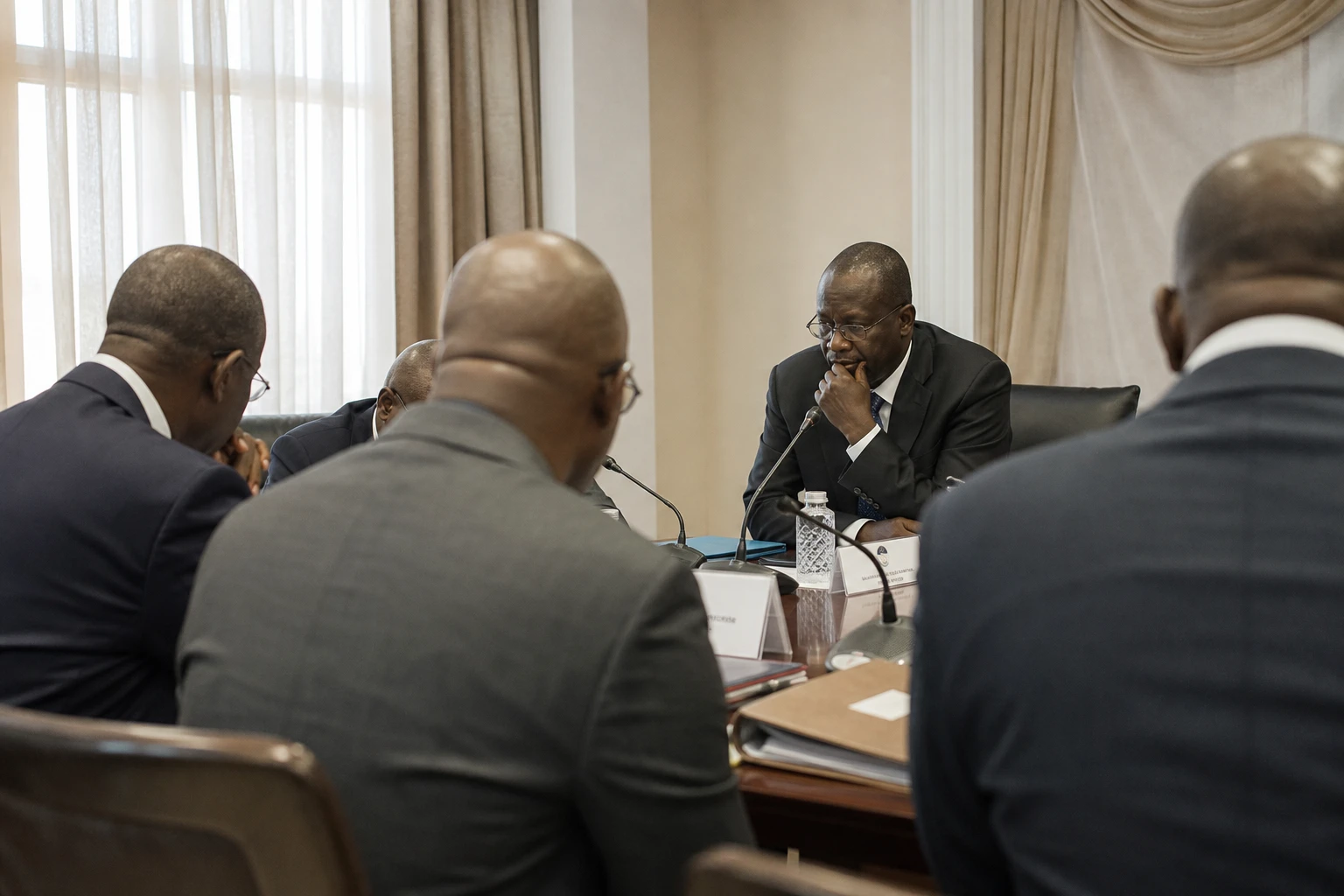
In Sabakhouré, in the sub-prefecture of Allassoyah, the discovery of six bodies in a pit has brought back to the fore a concern that has become political in Guinea: what happens when disappearances go without a clear answer? In a country where public confidence also depends on the state’s ability to identify the dead, the case carries implications far beyond Forécariah, about 100 kilometres from Conakry.
The context is a transition that has already reshaped the institutional landscape. Guinea adopted a new Constitution in September 2025, then held a referendum, a presidential election and legislative elections in 2025 and 2026. The World Bank also notes that the dissolution of 40 political parties on 7 March 2026 narrowed the party political space and fuelled opposition criticism over pluralism.
On 24 August 2026, young people collecting firewood alerted the authorities after discovering six bodies, all described as men, with their eyes blindfolded and hands tied. Initial reports indicate that the Forécariah prosecutor went to the scene, the bodies were removed and transferred to the prefectural hospital, and an investigation was opened. A regional and prefectural defence and security commission later inspected the site.
This chronology matters. It shows that in Guinea, the judicial handling of a violent incident now plays out as much on the ground as in public opinion. When victims’ identities are not established immediately, every hour without an answer fuels suspicion, particularly in a country marked by several reported cases of disappearances in recent years. Local and judicial authorities therefore have an interest in acting quickly, not only for the investigation but also to prevent silence from becoming a participant in the case in its own right.
Opposition, justice and the battle over the public narrative
The case has taken on national significance because it touches on security, justice and political speech. Cellou Dalein Diallo, a leading figure in Guinea’s opposition, has called for investigations and highlighted disappearances that he says remain unresolved in the public domain. At the same time, he denies having had any exchange with magistrate Algassimou Diallo, who is at the centre of an audio recording circulated on social media and presented as a conversation between the two men. The recording’s authenticity has not been established in the publicly available information.
Algassimou Diallo’s name entered the debate after his dismissal on 20 August 2026 by the Supreme Council of the Judiciary for what were deemed serious breaches of his duties as a magistrate. In this climate, the audio case goes beyond a private controversy. It becomes a test of the robustness of procedures, the protection of judicial integrity and the institutions’ ability to distinguish a disciplinary sanction from a political battle.
Cellou Dalein Diallo has also reframed the issue in terms of civil liberties. He says the Union of Democratic Forces of Guinea, or UFDG, continues to exist despite its administrative dissolution, even though some of its structures are now based abroad. The party was among the 40 organisations dissolved in March 2026, a decision that, according to the World Bank, affected several major political organisations. The Inter-Parliamentary Union, for its part, notes that the opposition boycotted the legislative elections on 31 May 2026.
This point is essential to understanding the current balance in Conakry. When a major opposition party loses its legal recognition, the debate is no longer only about its internal future. It concerns the representation of a section of the electorate, electoral competition and the credibility of the institutions responsible for organising elections. The Directorate General of Elections did confirm the inauguration of the first legislature of the Fifth Republic after the triple election on 31 May 2026, but the process took place without the main opposition parties.
An economy driven by mining, with social expectations undiminished
On the economic front, Guinea is making progress with strong figures, but remains heavily dependent on the extractive sector. The World Bank estimates that growth rose from 5.4% in 2024 to 7.4% in 2025, before accelerating to a projected average of 10.3% between 2026 and 2028, driven by iron ore. The institution adds that inflation fell to 3.2% in 2025 and that the poverty rate could drop to 22.3% that year, from 26.7% in 2024.
These forecasts do not tell the whole story. They point to a strengthening economy, but one that remains concentrated. The expected increase is driven first and foremost by rising mining exports, particularly bauxite and iron ore. This means higher state revenues, more freight, more infrastructure and increased port activity. But it also means that the quality of growth will depend on effective redistribution, local employment and the ability to ensure that incomes reach households, including those outside Conakry.
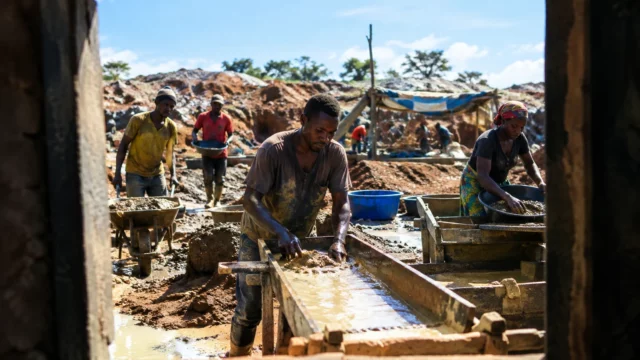
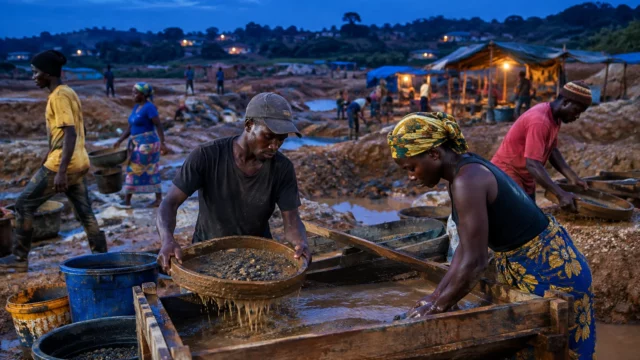
The Simandou project illustrates this shift. Rio Tinto says the first shipments of iron ore began in December 2025 and that the ramp-up will take about 30 months after completion of the shared rail and port infrastructure. The group also cites annual capacity of about 60 million tonnes for the SimFer mine, as part of a wider project developed with other partners. This is a major prospect for Guinea, but also a governance challenge: mining wealth has political value only if it becomes visible in public services, roads, energy and employment.
UNCTAD’s 2025 Guinea factsheet also confirms the scale of investment flows attracted by the country, while the World Bank highlights continuing needs in electricity and social protection. In other words, Conakry is promoting a story of macroeconomic performance, but daily life is judged by other criteria: the price of rice, stability, security, access to electricity and trust in the justice system.
What Guinea reveals about West Africa
The significance of these cases extends beyond Guinea’s borders. In West Africa, ECOWAS is closely monitoring transitions that reshape the political landscape without easing tensions over rights and freedoms. Guinea, a strategically important coastal country, sits at the intersection of three issues of concern to the whole region: domestic security, the place of opposition parties in transitions and states’ ability to turn mining revenues into social stability.
Against this backdrop, the Forécariah case is not a mere crime story. It is a reminder that a state is also judged by how it investigates deaths, protects the justice system and accounts for its actions. It also shows that in Mamadi Doumbouya’s Guinea, positive economic signals are not enough to close the political question. The next focus will remain on the investigations into the bodies found, as well as on how Guinea’s transition handles dissolved parties, dissent and the institutional balance established by the triple election of 2026.