Algeria
 Egypt
 Libya
 Morocco
 Sudan
 Tunisia
 Benin
 Burkina Faso
 Cabo Verde
 Ghana
 Guinea
 Guinea-Bissau
 Liberia
 Mali
 Mauritania
 Niger
 Nigeria
 Senegal
 Sierra Leone
 The Gambia
 Togo
 Cameroon
 Central African Republic
 Chad
 DR Congo
 Equatorial Guinea
 Gabon
 Republic of the Congo
 São Tomé and Príncipe
 Burundi
 Comoros
 Djibouti
 Eritrea
 Ethiopia
 Kenya
 Madagascar
 Malawi
 Mauritius
 Mozambique
 Rwanda
 Seychelles
 Somalia
 South Sudan
 Tanzania
 Uganda
 Angola
 Botswana
 Eswatini
 Lesotho
 Namibia
 South Africa
 Zambia
 Zimbabwe
A new face, but a long-standing expectation
In Côte d’Ivoire, basketball is not short of ambition or raw talent. What it has sometimes lacked, however, is continuity at the highest level, between individual talent, a competitive national team and a clear long-term plan. Pacôme Dadiet’s arrival on the scene speaks directly to this: the country is no longer looking merely to produce players, but now wants to establish them in a team capable of making an impact in Africa and beyond.
The context matters. Côte d’Ivoire is part of the ECOWAS region, where sport also serves as an indicator of stability, organisation and international outlook. Against this backdrop, Ivorian basketball remains under regional scrutiny, particularly as FIBA’s major qualifying windows now pit African national teams against one another in condensed formats, where every game carries considerable weight.
National-team debut in an already decisive window
Pacôme Dadiet made his debut with the Elephants during the fourth window of the African qualifiers for the 2027 FIBA Basketball World Cup. FIBA identified him as one of the newcomers in this window, alongside other players experiencing this level of continental competition for the first time. The player, who is under contract with the New York Knicks, was presented as the 2026 NBA champion, an accolade that immediately added significance to his first appearance in an Ivorian jersey.
According to the account of the games, Côte d’Ivoire played its matches in Dakar during this window, before some of the squad returned to their club seasons. The next stage of the schedule is crucial: the group’s final window is due to take place in Abidjan, the country’s political capital, giving the national team additional popular and symbolic significance. FIBA has confirmed that the Ivorians’ African campaign will continue as part of the race for the 2027 World Cup.
One fact stands out in this run of games: the Elephants won two of their three matches in the window before losing to Angola, a historic force in African basketball. Here, too, the stakes go beyond the result alone. In continental qualifying, it is not only a matter of beating a direct rival, but of maintaining the right momentum in the standings, because the format leaves little room for error.
Integration, adaptation and learning a more physical style of basketball
The first lesson from this debut is adaptation. Dadiet himself noted that African basketball is more physical and officiated differently from what he is used to at the highest level in the United States. This is no trivial observation. It is a reminder that players trained outside the continent often have to relearn the conventions of play, intensity and officiating when they join an African national team. Many African internationals experience this reality as they move between European leagues, the NBA and FIBA competitions.
Another strength of this first gathering was his integration into a group already structured around experienced leaders. Solo Diabaté, a leading figure in Ivorian basketball, provided technical guidance and tactical support. The presence of players like him underlines a key point: a national team’s success does not rest solely on imported talent, but on bringing together continental experience, collective understanding and local leadership.
Pacôme Dadiet has emphasised this balance. He says he wants to contribute his experience at the highest level while listening to the senior players. This approach is significant for Côte d’Ivoire, as it runs counter to a sometimes caricatured view of African national teams, often reduced to problems of governance or organisation. The message here is the opposite: there is expertise, a framework and, above all, a determination to professionalise performance.
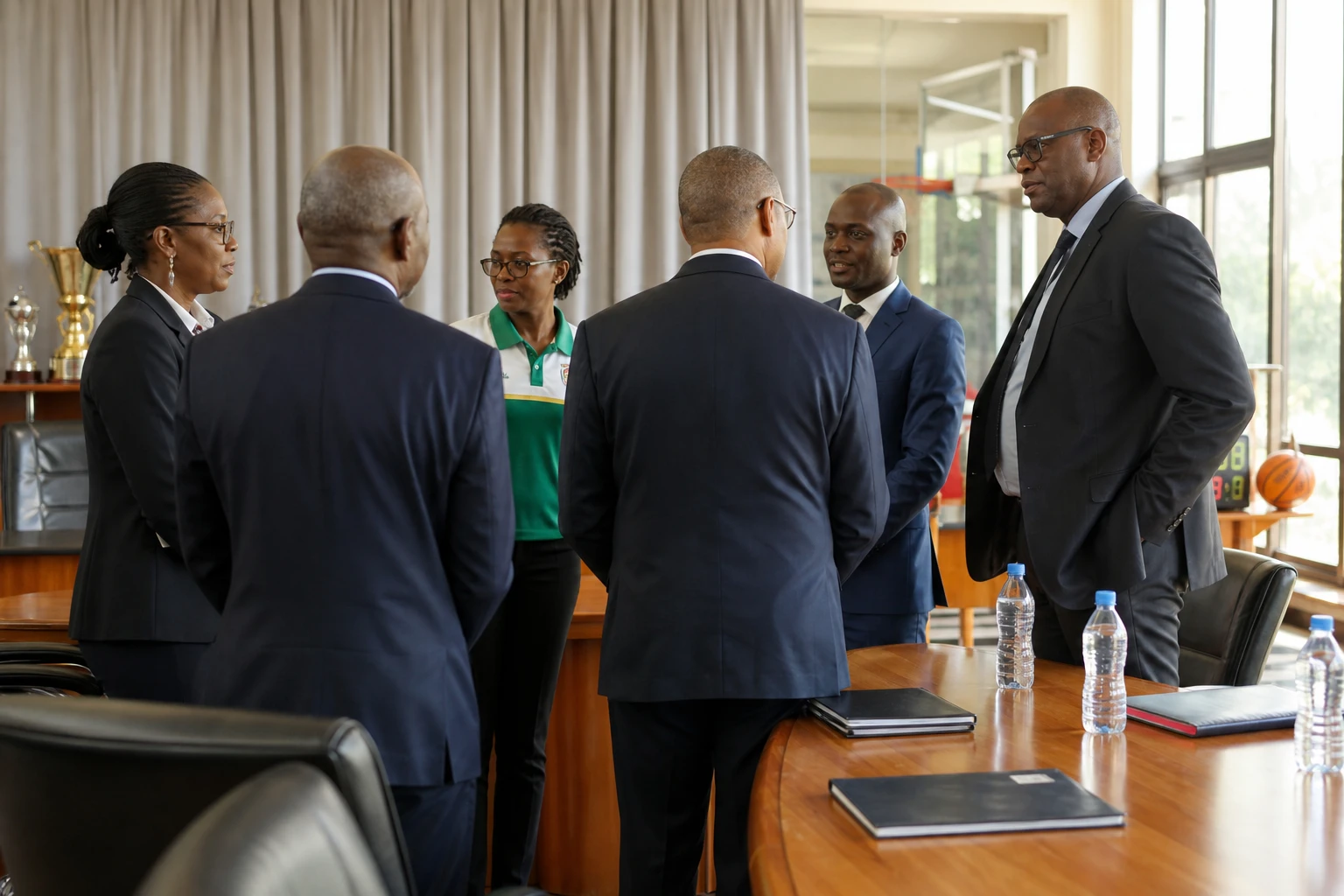
For the Ivorian Basketball Federation, the issue is also political in the sporting sense. Persuading players with profiles in Europe or the NBA to commit over the long term requires clear organisation, well-prepared windows and a clear vision for the national team. This is precisely where Côte d’Ivoire can build credibility, both in Africa and across the diaspora. The national team is no longer just a symbol; it is becoming a project.
What this return says about Ivorian basketball and its reach across Africa
Ultimately, Dadiet’s trajectory tells a broader story of change. African basketball is no longer simply waiting for high-profile players to come and “help” on an occasional basis. It wants to attract, retain and bring together several generations of talent. Côte d’Ivoire already has an interesting core, with players capable of competing at a high level and a strong continental base. The arrival of a young NBA champion adds another layer of ambition, without resolving the question of consistency on its own.
The impact across the continent is real. When a West African national team can field an NBA player while retaining its local leaders, it sends a signal to the whole continent: excellence is no longer the preserve of Africa’s traditional basketball powers. It also raises ECOWAS’s profile in sporting competitions, at a time when sporting rivalries between Dakar, Abidjan, Luanda and Rabat are increasingly shaping the African basketball landscape.
The immediate future will therefore be decided on two fronts. On the one hand, qualification for the 2027 World Cup remains within reach, but there is no room for overconfidence. On the other, Côte d’Ivoire must turn this promising start into long-term progress by transforming the Dadiet effect into a lasting national-team culture. That is what separates a media moment from a sustainable rise in standards. Ivorian basketball appears to have chosen the latter path.