Algeria
 Egypt
 Libya
 Morocco
 Sudan
 Tunisia
 Benin
 Burkina Faso
 Cabo Verde
 Côte d'Ivoire
 Ghana
 Guinea
 Liberia
 Mali
 Mauritania
 Niger
 Nigeria
 Senegal
 Sierra Leone
 The Gambia
 Togo
 Cameroon
 Central African Republic
 Chad
 DR Congo
 Equatorial Guinea
 Gabon
 Republic of the Congo
 São Tomé and Príncipe
 Burundi
 Comoros
 Djibouti
 Eritrea
 Ethiopia
 Kenya
 Madagascar
 Malawi
 Mauritius
 Mozambique
 Rwanda
 Seychelles
 Somalia
 South Sudan
 Tanzania
 Uganda
 Angola
 Botswana
 Eswatini
 Lesotho
 Namibia
 South Africa
 Zambia
 Zimbabwe
A vote with implications far beyond Bissau’s polling stations
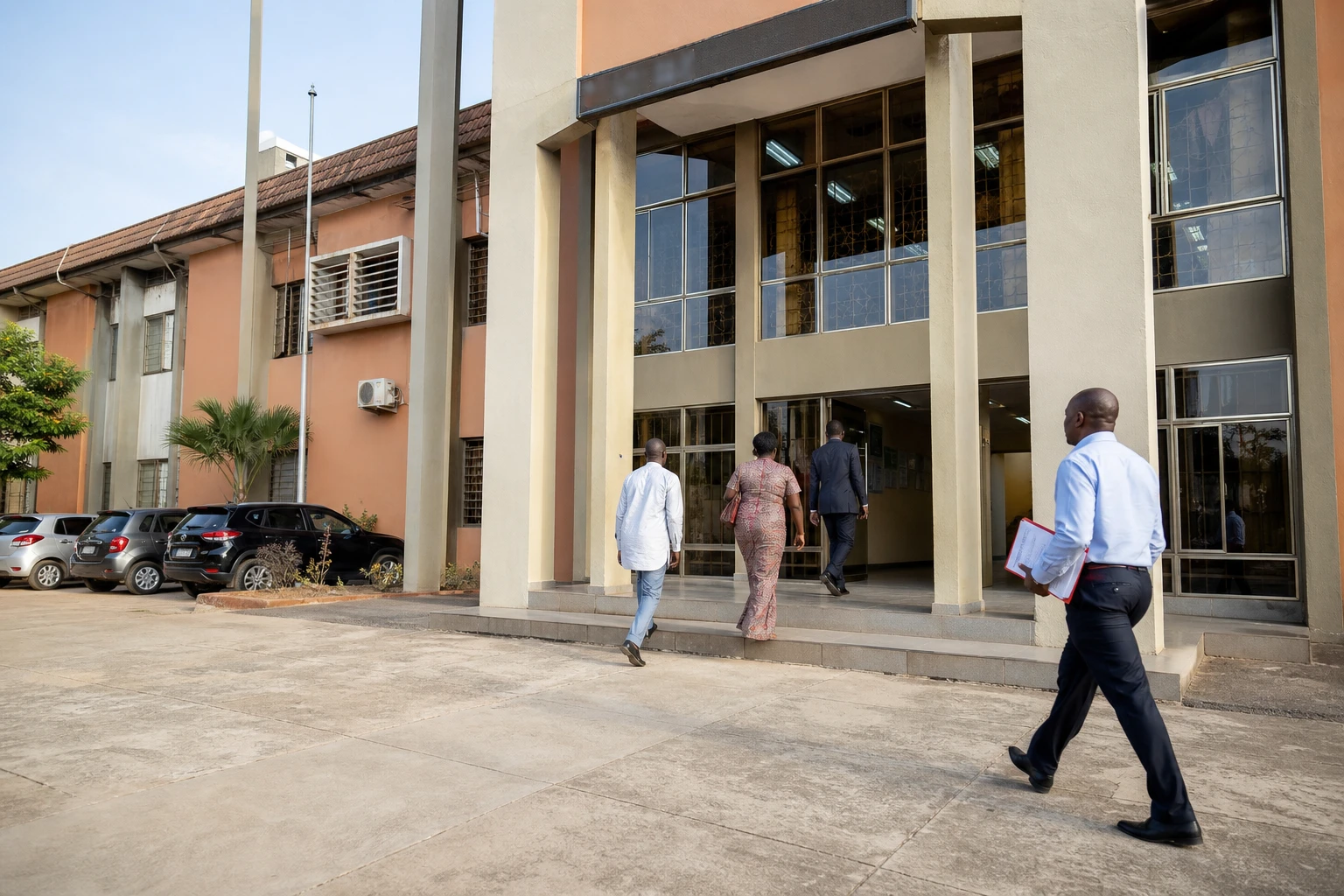
In Guinea-Bissau, a constitutional referendum is never just a legal debate. It touches the heart of power in a country where institutions have often been fragile and every electoral shift redraws the political balance. This time, the choice is between a semi-parliamentary system and a more concentrated presidential regime, with a smaller parliament and a stronger executive. The signal sent by the 30 August 2026 vote is therefore political before it is technical.
The regional context matters as much as the vote itself. Guinea-Bissau is a member of ECOWAS, the West African organisation that closely monitors military transitions, announced returns to constitutional order and electoral timetables. In Bissau, the transition launched after the November 2025 coup has put the authorities under scrutiny, as general elections are scheduled for 6 December 2026. In this context, constitutional reform also serves as a test of credibility for the process of emerging from the crisis.
‘Yes’ wins, but the political battle remains open
Results announced on Tuesday by the National Electoral Commission put the ‘yes’ vote ahead with 70% of valid ballots, against 30% for ‘no’. The head of the electoral body announced the figures after all votes had been counted, according to several corroborating sources. The referendum was held on 30 August 2026, and the transitional authorities presented it as a step towards the general elections in December.
The adopted text substantially changes the institutional framework. It reduces the prime minister’s influence, transfers more powers to the head of state and provides for a reconfiguration of parliament, which would shrink from 102 to 65 seats, according to details published before the vote. The transitional authorities defend this as a way to clarify the exercise of power. They say a more clearly defined executive would limit the political deadlock that has long paralysed the country. Critics, by contrast, see a concentration of power in the hands of the president and the military camp leading the transition.
The opposition did not approach the referendum in the same way. The PAIGC, the historic party of national liberation, called for a boycott, arguing that the timetable and context did not ensure a balanced democratic debate. This divide is significant. It shows that in Guinea-Bissau, the real issue is not just the constitutional text, but trust in the conditions of the vote, the institutions’ role as arbiters and the neutrality of the transitional authorities.
The recent past also explains observers’ caution. In November 2025, the military seized power after a disputed presidential election, halting the electoral process. Since then, the country has been under a military-led transitional regime, with a timetable intended to return civilians to power by the end of 2026. In such circumstances, every referendum is viewed through two lenses: legality and the balance of power. In Bissau, the two do not always align.
What the reform changes for the state—and what it says about the region
For the institutions, the reform could have two opposing effects. On the one hand, it could reduce conflicts between the president, the government and the National People’s Assembly in a country where executive-legislative deadlock has fuelled instability. On the other, it risks weakening checks and balances in favour of a more closed decision-making centre. In practice, the benefits will depend less on the text itself than on how it is implemented after the December elections. That is where the real break will come.
For Guinea-Bissau’s population, the stakes are more tangible. Traders, employees in the formal sector, public administrations and the informal economy, which plays a major role in daily life, all need predictability above all. Guinea-Bissau has paid the price of uncertainty for years: unstable governments, contested institutions, an interrupted electoral timetable, and weak signals to investors and public services. A constitution does not solve everything, but it can either reduce uncertainty or shift it to another level of conflict.
The issue extends beyond Guinea-Bissau’s borders. In West Africa, ECOWAS is still seeking to preserve a common framework for returning to constitutional order after several military transitions. The process in Guinea-Bissau will therefore be watched as a precedent: can a referendum really stabilise a transition born of a coup, or does it mainly serve to reshape political competition ahead of elections billed as decisive? The answer will matter for Bissau, but also for West African capitals seeking to prevent states of exception from becoming entrenched.
Above all, two dates will need watching. First, the actual preparations for the general elections on 6 December 2026. Second, how the transitional authorities translate the referendum result into the institutions, the composition of the future government and the space left for the opposition. In Guinea-Bissau, the ‘yes’ victory does not close this chapter. It opens it.