Algeria
 Egypt
 Libya
 Morocco
 Sudan
 Tunisia
 Benin
 Burkina Faso
 Cabo Verde
 Côte d'Ivoire
 Ghana
 Guinea
 Guinea-Bissau
 Liberia
 Mali
 Mauritania
 Niger
 Nigeria
 Senegal
 Sierra Leone
 The Gambia
 Togo
 Cameroon
 Central African Republic
 Chad
 DR Congo
 Equatorial Guinea
 Gabon
 Republic of the Congo
 São Tomé and Príncipe
 Burundi
 Comoros
 Djibouti
 Eritrea
 Ethiopia
 Kenya
 Madagascar
 Malawi
 Mauritius
 Mozambique
 Seychelles
 Somalia
 South Sudan
 Tanzania
 Uganda
 Angola
 Botswana
 Eswatini
 Lesotho
 Namibia
 South Africa
 Zambia
 Zimbabwe
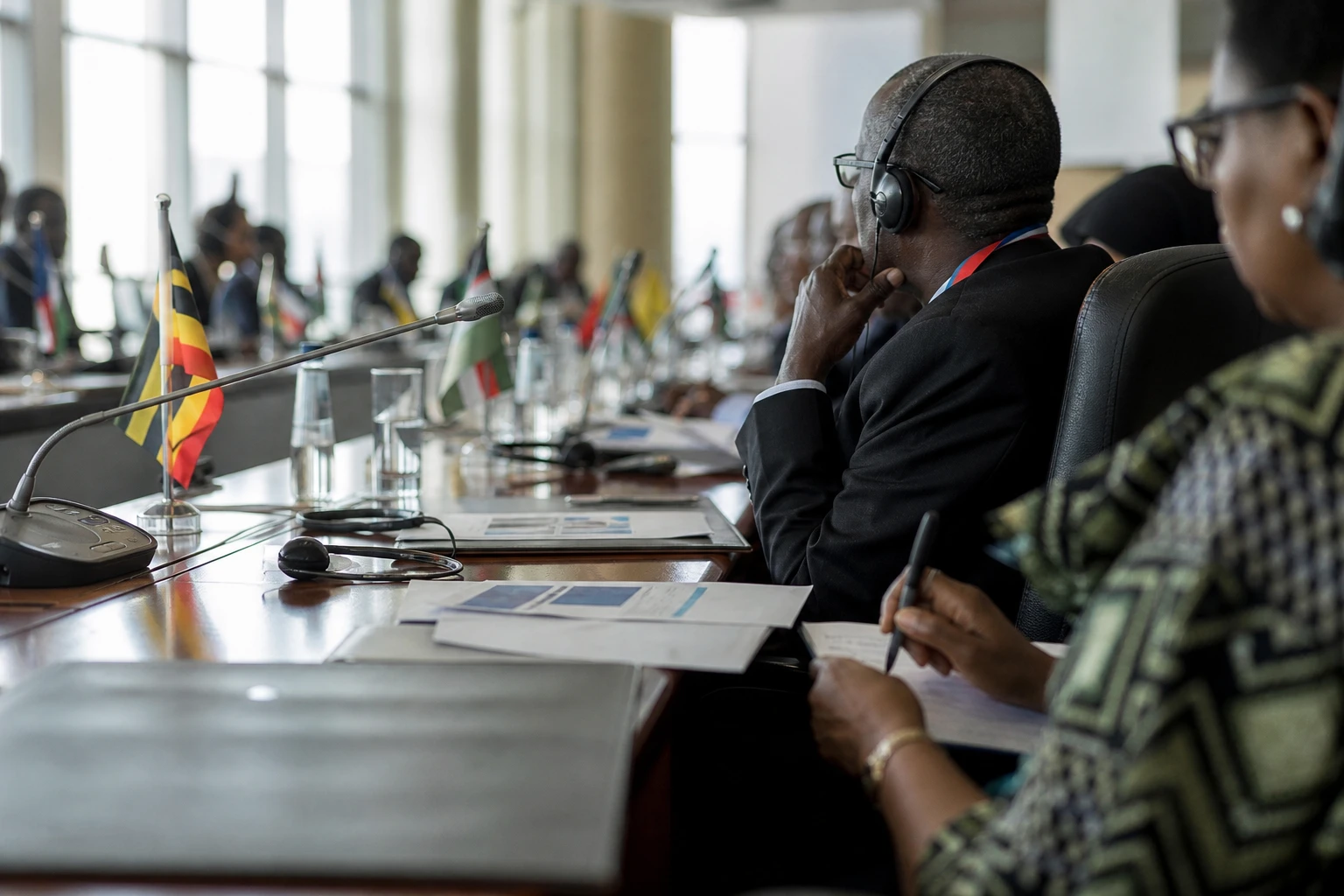
In Kigali, African agriculture talks money, roads and young people
On paper, the subject looks like one conference among many. In reality, it touches on three very practical questions: who finances production, how harvests move, and who will take over in the fields and in businesses. In Kigali, the 2026 Africa Food Systems Forum is putting these issues at the centre of an event expecting 5,000 participants, more than 200 speakers and a full week devoted to investment, climate and trade.
Rwanda’s choice as host is no accident. Kigali is once again welcoming a major continental food event, following the 2024 edition, which brought together nearly 4,900 people, according to Rwanda’s official report. The country has also established itself as a regular meeting point for major African events, with an image as a capital able to accommodate technical summits, negotiations and business meetings.
What the continental agenda says
The 2026 edition is part of a broader political sequence: in 2025, the African Union launched the strategy and action plan for the CAADP programme for 2026-2035, the continental framework succeeding the Malabo phase. The plan aims, among other things, to mobilise $100bn, increase agri-food production by 45%, triple intra-African trade in agricultural products and halve post-harvest losses.
In other words, Kigali is not merely hosting a sectoral forum. The meeting sits at the heart of African agricultural policy for the coming decade. In this context, the Forum aims to act as a bridge between bankable projects, development banks, sovereign wealth funds, institutional investors and public authorities. The idea is simple: move agricultural transformation beyond general statements and towards measurable financing mechanisms.
The programme announced in Kigali is built around this drive to scale up. The matchmaking platform, often billed as a “Deal Room”, is intended to give businesses and organisations the chance to pitch projects in agriculture, logistics, agri-tech, nutrition, finance and clean energy. The forum is also focusing on regional value chains, in line with the African Continental Free Trade Area, AfCFTA, which seeks to facilitate trade between African countries.
The facts: a high-level gathering from 31 August to 4 September 2026
According to the official programme, the Forum is being held at the Kigali Convention Centre from 1 to 4 September 2026, with pre-summit events starting on 31 August. Other pages in the communications package refer to the period from 31 August to 4 September, consistent with the idea of an extended week around the main conference. Both sources agree on the venue, the city and the event’s general focus.
The announced speakers give an idea of the forum’s scale. They include FAO Director-General Qu Dongyu, IFAD President Alvaro Lario, AGRA President Alice Ruhweza, as well as representatives of the African Development Bank and the African Union Commission. Their presence reflects a rare mix of multilateral institutions, governments and the private sector.
The 2026 edition also marks the Forum’s 20th anniversary. Founded in 2006 under a different name, it has gradually shifted to the continent and established itself as a political and economic marketplace for African agriculture. The Forum’s website now presents it as a space where heads of state, scientists and funders bring projects face to face with capital.
In the region, the East African Community has recently made progress on similar issues. In July 2026, its agriculture ministers adopted measures to strengthen regional agri-food systems and approved the creation of the YASE platform, dedicated to young people in the agri-food sector. This timing shows that Kigali is part of an East African dynamic as well as a continental one.
Why this edition matters to Rwandans and the region
For Rwandans, the stakes go beyond the country’s international image. A summit of this size supports hotels, transport, restaurants, translation, logistics and a whole network of often unseen services. It also puts Kigali in direct contact with investors, agricultural organisations and potential buyers. For the authorities, it is a showcase. For local entrepreneurs, it is an opportunity for contracts, funding and networks.
But agriculture remains the core issue. Across the continent, yields remain vulnerable to droughts, floods, heatwaves, pests and soil degradation. Organisers have planned sessions on adaptation, resilient seeds, water, agroecology and climate finance. This is no academic detour: without resilience, investment in fields remains exposed to climate and monetary shocks.
Young people have a particular place in this framework. In East Africa, the new YASE platform is specifically intended to create more opportunities for young people in agri-food value chains, innovation, market access and entrepreneurship. The debate in Kigali should therefore go beyond the slogan “young people are the future” and address a tougher question: what jobs, tools and capital will genuinely give them a place in the value chain?
Accountability will be another test. The continent has signed ambitious roadmaps on several occasions. The weakness remains implementation: incomplete budgets, irregular institutional coordination, insufficient data and weak monitoring of results. This is precisely where the Kigali forum may or may not make a difference. If it does not lead to traceable commitments, it will remain just another stage. If it clarifies funding, responsibilities and deadlines, it could help shape the CAADP’s new decade.
At continental level, Kigali is a reminder of an often-forgotten truth: African food security depends as much on public policy as on infrastructure, regional trade and investor confidence. The forum opens a useful window at a time when the African Union wants to make agri-food a driver of jobs, regional flows and economic sovereignty. What happens next will depend less on slogans than on implementation timetables, funded projects and the first concrete deliveries expected after September 2026.