Algeria
 Egypt
 Libya
 Morocco
 Sudan
 Tunisia
 Benin
 Burkina Faso
 Cabo Verde
 Côte d'Ivoire
 Ghana
 Guinea
 Guinea-Bissau
 Liberia
 Mali
 Mauritania
 Niger
 Nigeria
 Sierra Leone
 The Gambia
 Togo
 Cameroon
 Central African Republic
 Chad
 DR Congo
 Equatorial Guinea
 Gabon
 Republic of the Congo
 São Tomé and Príncipe
 Burundi
 Comoros
 Djibouti
 Eritrea
 Ethiopia
 Kenya
 Madagascar
 Malawi
 Mauritius
 Mozambique
 Rwanda
 Seychelles
 Somalia
 South Sudan
 Tanzania
 Uganda
 Angola
 Botswana
 Eswatini
 Lesotho
 Namibia
 South Africa
 Zambia
 Zimbabwe
A market governed by the harvest calendar
In Senegal, onions are not treated merely as a staple food. They are managed as a source of income for market gardeners, a test of the state’s storage capacity and a sensitive issue for households, which focus first on the price per kilo. The resumption of imports, decided on Monday 31 August 2026, puts back into circulation a market that had been frozen since 16 January 2026.
This sequence is part of a practice established over several years: Senegal regularly adjusts onion imports in line with the pace of local production, in order to protect producers’ sales and prevent price shocks. The Market Regulation Agency says the system has been in place since 2004 and has been strengthened by licensing, inspection and scheduling rules.
The country also operates within a broader regional framework. Senegal belongs to ECOWAS, the Economic Community of West African States, headquartered in Abuja and bringing together, among others, the sub-region’s major trading hubs. In this West African market, fresh produce moves quickly, but supply pressures are felt just as fast.
What the government has decided
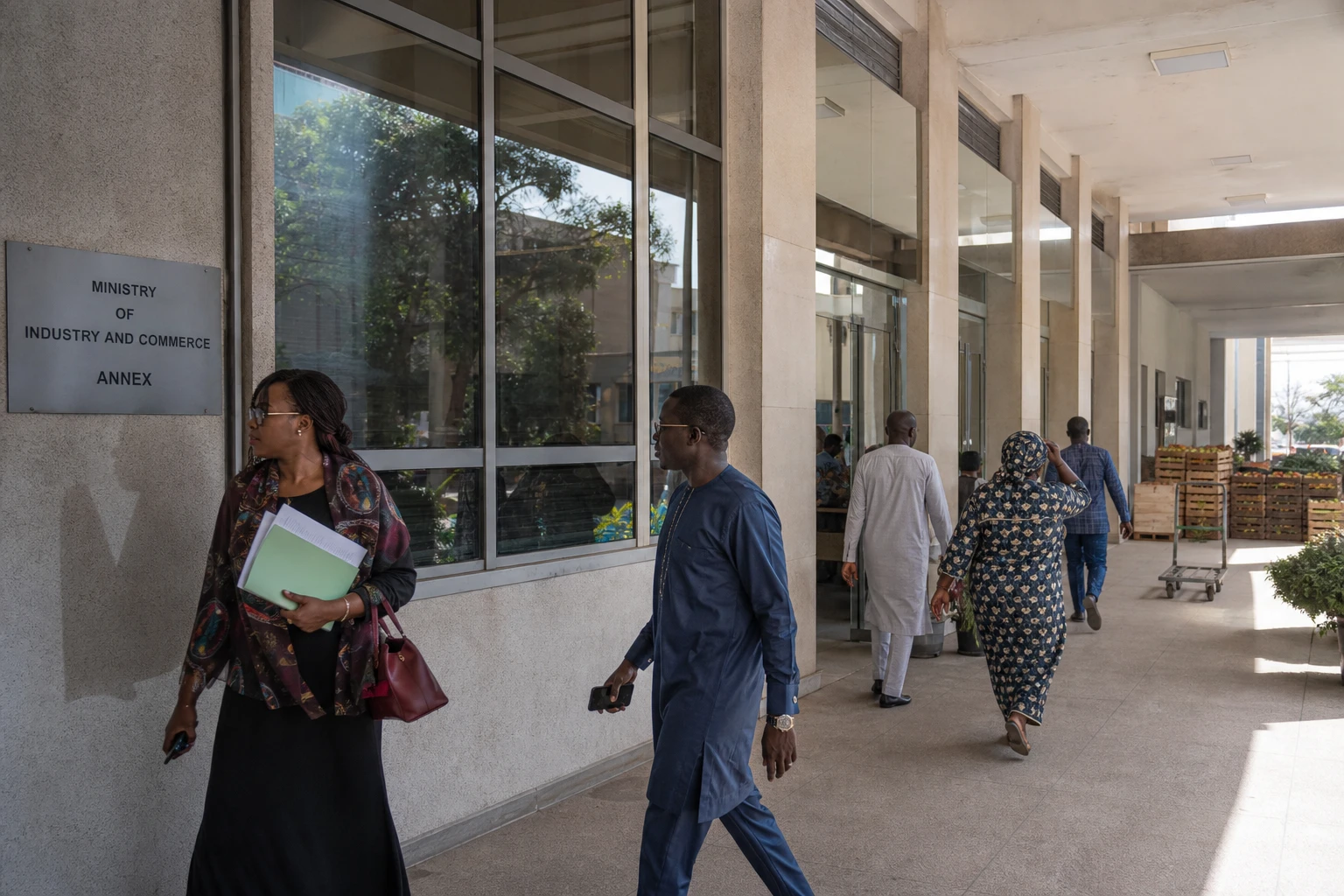
The Ministry of Industry and Trade confirmed in a statement that the freeze on onion imports would be lifted from 31 August 2026. According to the decision, the regulation introduced on 16 January had initially helped absorb domestic production and preserve market outlets for small local producers. The ministry also said import permits could be issued until 31 December 2026.
This reopening does not mean complete freedom. The ministry says importers must contact the Market Regulation Agency, or ARM, to put the system into practice. This confirms a familiar approach in Senegal: the market is not simply shut or opened abruptly, but managed in phases, with quotas, inspections and permits.
The decision follows several months of strong sales of local produce. In January 2026, the government had already announced a simultaneous freeze on imports of potatoes and onions, explaining that local onions would be available on the market from 15 February. This policy of supporting domestic supply was also reiterated during year-end 2025 budget discussions at the Ministry of Industry and Trade.
Producers, importers and consumers have different interests
For wholesalers and importers, the lifting of the freeze is good news. It reopens the trading window that allows urban markets to be supplied when local production contracts. In Dakar, where consumption volumes are high and steady, the return of imports is primarily intended to prevent supply shortages. The ministry justifies the measure on the grounds that it is necessary to keep the domestic market supplied and prices more stable for consumers.
For producers, the picture is more nuanced. The Senegal Onion Interprofessional Organisation did not oppose the lifting of the freeze, since local production had already been sold during the protection period. However, it highlights two vulnerabilities: marketing and storage. The ministry itself acknowledged in a recent review that the freeze had covered nine months of consumption, with a 2025 coverage rate of 75%, against a target of 83.3%.
That remains the real sticking point. Senegal says it produces around 450,000 tonnes of onions a year, but some of the harvest is lost for lack of suitable storage. A source at the Ministry of Industry and Trade even cites 180,000 tonnes of imports in 2025, showing that high production is not enough to eliminate reliance on foreign markets entirely. In another ministry document, the administration says the country is seeking to strengthen storage infrastructure, with a project targeting capacity of 250,000 tonnes, specifically to limit post-harvest losses.
Competition between large farms and small-scale producers adds a second pressure. Industry representatives report that better-capitalised groups often sell at lower prices, while family farms still struggle to find buyers for their onions. The ARM also notes that Senegalese onion marketing is organised around two periods of abundance, from March to May and then from July to September, making stock management crucial for all market participants.
What the reopening says about Senegal’s agricultural choices
The reopening of onion imports sums up a distinctly Senegalese balancing act: supporting “buy local” without exposing households to a prolonged rise in prices. The authorities promote a food sovereignty strategy, but know that sovereignty also depends on warehouses, cold-storage facilities, collection roads and better-organised trade. The government has also announced storage and preservation projects in Ngomène, in the Thiès region, to reduce losses of onions, potatoes, tomatoes and other market-garden produce.
Regionally, the issue extends well beyond Dakar. Across ECOWAS, agricultural products move between coastal countries, logistics corridors and retail markets. When Senegal closes and then reopens its market, it sends a signal to its trading partners and to neighbouring producers and suppliers, since Senegalese demand can affect West African trade flows.
For now, the challenge is straightforward: prevent strong local production from turning into losses and then a massive return to imports because of inadequate storage and limited market outlets. The next step will therefore depend less on the principle of the freeze than on how well it is implemented. Between the end of the local season, permits granted until 31 December 2026 and the supply needs of urban markets, Senegal continues to test a delicate balance between protecting agriculture, enforcing trade rules and stabilising prices.