Algeria
 Egypt
 Libya
 Morocco
 Sudan
 Tunisia
 Benin
 Burkina Faso
 Cabo Verde
 Côte d'Ivoire
 Ghana
 Guinea
 Guinea-Bissau
 Liberia
 Mali
 Mauritania
 Niger
 Nigeria
 Senegal
 Sierra Leone
 The Gambia
 Togo
 Cameroon
 Central African Republic
 Chad
 DR Congo
 Equatorial Guinea
 Gabon
 Republic of the Congo
 São Tomé and Príncipe
 Burundi
 Comoros
 Djibouti
 Eritrea
 Ethiopia
 Kenya
 Malawi
 Mauritius
 Mozambique
 Rwanda
 Seychelles
 Somalia
 South Sudan
 Tanzania
 Uganda
 Angola
 Botswana
 Eswatini
 Lesotho
 Namibia
 South Africa
 Zambia
 Zimbabwe
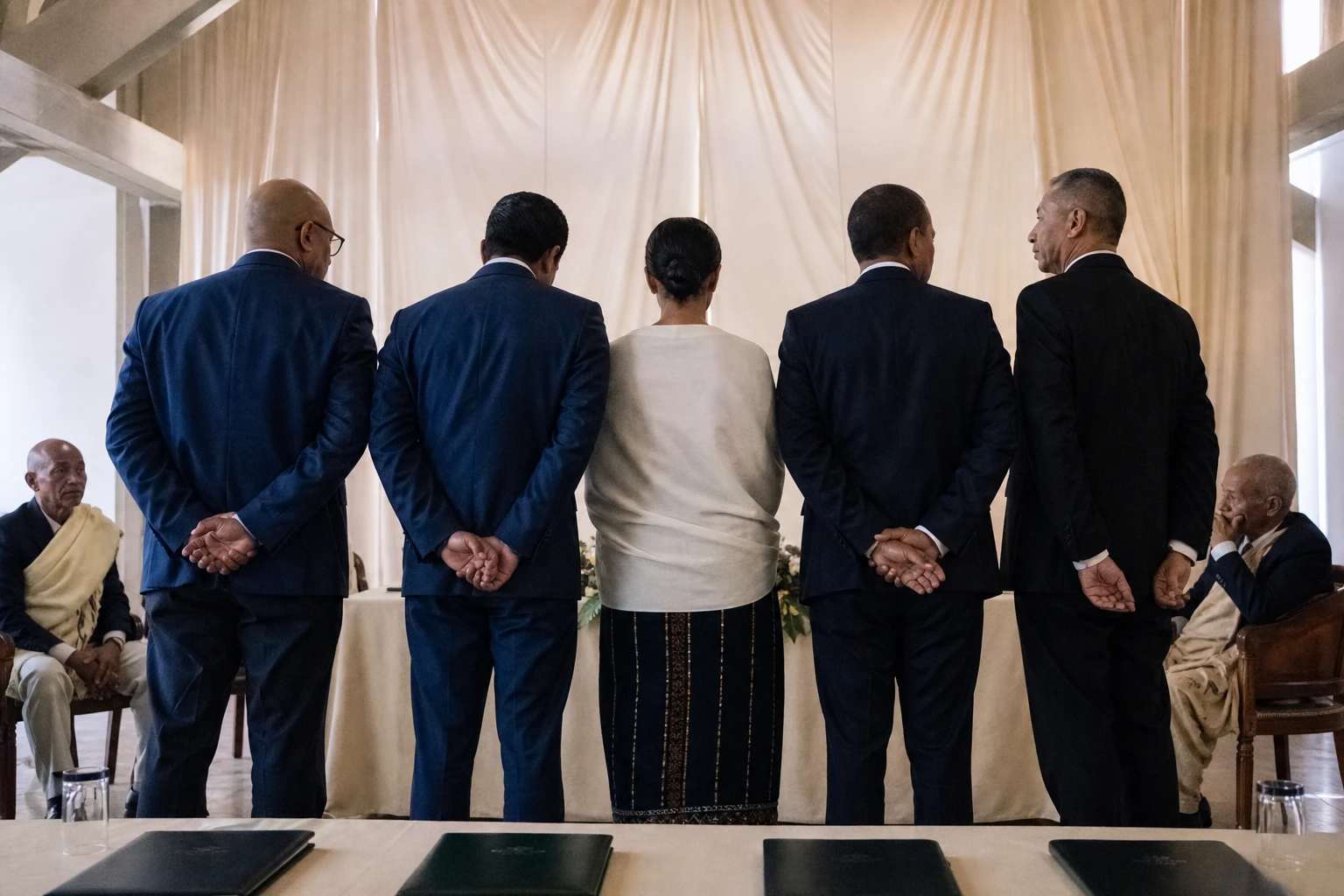
When the relics return, a whole chapter of memory falls back into place
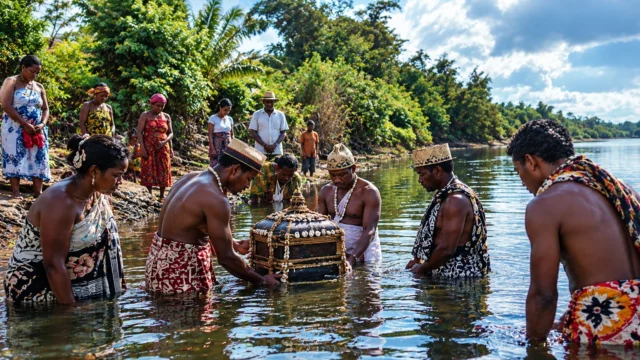
On the banks of the Tsiribihina, in Menabe, the bathing of Sakalava relics is more than a rite. It is a moment when family, lineage and history speak to one another. This year, the fitampoha took on particular significance in Belo sur Tsiribihina, as King Toera’s relics were present there once again after their return by France.
For the Sakalava of Menabe, this return changes the ceremony’s symbolic weight. It is no longer just a matter of honouring the ancestors. It is also about closing, at least in part, a chapter that began in August 1897, when Toera was killed and beheaded during the French colonial conquest.
Menabe, the Sakalava monarchy and the weight of the ritual calendar
The fitampoha is a Sakalava dynastic ceremony associated with Madagascar’s west coast. Madagascar’s Ministry of Tourism describes it as a religious event, while local media say it takes place in cycles on the banks of the Tsiribihina River, in the Sakalava region of Menabe.
The rite also has a political dimension in the broader sense. In Madagascar’s history, the Sakalava kingdoms shaped part of the island’s west long before the contemporary central state. The fitampoha therefore speaks not only of the royal past; it also reflects the place of local communities in nation-building.
In 2026, the ceremony is taking place against a backdrop in Madagascar of growing debate over memory and the restitution of cultural heritage. In Antananarivo, the government approved preparations in January 2025 for the return of the kabeso of Ampanjaka Toera and two Sakalava warrior skulls, with an official reception in the capital followed by a ritual ceremony in Menabe.
Toera’s restitution: an act of heritage recovery and a political test
On 26 August 2025, France physically handed over to Madagascar three Sakalava skulls held in national collections, including the one believed to be Toera’s. France’s Ministry of Culture said the restitution followed the law of 26 December 2023 on the return of human remains from public collections, and the transfer had been authorised by a decree of 2 April 2025.
The episode also matters for diplomacy between Paris and Antananarivo. The restitution was presented as a gesture to ease tensions over historical memory, at a time when France and Madagascar are strengthening their political and cultural exchanges. It also highlighted a broader fact: the request for restitution did not come out of nowhere, but followed years of work by Toera’s descendants and the Malagasy state.
The process was not straightforward. Malagasy media reported postponements, changes to the timetable and debates over the ceremony itself, showing that the return of relics is never a simple administrative act. It involves families, customary authorities, elected officials, state agencies and sometimes diverging local sensitivities.
What Toera’s return changes beyond the symbolism
For descendants of the Sakalava royalty, the restitution gives the fitampoha a new meaning. The ritual regains a continuity interrupted for more than a century. At local level, this strengthens recognition of traditional authorities and the importance of Menabe’s ritual sites, particularly the zomba, the space dedicated to the relics.
For the Malagasy state, the stakes are different. The aim is to show that Antananarivo can bring heritage, diplomacy and national cohesion together without erasing regional distinctiveness. In a country where local identities remain strong, this kind of event is a reminder that the nation is also built by accepting regional memories, not only through central administration.
Toera’s return also has a broader African significance. Madagascar has been a member of the African Union since 1963 and of the Southern African Development Community, or SADC, which brings together 16 states in southern Africa and the Indian Ocean. Across this region, heritage restitution is becoming a matter of cultural sovereignty, alongside the preservation of languages, archives and historic sites.
The continental significance is clear: Africa is not only calling for the return of objects. It is also demanding recognition of its wounded memories and the right to pass them on within its own frameworks. In Madagascar, this demand is expressed through a specific rite, a specific geography and a specific history. The 2026 fitampoha offered a rare demonstration of this, bringing together Sakalava custom, the Malagasy state and an act of restitution from Europe in one place.