Algeria
 Egypt
 Libya
 Morocco
 Sudan
 Tunisia
 Benin
 Burkina Faso
 Cabo Verde
 Côte d'Ivoire
 Ghana
 Guinea
 Guinea-Bissau
 Liberia
 Mali
 Mauritania
 Nigeria
 Senegal
 Sierra Leone
 The Gambia
 Togo
 Cameroon
 Central African Republic
 Chad
 DR Congo
 Equatorial Guinea
 Gabon
 Republic of the Congo
 São Tomé and Príncipe
 Burundi
 Comoros
 Djibouti
 Eritrea
 Ethiopia
 Kenya
 Madagascar
 Malawi
 Mauritius
 Mozambique
 Rwanda
 Seychelles
 Somalia
 South Sudan
 Tanzania
 Uganda
 Angola
 Botswana
 Eswatini
 Lesotho
 Namibia
 South Africa
 Zambia
 Zimbabwe
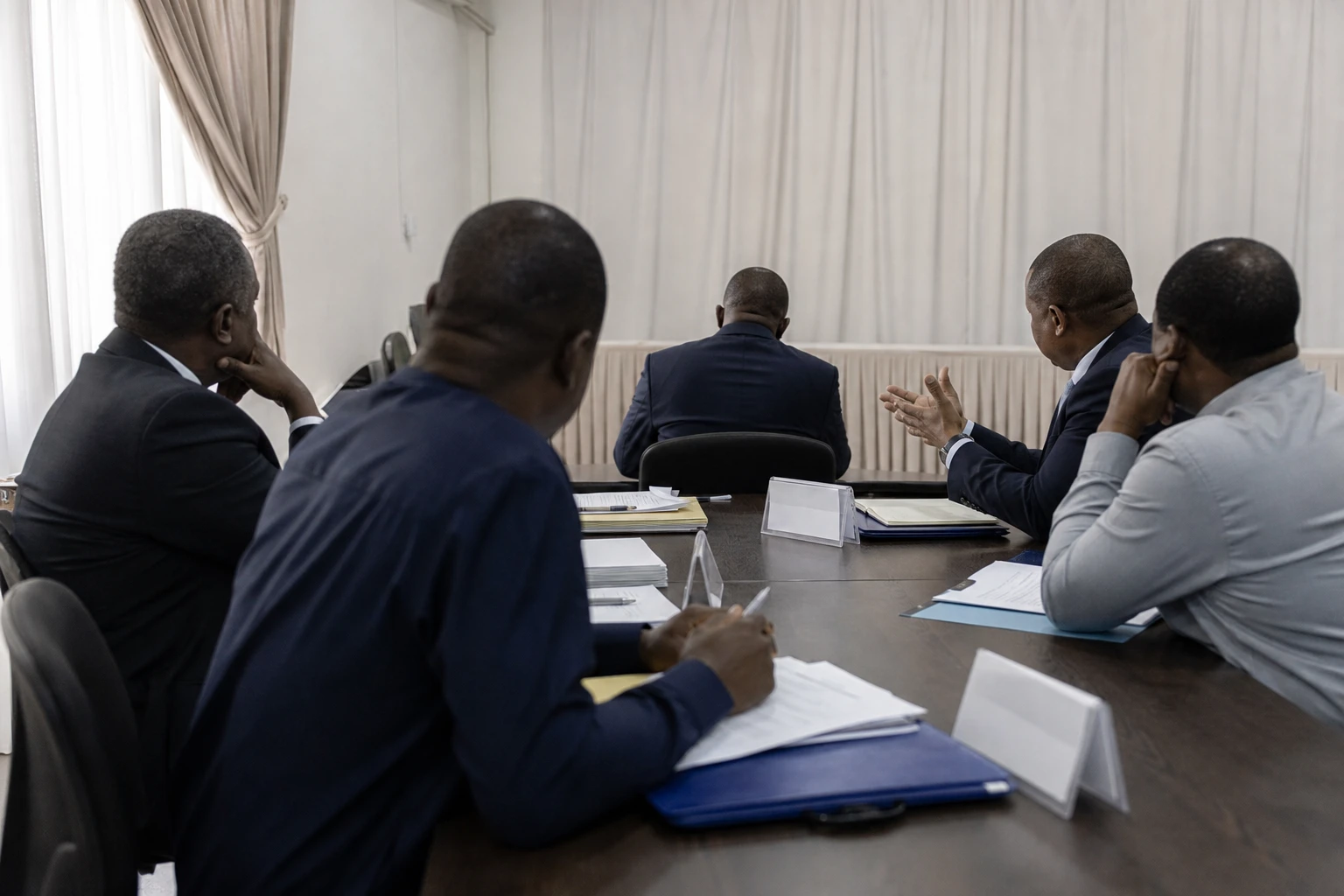
In Niamey, another warning in a country under strain
In the Nigerien capital, the sound of gunfire brought back a reality many had hoped would recede: in Niger, security is not at stake only on the fronts against armed groups, but also within the ranks of the army itself. On the night of 28–29 August 2026, soldiers targeted sites considered strategic in Niamey, including Air Base 101, the presidential palace and the area around Diori Hamani International Airport, before the authorities announced a gradual return to calm.
This latest episode comes amid an already fraught situation. Niger has been governed since the coup of 26 July 2023 by General Abdourahamane Tiani, who subsequently became head of state during the transition and then president for a transitional period set out in a new charter. The country also left ECOWAS, the Economic Community of West African States, on 29 January 2025, alongside Mali and Burkina Faso, and is now part of the Alliance of Sahel States, or AES.
What is known about the events of 29 August
Initial information published by the Nigerien News Agency and carried by other media indicates that a group of soldiers « breaking with military regulations » detained some of their comrades at Base 101 before opening fire on several sensitive sites in the capital. According to the same sources, the intervention of the defence and security forces gradually restored control of the targeted positions.
Gunfire and explosions interrupted national television broadcasts for a time and caused alarm in several districts of Niamey, particularly around the Plateau, where the central institutions are located, and the airport area. According to reports from the Nigerien News Agency, Reuters, the Associated Press and Al Jazeera, Air Base 101 is located within the grounds of Diori Hamani Airport, making it a key site for defence and air traffic.
The government has not released a definitive casualty toll. It has, however, announced the arrest of several dozen members of the military, without giving details of their ranks or units. International media have reported soldiers killed or arrested, but figures vary between reports and had not been confirmed by an independent official source at the time of the first announcements.
The statement read out on national television described the incident as a « fit of anger » quickly contained by loyalist forces. The AES Confederation, for its part, expressed its support for Niger’s institutions and praised the response of the defence and security forces. Algeria and Türkiye also issued messages of support, reported by the Nigerien News Agency.
Why this episode matters beyond the barracks
In Niger, the stakes go beyond military discipline. Base 101 and Diori Hamani Airport serve sensitive functions: military mobility, protection of Niamey’s airspace, access to strategic equipment and the presence of foreign actors. The AP reported that Russian forces helped loyalists regain control, while Reuters had reported, before the events, the presence of Russian and Italian personnel at the airport site. This illustrates how closely the capital’s security is now tied to external partnerships and complex military balances.
The issue also has domestic implications. The Special Forces, mentioned in several accounts, are engaged in operations against jihadist groups active in the west of the country and in border areas with Mali and Burkina Faso. If some of these units are shaken, the entire security apparatus is weakened, at a time when Niger is facing repeated attacks on roads and military sites. In June 2026, Niamey airport had already been targeted in an attack attributed to JNIM, and the AP notes that another assault on the same complex took place in January 2026.
For Niamey residents, the consequences are immediate: the temporary closure of some roads, stepped-up checks and uncertainty about what comes next. For the state, the message is broader: the government that emerged from the 2023 coup must show that it controls not only its borders but also its own chain of command. For now, the authorities have regained control of the affected sites, but have yet to detail those responsible, their motives or the precise fate of the arrested soldiers.
A development to watch in the Sahel
This mutiny comes amid a Sahel where power grabs, military transitions and regional realignments are unfolding in parallel. Niger’s withdrawal from ECOWAS, formalised in January 2025, reinforced Niamey’s strategic shift towards the AES, alongside Mali and Burkina Faso. At the same time, jihadist attacks, tensions within the armed forces and rivalries over external influence continue to weigh on the stability of the wider West African region.
The decisive question now will be less the end of the gunfire than the Nigerien authorities’ ability to clarify what happened on the night of 28–29 August 2026. The next information expected concerns the identities of the detained soldiers, the actual scale of any losses and the disciplinary or political measures that will follow. In a country where the lines between internal security, the fight against jihadism and political balance remain blurred, every local military crisis quickly reverberates across the Sahel.