Algeria
 Egypt
 Libya
 Morocco
 Sudan
 Tunisia
 Benin
 Burkina Faso
 Cabo Verde
 Côte d'Ivoire
 Ghana
 Guinea
 Guinea-Bissau
 Liberia
 Mali
 Mauritania
 Niger
 Nigeria
 Senegal
 Sierra Leone
 The Gambia
 Togo
 Cameroon
 Central African Republic
 Chad
 Equatorial Guinea
 Gabon
 Republic of the Congo
 São Tomé and Príncipe
 Burundi
 Comoros
 Djibouti
 Eritrea
 Ethiopia
 Kenya
 Madagascar
 Malawi
 Mauritius
 Mozambique
 Rwanda
 Seychelles
 Somalia
 South Sudan
 Tanzania
 Uganda
 Angola
 Botswana
 Eswatini
 Lesotho
 Namibia
 South Africa
 Zambia
 Zimbabwe
A battle over authority that goes beyond lecture halls
In Goma and Bukavu, universities are no longer just places of study. They have become a tangible test of sovereignty, administrative control and the continuity of the state in the east of the Democratic Republic of the Congo. When two authorities give contradictory orders to the same institutions, students, teachers and staff are caught between two systems of power.
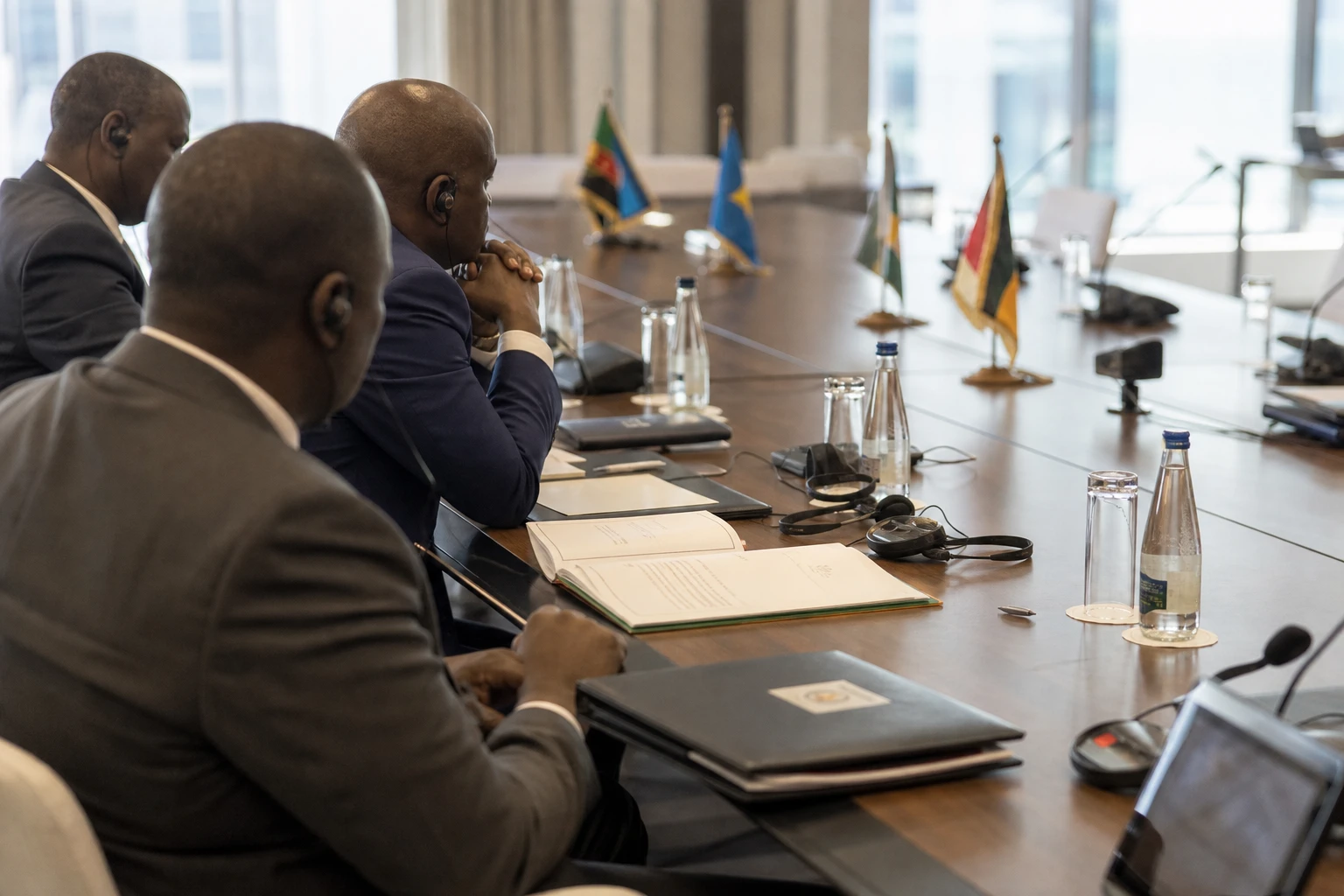
The tension is all the more acute because North Kivu and South Kivu remain at the heart of the conflict between Kinshasa and the AFC/M23. In this part of the country, the university question points to a broader issue: who pays, who appoints, who controls, and on what grounds of legitimacy. The standoff also forms part of the Doha process, where both sides have reaffirmed their commitment to continue negotiations, without yet resolving all the mechanisms for restoring public authority.
Kinshasa shuts down activities, AFC/M23 objects
On 25 August 2026, the Congolese Ministry of Higher and University Education, Scientific Research and Innovation temporarily suspended academic activities at several public institutions in Goma and Bukavu. The measure affects, in particular, the University of Goma, the Official University of Bukavu, the ISC, the ISTM, the ISP, the ISDR and the ISAM in the two cities. The government says it is acting in a context it considers to be of security concern.
The following day, the AFC/M23 rejected the decision. The movement denounced what it called an “arbitrary” measure and asked the institutions to continue their activities. In its argument, it accuses Kinshasa of politicising the university sector. The response reflects a pattern that has been visible for several months: the AFC/M23 is no longer content to occupy areas militarily; it is also seeking to impose its own administrative rules there.
The Congolese government has also suspended the pay of 48 employees accused of joining the movement, pledging allegiance to it or accepting positions under its authority. Here, too, Kinshasa is trying to exercise its power from a distance, through salaries, decrees and administrative discipline. The AFC/M23, for its part, says it intends to take responsibility for these staff, without setting out its funding or the arrangements involved.
In areas under AFC/M23 control, the state is being replaced piece by piece
The dispute over the universities has not emerged out of nowhere. Recent reports by the UN Group of Experts describe the systematic consolidation of a parallel administration in areas controlled by the AFC/M23. The movement has set up its own tax and financial structures, recruited magistrates, established courts and extended its grip over several sovereign sectors. The UN describes a de facto system of governance that operates like a state within a state.
In Goma, this network is visible in everyday practices. UN experts cite taxes imposed on households, land services reopened under the movement’s control, stamps affixed to passports and restrictions on certain construction projects. The same report also notes that the movement has gradually developed an administrative chain to oversee the population, with officials trained to convey its directives. These mechanisms are not mere political rhetoric. They reflect a desire to establish a lasting presence.
In the judicial sector, the rebel group has even set up a Commission for the Restoration of Justice to oversee civil and military courts and recruit magistrates. The UN says this approach took shape as early as 2025 and continued in 2026. In short, the university battle is just one part of a broader effort to replace institutions.
What this means for students, the local economy and the region
For students, the impact is immediate. Classes stop, exams are thrown into confusion, enrolment becomes uncertain and degrees lose their clarity. In a region where travel is already costly and risky, a prolonged suspension could force some young people to drop out or go elsewhere to study. The shock is not only academic. It affects families, small businesses around campuses and the livelihoods of thousands of people who depend on the university economy.
For Kinshasa, the decision to suspend activities amounts to a refusal to normalise a rival authority. The government wants to prevent public universities from effectively coming under the authority of an armed movement. But this stance carries a political and social cost: it implicitly acknowledges that it is no longer possible to fully administer some areas from the capital, Kinshasa, without security and logistical compromise.
For the AFC/M23, the stakes are the opposite. By contesting the suspension and appointing university officials, the movement is seeking to prove that it can govern. This is a message to the local population, but also to the Doha negotiators and regional actors. In other words, it does not want merely to control territory; it wants to present itself as an interlocutor capable of organising public life.
This trend is also worrying because it extends precedents already visible in the east. The UN experts, the African Union and the facilitators of the Doha process have all stressed the need to restore state authority, protect civilians and clarify ceasefire mechanisms. As long as these points remain unclear, each side will continue to strengthen its own levers, including in highly symbolic sectors such as higher education.
A university dispute becomes a political signal for the entire Great Lakes region
The case of the universities in Goma and Bukavu goes beyond the DRC alone. In the Great Lakes region, it shows how an armed conflict can translate into competing administrations, standards and public services. This is precisely the kind of situation peace agreements seek to prevent, but which negotiations have yet to resolve.
The continental implications are real. If higher education, justice, local finance and land administration can shift into parallel systems, then the issue is no longer merely military. It becomes institutional, regional and long-term. That is why the next phase of this dispute will be shaped as much in negotiating rooms as by the ability of the Congolese authorities, mediators and African institutions to impose common rules that can be verified and enforced on the ground.