
 Algeria
 Egypt
 Libya
 Morocco
 Sudan
 Tunisia
 Benin
 Burkina Faso
 Cabo Verde
 Côte d'Ivoire
 Ghana
 Guinea
 Guinea-Bissau
 Liberia
 Mali
 Mauritania
 Nigeria
 Senegal
 Sierra Leone
 The Gambia
 Togo
 Cameroon
 Central African Republic
 Chad
 DR Congo
 Equatorial Guinea
 Gabon
 Republic of the Congo
 São Tomé and Príncipe
 Burundi
 Comoros
 Djibouti
 Eritrea
 Ethiopia
 Kenya
 Madagascar
 Malawi
 Mauritius
 Mozambique
 Rwanda
 Seychelles
 Somalia
 South Sudan
 Tanzania
 Uganda
 Angola
 Botswana
 Eswatini
 Lesotho
 Namibia
 South Africa
 Zambia
 Zimbabwe
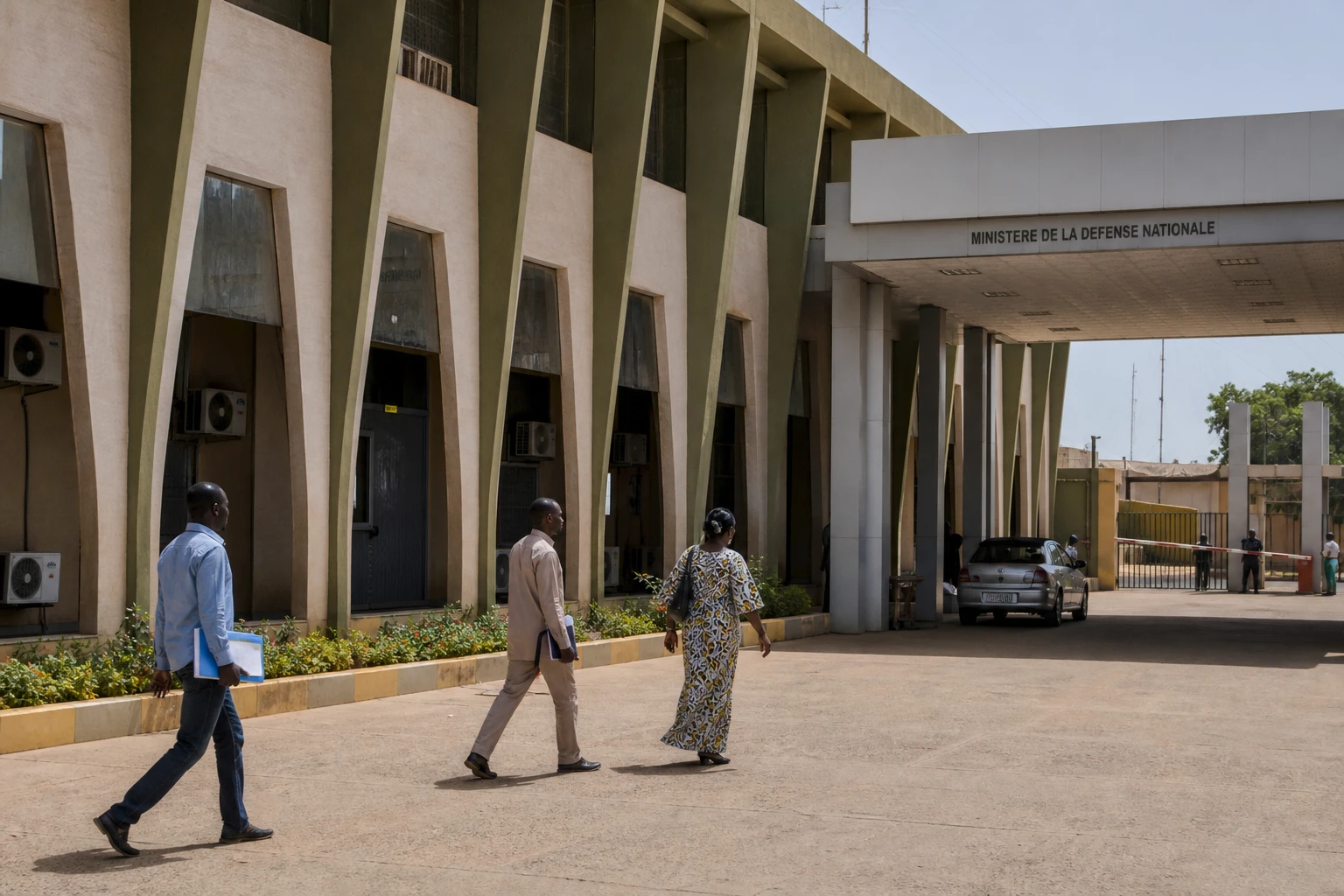
Niamey on edge as military rule remains fragile
In Niamey, the challenge is no longer simply to hold on to power. It is also to preserve the cohesion of an army that, since the July 2023 coup, has become the main pillar of Niger’s regime. The night of 28 to 29 August 2026 was a reminder of that fragility: gunfire targeted sensitive sites in the capital, foremost among them Base 101, located within the grounds of Diori Hamani International Airport.
Niger is also pursuing an assertive regional realignment with Burkina Faso and Mali within the Alliance of Sahel States (AES), following the three countries’ official withdrawal from ECOWAS. This choice has shifted some diplomatic balances, but it has not resolved the heart of Niger’s problem: internal security, discipline within the forces and the constant pressure of armed groups in several regions of the country.
What Niger’s authorities say
Niger’s Ministry of Defence confirmed that “a group of soldiers in breach of military regulations” had, at around 00:20, detained some of their comrades in the barracks at Base 101, then fired on sensitive sites in Niamey. The statement says the swift response by the defence and security forces contained the mutiny and allowed them gradually to regain control of the sites.
The public broadcaster Le Sahel carried the statement on 29 August, adding that a separate statement from the Confederation of Sahel States referred to the same sequence of events during the night of 28 to 29 August. This alignment between Niger’s official account and the AES’s communications confirms the political gravity of the incident.
International and African media, for their part, reported gunfire and explosions near the airport and the presidency, before the announcement that calm was gradually returning. Reuters, AFP, as carried by several newsrooms, AP and Africanews described a mutiny involving soldiers from the Nigerien army, not an external attack.
A test of military discipline and the “refoundation” narrative
This fresh bout of unrest comes amid security fatigue. For three years, General Abdourahamane Tiani’s regime has promised to restore order after the overthrow of President Mohamed Bazoum. But jihadist attacks continue, particularly in the west and south-west of the country, weighing on troop morale and shaping perceptions of the authorities in areas at risk.
The fact that Base 101 is within the perimeter of Niamey airport gives the episode particular significance. The site has military, logistical and diplomatic functions. Reports published by Reuters and other media have noted that it also hosts a Russian presence linked to Africa Corps, successor to Russia’s paramilitary deployment in the Sahel, as well as an Italian cooperation contingent. Any disturbance there thus becomes a political signal as much as a barracks incident.
Statements attributed to regime supporters and carried in the press show that the authorities are also seeking to control the narrative. They portray the episode as an attempt at destabilisation by “ill-intentioned” elements, as the junta seeks to embody restored sovereignty. But the real issue for Nigeriens is more concrete: whether the army can remain united as security fronts multiply and the capital itself has already faced several alerts this year.
What this means for Niger and beyond
For Niamey’s population, the episode heightens a sense of vulnerability already fuelled by the June attacks on the airport and recurring tensions around strategic sites. For the military, it reveals an internal rift more troubling than a simple breach of discipline: when the chain of command falters, the entire structure of the military transition is weakened.
At regional level, the affair has immediate repercussions. ECOWAS, which continues to engage with Niger, Burkina Faso and Mali despite the political rupture, is closely monitoring security developments in the Sahel. The AES, for its part, is seeking to establish itself as a framework for sovereignty and cooperation, but it still has to prove that it can deliver stability beyond declarations and institutional logos.
The continental significance is clear: the Sahel remains a testing ground for the reshaping of alliances, where insecurity, military transitions and new foreign presences are intertwined. In Niamey, this night of gunfire says more than just something about a mutiny. It also reveals how difficult it is for a state undergoing refoundation to turn military authority into lasting stability.



