
 Algeria
 Egypt
 Libya
 Morocco
 Sudan
 Tunisia
 Benin
 Burkina Faso
 Cabo Verde
 Côte d'Ivoire
 Ghana
 Guinea
 Guinea-Bissau
 Liberia
 Mali
 Mauritania
 Niger
 Nigeria
 Senegal
 Sierra Leone
 The Gambia
 Togo
 Cameroon
 Central African Republic
 Chad
 Equatorial Guinea
 Gabon
 Republic of the Congo
 São Tomé and Príncipe
 Burundi
 Comoros
 Djibouti
 Eritrea
 Ethiopia
 Kenya
 Madagascar
 Malawi
 Mauritius
 Mozambique
 Rwanda
 Seychelles
 Somalia
 South Sudan
 Tanzania
 Uganda
 Angola
 Botswana
 Eswatini
 Lesotho
 Namibia
 South Africa
 Zambia
 Zimbabwe
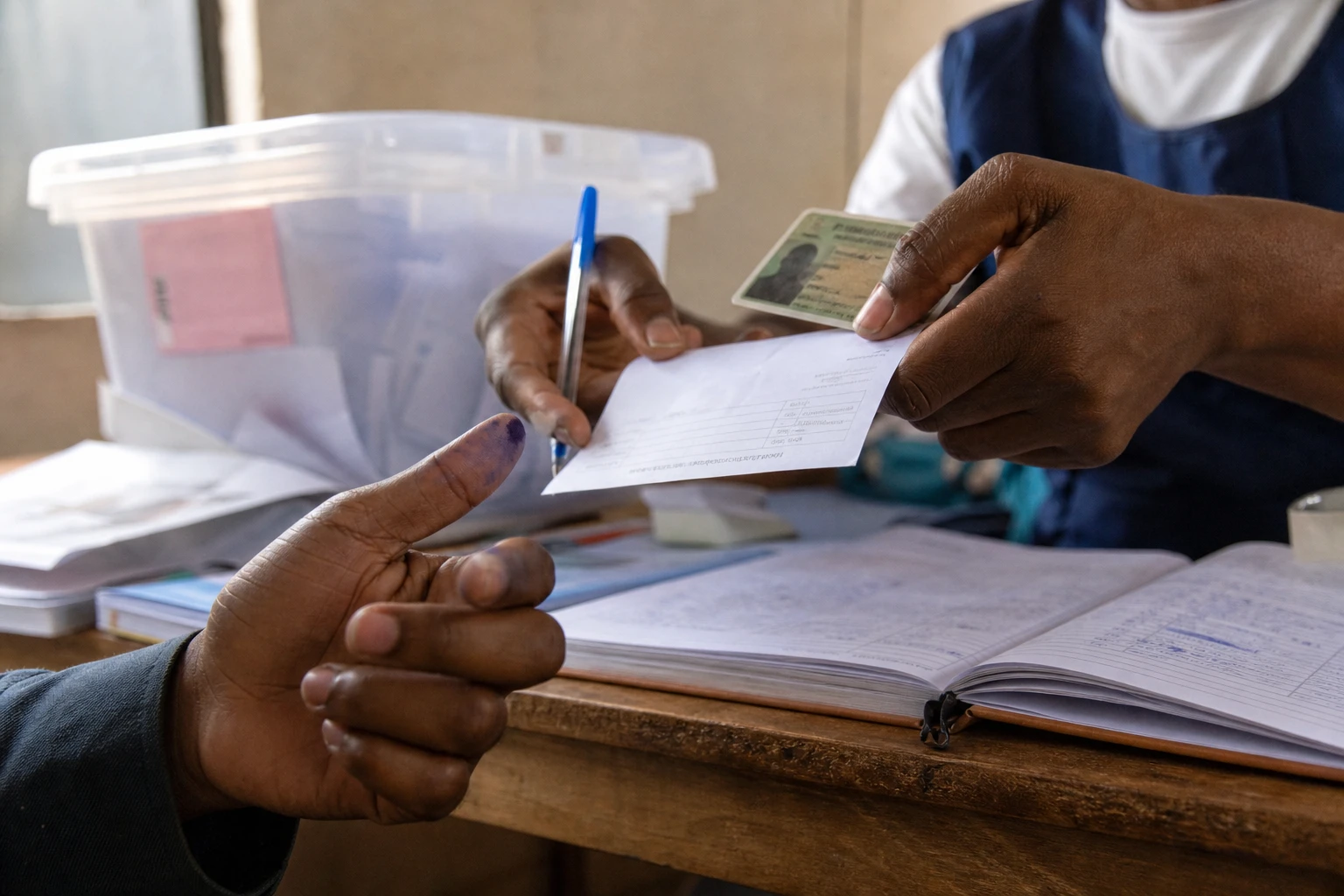
In Kisangani, the response steps up
When an epidemic affects several provinces, the first challenge is not just treatment. It is the ability to protect quickly those who remain in contact with patients: health workers, surveillance teams, logisticians and community volunteers. In Kisangani, capital of Tshopo, the Democratic Republic of the Congo launched an Ebola vaccination campaign on 27 August 2026, initially targeting health workers.
The decision comes as the outbreak linked to the Bundibugyo virus has spread to six provinces in the east and north-east of the country, according to the World Health Organization. The WHO said cases had been reported in 54 health zones, with active transmission in Ituri, North Kivu, South Kivu, Haut-Uélé, Tshopo and Bas-Uélé.
Vaccination is therefore being used as a tool for immediate protection, but also as a means of scientific observation. The aim is to document, in real-world conditions, what a vaccine already known to be effective against other strains might offer against a less familiar one.
A known vaccine, a harder strain to cover
The vaccine being deployed is Ervebo, which has already been used in previous Ebola outbreaks caused by the Zaire virus. The WHO nevertheless notes that it is not yet known whether it protects against the Bundibugyo virus, which is responsible for the current epidemic. Its use in the DRC is therefore part of a strategy to protect the groups most at risk, under exceptional conditions and accompanied by data monitoring.
Logistically, Kinshasa has received doses of Ervebo as the response has scaled up. On 20 August, the WHO and Africa CDC welcomed the allocation of vaccines to the DRC, noting that more than 56,000 doses had already been allocated to the country for other Ebola responses between 2021 and July 2026. International media subsequently reported the arrival of a new shipment of more than 16,000 doses, before the campaign got under way in Kisangani.
At the launch of the campaign, Congolese Health Minister Samuel-Roger Kamba urged health workers to get vaccinated as a priority. Congolese media reported that Tshopo had 17 confirmed cases since the start of the epidemic, confirming that the province remains one of the outbreak’s active centres.
The WHO, for its part, said vaccination of health workers began on 27 August in some areas, including Kisangani. The agency also stresses that in areas of active transmission, the response must combine vaccination, contact tracing, clinical care, community engagement and controls on high-risk movements.
What the campaign says about the DRC and the region
For the DRC, this episode is a reminder of a familiar but still costly reality: containing Ebola depends as much on science as on the state’s ability to reach affected areas quickly. Kisangani is not just a health hub. It is also a transport junction on the Congo River, at the heart of trade between the country’s interior and major commercial routes. The WHO has also described the “Congo River Without Ebola” initiative as a measure designed to secure this vital artery.
The regional context matters just as much. The current outbreak has drawn on expertise from the WHO and Africa CDC, the continent’s public health agency, showing that the response is no longer being managed only at provincial or national level. It also concerns health preparedness in Central Africa and the Great Lakes region, where travel between urban areas, borders and river routes can accelerate transmission.
The situation is especially sensitive because Ebola first affects health workers, then communities that may or may not trust health facilities. The WHO says vaccination remains appropriate for people at high risk, but also calls for tailored communication, since local acceptance determines much of the response’s effectiveness.
In the background, the DRC is also seeking to generate evidence. The use of Ervebo, when no vaccine specifically approved for the Bundibugyo strain is yet available, should help document any cross-protection and inform future public health decisions. Clinical research on other vaccine candidates is also under way, notably at Oxford and Moderna, but remains at an early stage.
The continental implications are clear: the Congolese response is becoming a test for African health security. If vaccination of exposed workers, community surveillance and controls on transport routes can slow the outbreak, the DRC will strengthen expertise already tested in previous episodes. If the response falters, the effects will be felt far beyond Tshopo, across the Great Lakes region.



