
 Algeria
 Egypt
 Libya
 Morocco
 Sudan
 Tunisia
 Benin
 Burkina Faso
 Cabo Verde
 Côte d'Ivoire
 Ghana
 Guinea
 Guinea-Bissau
 Liberia
 Mali
 Mauritania
 Niger
 Nigeria
 Senegal
 Sierra Leone
 The Gambia
 Togo
 Cameroon
 Central African Republic
 Chad
 Equatorial Guinea
 Gabon
 Republic of the Congo
 São Tomé and Príncipe
 Burundi
 Comoros
 Djibouti
 Eritrea
 Ethiopia
 Kenya
 Madagascar
 Malawi
 Mauritius
 Mozambique
 Rwanda
 Seychelles
 Somalia
 South Sudan
 Tanzania
 Uganda
 Angola
 Botswana
 Eswatini
 Lesotho
 Namibia
 South Africa
 Zambia
 Zimbabwe
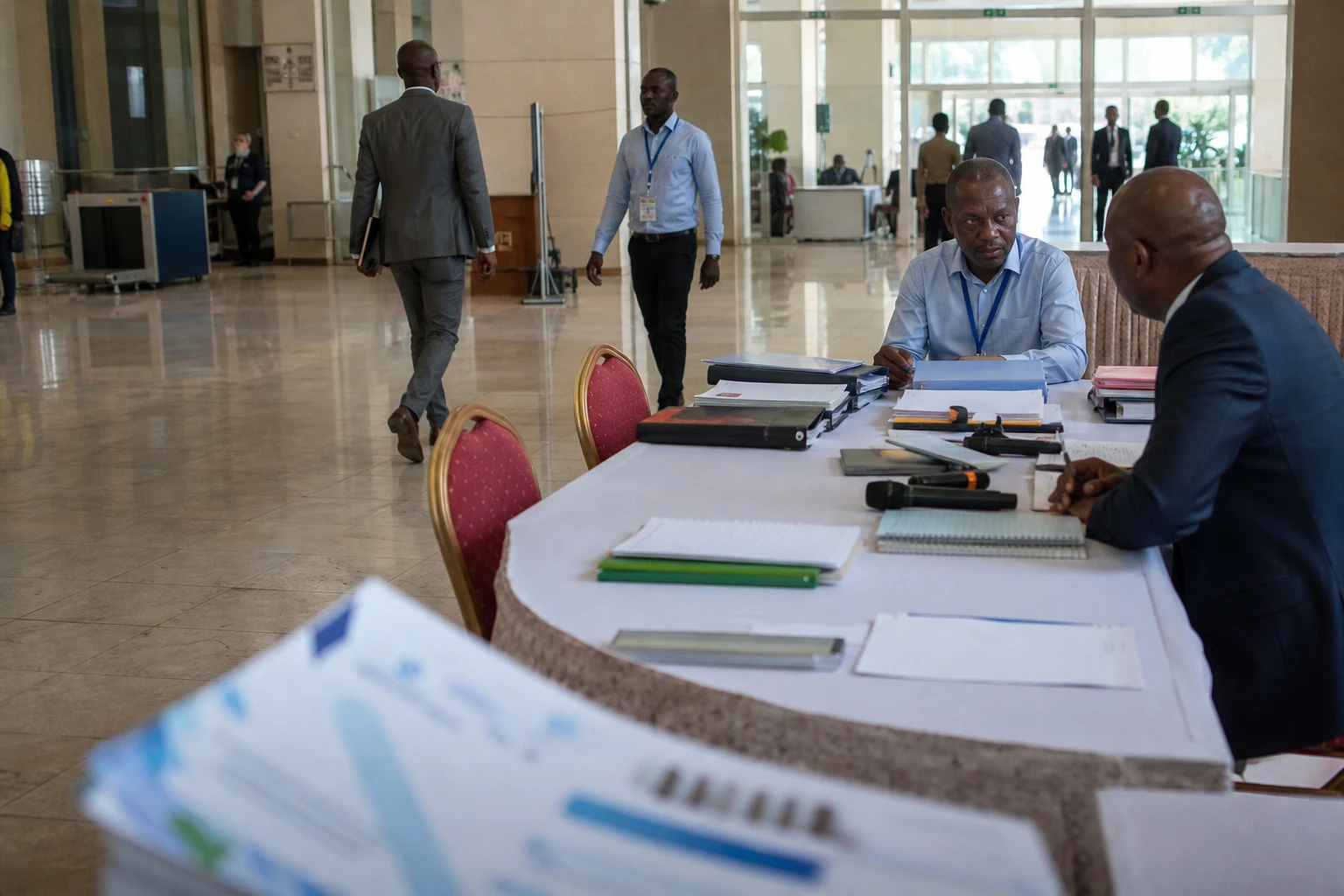
A dialogue beginning far from Kinshasa
In the Democratic Republic of the Congo, major political announcements are often made in Kinshasa and then run up against realities on the ground. This time, Félix Tshisekedi wanted to reverse the sequence. The head of state has launched a National Dialogue for Peace, Cohesion and the Refounding of the State, limited to three months and first set to take place in all 26 provinces before a synthesis in Kinshasa. The message is clear: start in the territories and return to the centre, rather than doing the opposite.
This choice comes at a time when the crisis in the east continues to weigh on the country’s entire political life. The Democratic Republic of the Congo remains engaged in several parallel frameworks: the African Union’s mediation efforts, the Doha talks, commitments made in Washington, and the support voiced by SADC and the United Nations for a lasting political solution. At regional level, the stakes go beyond the DRC alone: stability in the Great Lakes region also shapes the balance within the East African Community, SADC and Central Africa as a whole.
What the head of state has proposed
On the evening of 27 August, Félix Tshisekedi outlined a two-stage format. First, consultations in the provinces, territories and communities. Then, national meetings in Kinshasa. The presidency describes it as an unprecedented process, designed to address the structural causes of instability rather than simply distribute positions. The head of state also set a red line: actors who take up arms, occupy part of the territory or act in the service of a foreign power will not take part in the dialogue as political groups. In Kinshasa’s view, the framework must therefore remain sovereign and republican, and be limited in time.
The announcement did not come out of nowhere. For several months, religious denominations, notably the CENCO and the ECC, have been pushing a roadmap for an inclusive national dialogue. They say they want to break the country’s cycle of armed conflict and rebuild trust among Congolese people. Talks have taken place with the presidency, and the idea of a social pact has also been discussed with international partners. The government is therefore taking up an idea already established in public debate, but taking control of it, with a timetable and structure set by the presidential palace.
A credibility test for Kinshasa
The sensitive issue is not the announcement. It is trust. Many in Congolese political circles remember dialogues that led to temporary compromises without resolving underlying weaknesses. The government wants to avoid the appearance of power-sharing under pressure. The opposition, meanwhile, fears a process whose outcome is predetermined. Political analyst Christian Moleka believes the consultation phase could drag on and push the real political dialogue further back than announced. In short, the official timetable is short, but the political process could extend it.
The role of armed actors is also under debate. By excluding groups that continue to fight with weapons, Kinshasa is seeking to distinguish internal political dialogue from security negotiations. This separation may reassure some members of the public who want civilian voices to regain their rightful place. But it could also limit the process if actors controlling areas where fighting is taking place remain outside the framework for discussion. In the east, where violence continues to displace people and undermine economic activity, the gap between national announcements and local realities remains the main risk.
In Kinshasa, the dialogue could give the head of state the initiative again. In the provinces, above all, it will have to prove that he is listening to more than the elites already in the public eye. This is where the territorial format takes on meaning. Local notables, traditional authorities, churches, academics and business communities must be heard, because the Congolese crisis is not only institutional. It also affects access to public services, security, the movement of goods, commercial life and the relationship between the capital and the periphery. If this diversity is merely on display, the dialogue will quickly be seen as a communications exercise.
A reach beyond domestic politics
For Central Africa and the Great Lakes region, this new sequencing sends a signal. The African Union has already appointed Faure Gnassingbé as mediator in the peace process in eastern Congo, while Angola has called for reconciliation among Congolese. SADC, for its part, reaffirmed its support in Durban for coordinated efforts to restore peace, protect civilians and promote inclusive dialogue in the DRC. These developments show that the Congolese question is now being addressed at several levels, but that no one level can succeed alone.
What happens next will depend on two very concrete things: the publication of the decrees and the organising committee, and the government’s ability to set rules accepted beyond its own camp. The provincial consultations will show whether the dialogue is merely institutional window-dressing or a genuine attempt to root political decision-making in the country as it is. In the DRC, the challenge is not simply to talk. It is to restore a framework in which political voices carry more weight than force, without denying that security in the east continues to shape everything else. The process will be judged by that standard, and by what happens on the ground.



