
 Algeria
 Egypt
 Libya
 Morocco
 Sudan
 Tunisia
 Benin
 Burkina Faso
 Cabo Verde
 Côte d'Ivoire
 Guinea
 Guinea-Bissau
 Liberia
 Mali
 Mauritania
 Niger
 Nigeria
 Senegal
 Sierra Leone
 The Gambia
 Togo
 Cameroon
 Central African Republic
 Chad
 DR Congo
 Equatorial Guinea
 Gabon
 Republic of the Congo
 São Tomé and Príncipe
 Burundi
 Comoros
 Djibouti
 Eritrea
 Ethiopia
 Kenya
 Madagascar
 Malawi
 Mauritius
 Mozambique
 Rwanda
 Seychelles
 Somalia
 South Sudan
 Tanzania
 Uganda
 Angola
 Botswana
 Eswatini
 Lesotho
 Namibia
 South Africa
 Zambia
 Zimbabwe
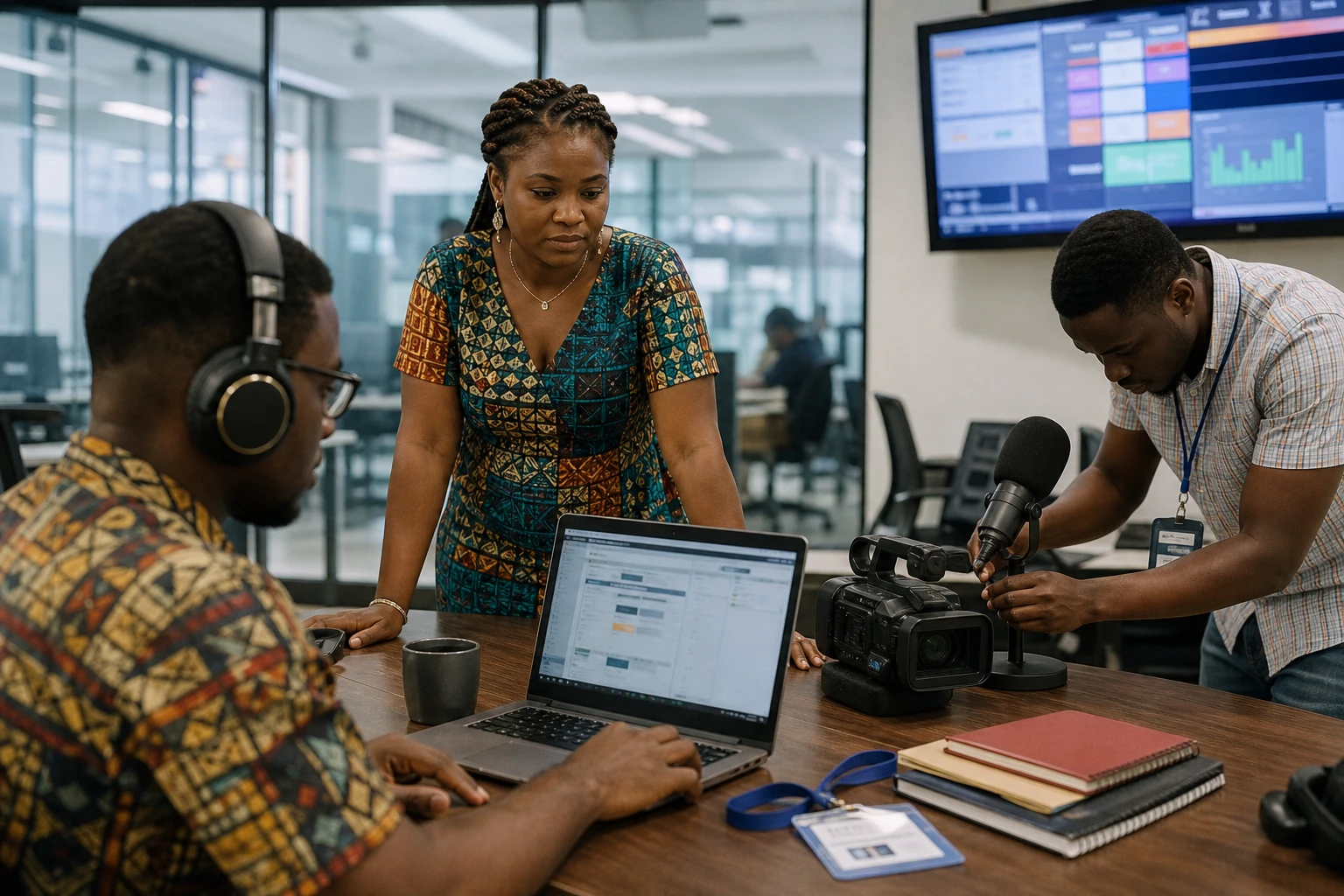
Training the women who are shaping the country’s digital future
In Accra, a university programme is seeking to answer a very practical question: who will master artificial intelligence tools in higher education institutions in the years ahead? In Ghana, the issue goes beyond simply upgrading skills. It concerns women’s role in leading change, as education professions evolve rapidly and digital divides remain evident.
The initiative launched by the Institute for Educational Planning and Administration at the University of Cape Coast is part of this effort. The institution is working with its Centre for Gender Research and with support from organisations linked to UNESCO. Ghana’s selection is no coincidence: the country has already embarked on several initiatives to narrow the digital divide, but women remain less connected and have fewer advanced digital skills.
What Ghana’s programme involves
The initiative, called “Women Leading Change in Africa”, aims to reach 1,000 higher education professionals between August 2026 and November 2027. The programme is free and offers more than 57 micro-credentials through a dedicated platform. Each module can be completed separately, allowing participants to progress at their own pace without having to wait until the end of a long course to receive a certificate. Two in-person cohorts are due to complement the programme, ahead of a public policy dialogue planned for 2027.
The programme’s core aim is clear: to strengthen the skills of women already working in the system in artificial intelligence, university administration and educational leadership. In practice, this means training teachers, executives, administrators and academic leaders who can use, as well as oversee, tools that have become central to managing courses, assessment, content creation and educational services. The project therefore aims to address both how these tools are used and how they are governed.
A useful signal in the face of a persistent divide
This initiative responds to a reality documented across Africa. UNESCO’s 2024 Global Education Monitoring Report notes that women account for 35% of graduates in STEM — science, technology, engineering and mathematics — and hold only a quarter of jobs in science, engineering and ICT. In other words, under-representation does not begin at the point of recruitment; it takes root much earlier, in access to training, networks and positions of responsibility.
The picture is even clearer when it comes to digital technology use. A 2024 study by the African Union’s CIEFFA and ImpactHER surveyed more than 4,000 people in 52 African countries. It found that 60% of respondents had never received digital skills training, 34.7% owned no digital device, and only 14% said they had AI skills. This snapshot reflects a continent-wide reality: AI’s promise will not have the same impact on everyone if access to learning remains unequal.
In this context, the format matters as much as the content. Micro-credentials allow for quick cycles of practice and assessment. They suit professionals already juggling teaching, research and management responsibilities. They also reduce the time barrier, which is often decisive for women in higher education because academic careers remain shaped by unequal family and institutional expectations. The issue is therefore not just technical. It is also organisational and social.
What this initiative says about Ghana and West Africa
In Ghana, UNESCO reports that the proportion of women connected to the internet has risen, but remains limited: 29% of women are now online, compared with less than 20% in 2016. Progress has been made, but it is not enough to ensure full participation in the digital economy. The question is no longer just about getting online. It is also about knowing how to use the internet to learn, create, teach and make decisions.
The Cape Coast programme is therefore part of a broader national trajectory. For several years, Ghanaian authorities have been pursuing multiple initiatives on digital inclusion and girls in science. But this new effort adds a different dimension: it targets women already working in higher education, where the country’s future leaders are trained. It is a strategic bet, because a university that equips its female teachers and administrators also influences the future practices of students, researchers and decision-makers.
The programme’s reach extends beyond Ghana. In West Africa, where universities play a central role in social mobility and the training of the administrative elite, women’s access to AI is becoming a matter of competitiveness, as well as educational sovereignty. The initiative planned in Cape Coast thus joins a broader African trend: ensuring that the tools of tomorrow are not developed without the women who are already teaching, guiding and making decisions today. The real value of this micro-credential will be measured by this in the months ahead.



