
 Algeria
 Egypt
 Libya
 Morocco
 Sudan
 Tunisia
 Benin
 Burkina Faso
 Cabo Verde
 Ghana
 Guinea
 Guinea-Bissau
 Liberia
 Mali
 Mauritania
 Niger
 Nigeria
 Senegal
 Sierra Leone
 The Gambia
 Togo
 Cameroon
 Central African Republic
 Chad
 DR Congo
 Equatorial Guinea
 Gabon
 Republic of the Congo
 São Tomé and Príncipe
 Burundi
 Comoros
 Djibouti
 Eritrea
 Ethiopia
 Kenya
 Madagascar
 Malawi
 Mauritius
 Mozambique
 Rwanda
 Seychelles
 Somalia
 South Sudan
 Tanzania
 Uganda
 Angola
 Botswana
 Eswatini
 Lesotho
 Namibia
 South Africa
 Zambia
 Zimbabwe
A better-defined border, a clearer daily reality
Between northern Côte d’Ivoire and southern Mali, the border is more than a line on a map. It shapes markets, transhumance routes, land rights and the movement of thousands of families living on either side of the boundary. For Côte d’Ivoire, whose political capital is Yamoussoukro, the issue is also very practical: turning a sensitive area into a better-organised space for movement, without disrupting local practices or hindering cross-border trade.
In this matter, the regional dimension is as important as bilateral diplomacy. The African Union, through its African Union Border Programme, has for years urged states to complete the delimitation and demarcation of their borders while promoting cross-border cooperation. ECOWAS, too, advocates integrated border management mechanisms to facilitate trade and reduce friction in crossing areas.
What was approved in Bamako
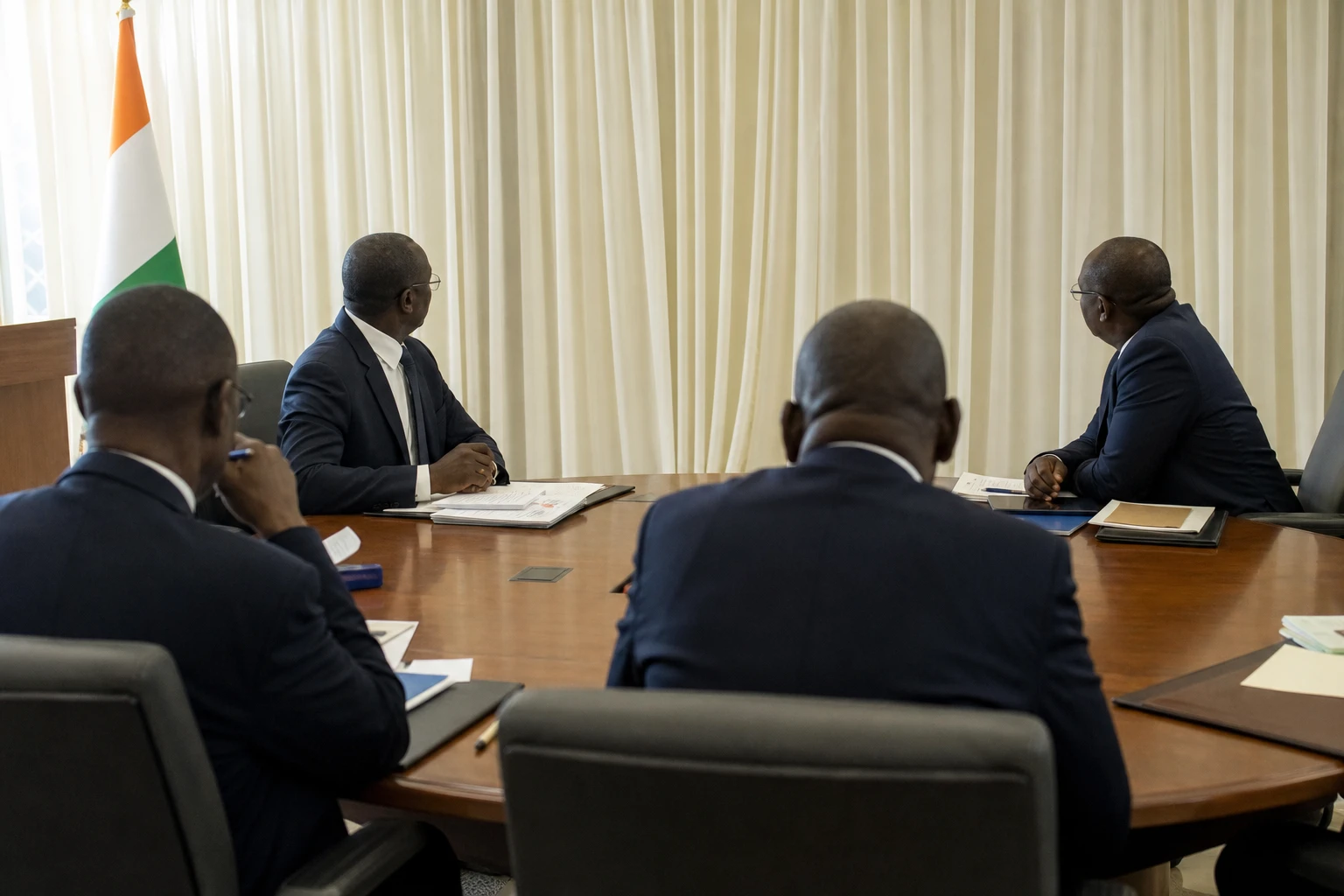
From 21 to 25 August 2026 in Bamako, Ivorian and Malian experts meeting as part of the Joint Technical Commission for the Demarcation of the Border unanimously adopted the definitive line of their shared border, as well as a draft delimitation treaty. The Ivorian government text states that the two parties also approved a basic framework for future demarcation and boundary-marker installation operations.
This step did not come out of the blue. The work in Bamako builds on a joint technical reconnaissance mission carried out from 12 to 19 April 2026 in the area of Pogo, on the Ivorian side, and Zégoua, on the Malian side. An earlier stage had already laid the groundwork, with a technical meeting in Grand-Bassam and a previous field reconnaissance mission. In other words, the two states followed a standard border process: survey, compare, arbitrate, then establish a mutually agreed line.
The commission’s fourth session, according to the Ivorian and Malian press, now opens the most delicate phase: the formal signing of the treaty by the authorities, followed by its demarcation on the ground. This is where the legal meets the practical. A line recognised on paper becomes useful only when residents, administrations, security forces and local authorities have a stable reference point.
Land, mobility and local stability
In border areas, the border first affects the land. It can clarify a land dispute, secure a plot or, conversely, bring a contested occupation to light. It also affects transhumance, the seasonal movement of herds, which is often a source of tension when routes are unclear. By clarifying the boundary, Abidjan and Bamako are therefore seeking to reduce areas of ambiguity where conflicts over land use can arise.
For border communities, the impact will depend on how the treaty is implemented. Better-accepted boundary markers can help secure weekly markets, small-scale trade and family ties that often pay little heed to state borders. Conversely, demarcation that is poorly explained or agreed can slow some crossings, particularly for herders, transporters and informal traders whose livelihoods depend on a fluid border. This is why administrative cooperation will matter as much as the line itself.
This issue is also part of a broader economic reality. Côte d’Ivoire remains the largest economy in WAEMU, with a high dependence on the regional movement of goods and people. Mali is among its important trading partners. Making the border more secure therefore serves not only territorial sovereignty, but also logistics flows, local trade and supply chains linking northern Côte d’Ivoire with the Malian market and, beyond that, the wider West African region.
What this says about West Africa
At continental level, the Ivorian-Malian agreement is a reminder that a well-defined border can become a tool for peace rather than simply an instrument of separation. The African Union has long stressed this point: completing delimitation, facilitating cross-border cooperation and strengthening national border management capacity are all part of the same undertaking. In this respect, the case of Côte d’Ivoire and Mali joins efforts elsewhere on the continent, where states are seeking to limit border disputes without disrupting local trade.
For West Africa, the issue is also one of security. Porous borders can fuel smuggling, trafficking and the movement of armed groups, but overly rigid borders can also choke off communities that depend on cross-border trade. Abidjan and Bamako are therefore seeking to make the border a well-managed, clearly defined and cooperative space. The next step to watch will be the signing of the treaty, announced before the end of 2026, followed by the effective deployment of demarcation operations on the ground.



