Algeria
 Egypt
 Libya
 Morocco
 Sudan
 Tunisia
 Benin
 Burkina Faso
 Cabo Verde
 Côte d'Ivoire
 Ghana
 Guinea-Bissau
 Liberia
 Mali
 Mauritania
 Niger
 Nigeria
 Senegal
 Sierra Leone
 The Gambia
 Togo
 Cameroon
 Central African Republic
 Chad
 DR Congo
 Equatorial Guinea
 Gabon
 Republic of the Congo
 São Tomé and Príncipe
 Burundi
 Comoros
 Djibouti
 Eritrea
 Ethiopia
 Kenya
 Madagascar
 Malawi
 Mauritius
 Mozambique
 Rwanda
 Seychelles
 Somalia
 South Sudan
 Tanzania
 Uganda
 Angola
 Botswana
 Eswatini
 Lesotho
 Namibia
 South Africa
 Zambia
 Zimbabwe
A discovery that raises questions about security in forest areas
In Allassoyah, in Forécariah prefecture, a routine search for firewood led to a scene that stunned residents. The bodies of six men were found in a mass grave, blindfolded and with their hands tied, in a forested area of the Sabakhouré sector. Two sources consulted place the discovery on Monday 24 August 2026, and both say the alarm was raised by young people who had gone to collect dead wood.
The incident goes beyond the local area. Forécariah occupies a sensitive position, close to Conakry and facing the Sierra Leonean border. It is also a prefecture where the state regularly makes its presence felt, including through the recent installation of the new elected officials of the urban commune and ceremonies linked to the Transguinean railway project, the future rail line associated with the Simandou project. This institutional presence does not erase the vulnerabilities on the ground: control of forest areas, the discreet movement of people, and limited capacity to prevent violence away from monitored routes.
What is known, and what the justice system must still establish
Initial findings describe six male victims. One is believed to have been about 60 years old, while the other five were younger. None of the bodies has been identified so far. The remains were taken to Forécariah prefectural hospital for forensic examinations intended to establish the victims’ identities, the date of death and the circumstances of their burial. A judicial investigation has been opened.
The public prosecutor at the Forécariah Court of First Instance visited the scene with the defence and security forces, according to the two corroborating accounts. This presence matters. It means the case is no longer just a local finding, but a criminal investigation intended to determine whether this was a multiple homicide, a settling of scores or another act of violence whose nature has yet to be established. For now, there is no basis for attributing a motive or identifying perpetrators.
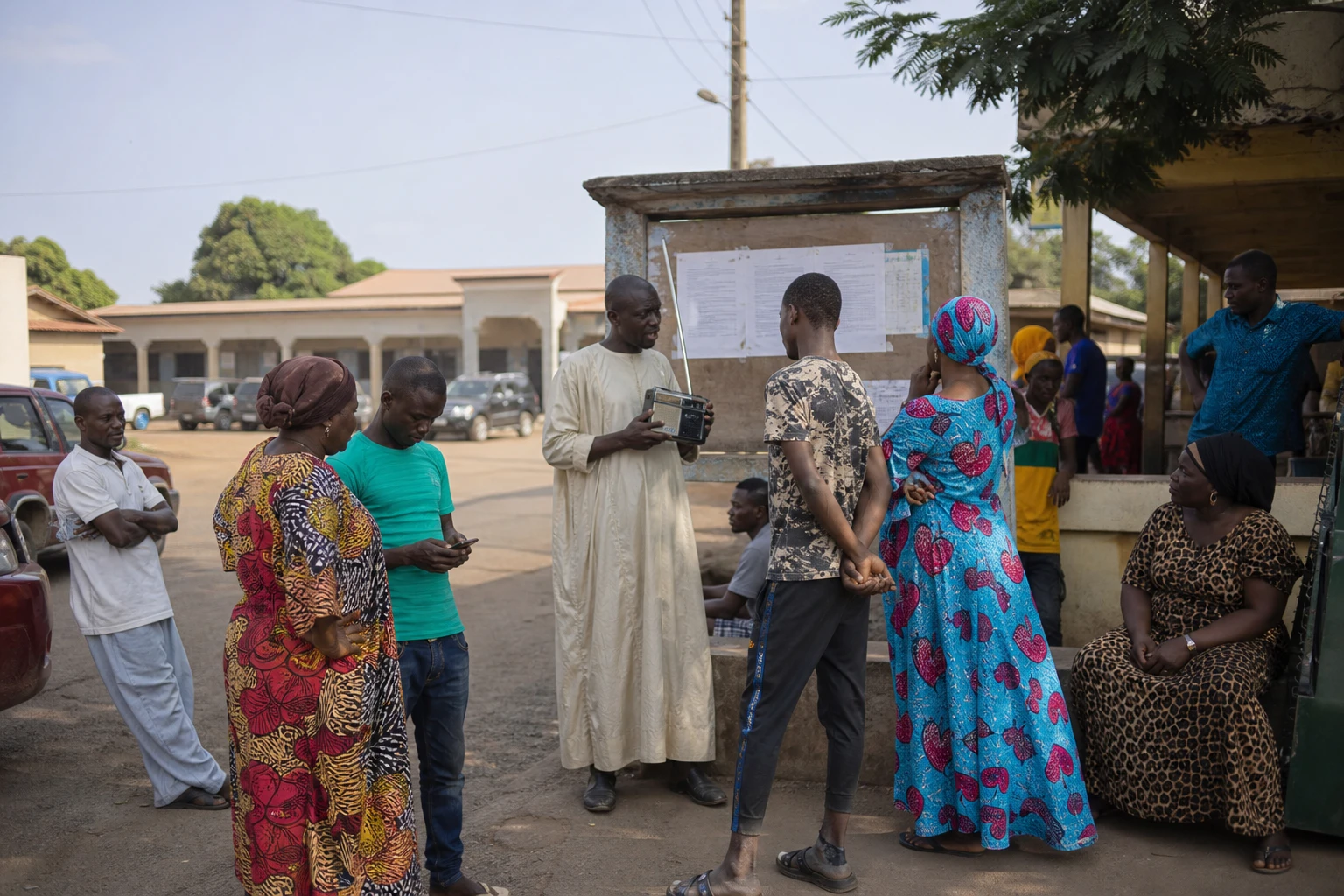
The reaction of local residents reflects the scale of the shock. Some say they do not recognise the victims. Others heard the news on rural radio or through social media, showing how quickly it spread in an area where community ties are often the first line of security alert. The mayor of Allassoyah says he has called an emergency meeting with district chiefs to step up surveillance and organise patrols. This local response illustrates a simple reality: when the institutional response is slow, communities improvise their own alert systems.
Forécariah, a strategic territory between development on display and real vulnerabilities
Forécariah is no ordinary peripheral prefecture. It lies on a strategic route for Guinea, between the Conakry region, cross-border trade and major infrastructure projects. On 12 March 2024, Guinea’s presidency launched the laying of the first rail beam of the Transguinean railway in Kamalayah, in the Moussaya sub-prefecture. The event highlighted the corridor’s economic importance. But it also serves as a reminder that territories crossed by such projects must be considered in terms of human security, not just logistics.
In this prefecture, the rural commune of Allassoyah often features in local news related to public administration, the environment or community activities. It is precisely this kind of area—forested, sparsely populated and close to borders—that becomes vulnerable when public surveillance is incomplete. Firewood, an everyday resource for many rural households, was the starting point for a discovery that points to a possible crime of a different nature. Daily life and security have collided abruptly.
For residents, the immediate issue is not political. It is practical: finding out whether there are other victims, understanding how long the bodies had been buried, and getting answers within a credible timeframe. For local authorities, the case will test the judicial system, as well as trust between the public, police, gendarmerie and prosecutor’s office. In Guinea, as elsewhere in West Africa, an unresolved case in a border area can quickly fuel suspicion, rumours and fear. The transparency of the investigation will matter as much as its findings.
A local case with regional resonance
Beyond Forécariah, the case highlights a shared requirement across West Africa: strengthening local justice, forensic medicine and the effective presence of the state in transit areas. ECOWAS, the regional economic community to which Guinea belongs, has for years stressed border stability and the safe movement of people. But on the ground, security also depends on villages, forest tracks and small communes, far from official statements.
The case also comes at a time when Guinea’s authorities are seeking to showcase development, local reorganisation and major infrastructure works simultaneously. The contrast is stark. On one side are the institutional reconstruction of communes and flagship projects. On the other is a mass grave, a reminder that some areas remain exposed to serious violence that is still poorly documented. What happens next will depend first on the investigation. Then comes the most sensitive question: how to ensure lasting protection for people in the rural and border areas of Forécariah prefecture.