
 Algeria
 Egypt
 Libya
 Sudan
 Tunisia
 Benin
 Burkina Faso
 Cabo Verde
 Côte d'Ivoire
 Ghana
 Guinea
 Guinea-Bissau
 Liberia
 Mali
 Mauritania
 Niger
 Nigeria
 Senegal
 Sierra Leone
 The Gambia
 Togo
 Cameroon
 Central African Republic
 Chad
 DR Congo
 Equatorial Guinea
 Gabon
 Republic of the Congo
 São Tomé and Príncipe
 Burundi
 Comoros
 Djibouti
 Eritrea
 Ethiopia
 Kenya
 Madagascar
 Malawi
 Mauritius
 Mozambique
 Rwanda
 Seychelles
 Somalia
 South Sudan
 Tanzania
 Uganda
 Angola
 Botswana
 Eswatini
 Lesotho
 Namibia
 South Africa
 Zambia
 Zimbabwe
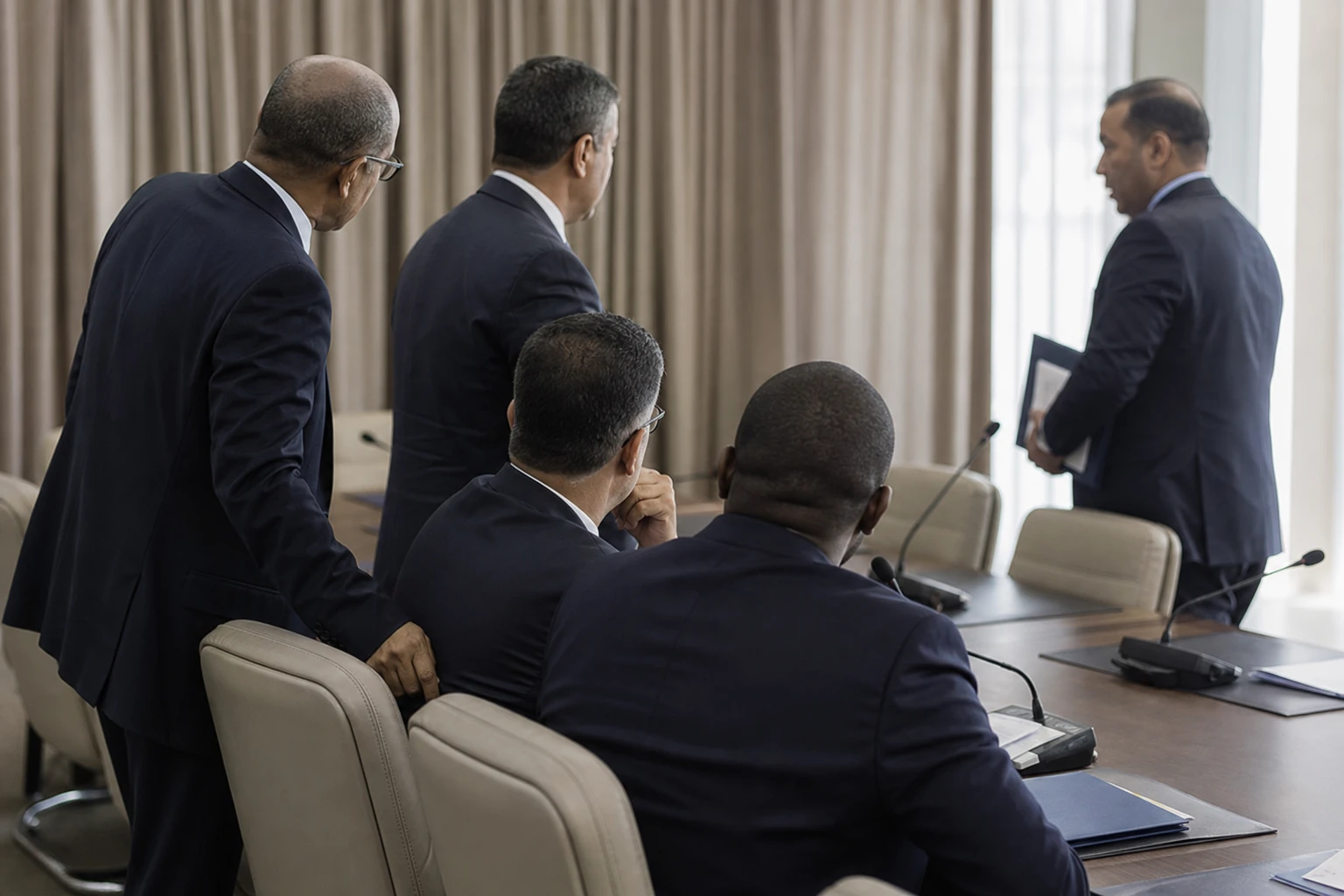
A test of confidence in Moroccan security
A security apparatus relies not only on personnel, budgets or equipment. It also depends on something more fragile: the trust of its partners. It is precisely this invisible asset that the release of data attributed to the Jabaroot group has shaken, as Morocco seeks to strengthen its role as a police hub linking North Africa, the Sahel and several European capitals.
The issue therefore goes beyond administrative embarrassment. In Rabat, domestic security has become a fully fledged diplomatic tool. The kingdom hosts training courses, shares intelligence and presents itself as a partner able to keep channels open when others close. In such a system, a mass leak of names, job titles and metadata does more than muddy files; it can slow exchanges, sow doubt and force partners to reassess their cooperation practices.
What the leak says about Morocco’s current moment
On 24 August, Jabaroot circulated on Telegram a database said to contain the details of 70,381 people linked to the General Directorate for Territorial Surveillance (DGST) and the General Directorate of National Security (DGSN). The documents in question reportedly include identities, dates of birth, national identity card numbers and other administrative information. As is often the case in such incidents, the authenticity of the data as a whole has not been publicly established. Several items previously published by the group were described by the authorities and by media outlets that examined the files as partly false, incomplete or truncated.
This caution matters. The DGSN is not simply an intelligence service: it is a large police administration, while the DGST handles domestic intelligence. The names exposed in the database therefore do not all refer to intelligence officers. But even a partial leak of this kind can be used to map organisational structures, cross-reference locations of assignments, identify liaison staff and detect patterns of movement. That is where the risk becomes strategic.
Morocco is not entering this incident empty-handed. According to the International Telecommunication Union’s 2024 Global Cybersecurity Index, the country ranks in the top tier, with a score of 97.5 out of 100. Its specialist administration highlights progress in legal, organisational, technical and cooperation measures. But the same country has already faced a major cyberattack against the National Social Security Fund (CNSS) since April 2025, exposing sensitive data belonging to a very large number of members and businesses.
Rabat, an African security hub under pressure
Morocco has systematically built its reputation as a reliable security operator on the continent. The opening in Salé of the African Police Cooperation Centre sent a clear signal: Rabat wants to be at the heart of police coordination around major sporting events and cross-border threats. The centre brings together Moroccan representatives and liaison officers from the 23 countries qualified for the Africa Cup of Nations hosted by the kingdom. The initiative is also part of preparations for the 2030 World Cup, which Morocco will co-host with Spain and Portugal.
This strategy is not based solely on new institutions. For years, Morocco has invested in training schools, technical courses and personal networks. Interpol says its National Central Bureau in Rabat connects Moroccan services to other police forces through the secure I-24/7 network. The organisation also stresses that Africa is central to global police cooperation, with an increase in case exchanges and positive hits linked to African data. In other words, the continent is no longer simply a recipient of cooperation; it is becoming a driving force.
That is precisely why the Jabaroot leak is sensitive. If African services have seconded liaison officers to Salé or shared data through joint training programmes, they may fear that aspects of their cooperation have been indirectly exposed. The most tangible effects will not necessarily appear in a statement. They could surface elsewhere: slower exchanges, delayed staff deployments, greater caution over shared information and more internal checks. In cases like this, a break is rarely announced; mistrust first takes hold in silence.
A regional issue beyond superficial rivalries
In the short term, two interpretations are circulating. The first sees Jabaroot as an outside actor exploiting digital tensions around Morocco. The second points to an internal breach, or even score-settling within a security apparatus in which the DGST and the DGED, the foreign intelligence service, are sometimes seen as rivals. Neither hypothesis has been publicly established on technical grounds at this stage. But for Morocco’s African partners, the precise source matters less than the effect: the demonstration that a system considered robust can be vulnerable.
The African context makes the incident all the more significant. Across the continent, police and intelligence services are sharing increasing amounts of data to combat terrorism, trafficking and cybercrime. Interpol points to the expansion of case sharing, the rise in hits drawing on African data and the growing role of secure exchange tools. At the same time, the organisation stresses that cybercrime is among the major threats observed in Africa. A leak in Morocco therefore does not remain in Morocco; it affects one link in a continental network already under strain.
Morocco must now contain a twofold risk. On the one hand, it needs to reassure African partners that have invested time, officers and information in joint mechanisms. On the other, it must preserve its reputation for reliability at a time when its domestic security is already under scrutiny after the CNSS incident, even as its regional ambitions have grown with preparations for the Africa Cup of Nations and the 2030 World Cup. The next test may not come in the form of a dramatic announcement. It will be visible instead in partners’ quiet actions: a delayed deployment, a postponed meeting, a channel narrowed. That is often how the real cost of a leak begins.



