Algeria
 Egypt
 Libya
 Morocco
 Tunisia
 Benin
 Burkina Faso
 Cabo Verde
 Côte d'Ivoire
 Ghana
 Guinea
 Guinea-Bissau
 Liberia
 Mali
 Mauritania
 Niger
 Nigeria
 Senegal
 Sierra Leone
 The Gambia
 Togo
 Cameroon
 Central African Republic
 Chad
 DR Congo
 Equatorial Guinea
 Gabon
 Republic of the Congo
 São Tomé and Príncipe
 Burundi
 Comoros
 Djibouti
 Eritrea
 Ethiopia
 Kenya
 Madagascar
 Malawi
 Mauritius
 Mozambique
 Rwanda
 Seychelles
 Somalia
 South Sudan
 Tanzania
 Uganda
 Angola
 Botswana
 Eswatini
 Lesotho
 Namibia
 South Africa
 Zambia
 Zimbabwe
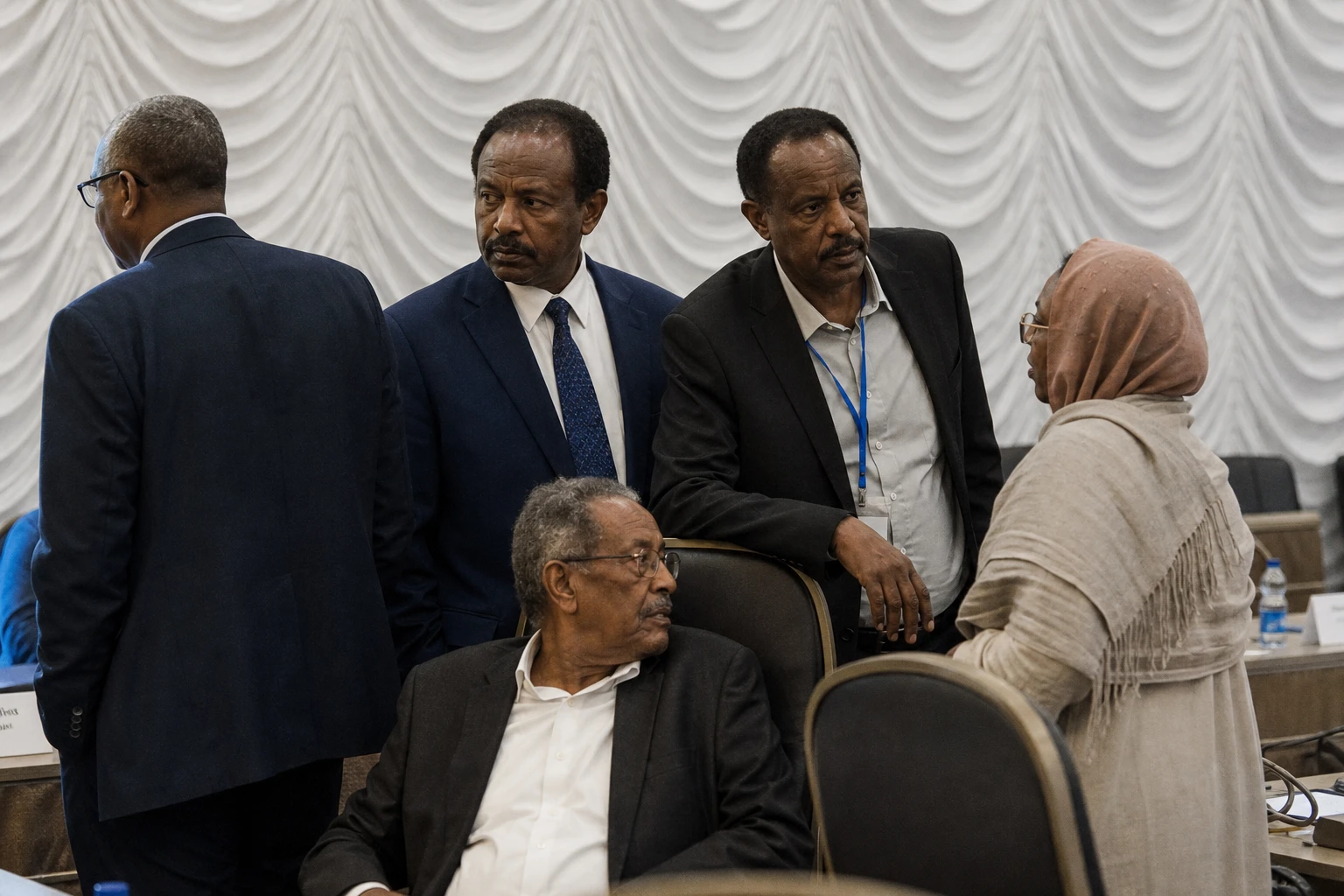
In Sudan, the battle over dialogue is as political as it is military
In Addis Ababa, Sudanese civil forces chose to reject an initiative presented as a way out of the war. Their message is simple: without a genuine ceasefire, the inclusion of all sides to the conflict and guarantees of a civilian transition, the word “dialogue” risks becoming window dressing, not a solution. This divide matters far beyond the conference rooms of the Ethiopian capital, because it touches on a central question for Sudanese people: who can speak for the country while Khartoum remains battered and the fighting continues to displace millions?
The context is a war that has been raging since 15 April 2023 between the Sudanese Armed Forces and the Rapid Support Forces, with devastating effects on civilians, the urban economy and public services. The UN and the International Organization for Migration continue to describe a mass displacement crisis, while the African Union regularly calls for a verifiable ceasefire and an inclusive process led by Sudanese themselves. At regional level, IGAD, the African Union, the Arab League, the UN and the European Union are seeking to co-ordinate their efforts, precisely to prevent competing initiatives from cancelling one another out.
What the forces gathered in Ethiopia rejected
The Addis Ababa meeting brought together, according to available reports, representatives of the Congress Party, the Umma Party, the peace coalition Somoud and Sudanese civil society organisations. Their final position rejects participation in any dialogue convened by General Abdel Fattah al-Burhan if it remains limited to one side or takes place without a halt to the fighting. The main argument is as much political as practical: a peace process cannot be credible if one of the two armed sides—in this case the Rapid Support Forces of General Mohamed Hamdan Dagalo, known as Hemedti—is absent from the discussions.
Participants also say they reject an initiative that, in their view, risks legitimising a military regime born of the October 2021 coup and effectively entrenching the country’s fragmentation. This view has already been voiced by the civil bloc Somoud, which denounced, in early August, an army-led internal dialogue as a manoeuvre liable to normalise territorial division. In this sequence of events, former prime minister Abdalla Hamdok has emerged as one of the most prominent voices in the anti-war camp. He has stressed that no process can be serious while the guns are still speaking.
The rejection is therefore not simply a disagreement over timing. It reflects a battle over legitimacy. For the civil forces gathered in Ethiopia, the question is not who sits around a table, but who sets the rules, who protects civilians and who ensures that the transition is not captured by one party to the conflict. In fragile political systems, this distinction is decisive: dialogue without a ceasefire and a monitoring mechanism quickly becomes a public-relations exercise.
A civilian roadmap in the face of the logic of arms
In response, the Addis Ababa signatories have put forward a counterproposal built around three pillars: opening an emergency humanitarian corridor, establishing a permanent ceasefire and putting in place governance defined by civil society. This sequence says much about the shift under way in Sudan. Before even discussing power-sharing, anti-war actors are putting aid, the protection of the population and the restoration of a demilitarised political space at the centre of the debate.
For residents of Khartoum, Omdurman, El-Fasher and El-Obeid, the difference is tangible. A humanitarian corridor can determine whether medicines, fuel and food arrive. A lasting ceasefire can reopen schools, markets and roads. Civilian governance can, finally, prevent every military advance from immediately turning into an authoritarian reshuffle. For military leaders, by contrast, the stakes are different: control the narrative of the war, retain the diplomatic initiative and present dialogue as a sign of a return to order. It is precisely this balance of power that the civil forces are challenging.
Sudan’s war is no longer just an armed confrontation. It has also caused mass displacement, administrative breakdowns, disrupted markets and enormous pressure on neighbouring states. The IOM continues to track millions of internally displaced people, while humanitarian agencies warn of growing needs and the effects of insecurity in urban areas as well as rural peripheries. This reality explains why the question of dialogue cannot be separated from humanitarian access. In practice, peace is not negotiated in the same way when civilians are still moving from one region to another in the hundreds of thousands.
A Sudanese episode with implications for the whole region
The Sudanese case has clear significance for Africa. It puts the ability of the African Union and IGAD to champion a genuinely Sudanese solution to the test, without sidelining civil actors or letting armed groups dictate the format of a political settlement. It also tests an idea that has become a recurring theme on the continent: lasting peace cannot rest solely on arrangements between military leaders or on parallel mediation efforts that compete with one another. The African Union also reaffirmed in June its commitment to Sudan’s territorial integrity and an inclusive political process.
For North Africa and the Horn of Africa alike, the stakes go beyond Sudan itself. Displacement flows, trade routes, border security and the diplomatic balance in the immediate neighbourhood all depend on the outcome of the conflict. Ethiopia, which is hosting these consultations, has once again become a regional political platform. Addis Ababa is serving here as more than a simple meeting place: it is a test of the credibility of African mediation. If peace talks continue to fragment, they risk entrenching a scenario of dual legitimacy: on one side, military authority; on the other, civilians seeking to keep alive the idea of a unified Sudanese state, governed by civilian institutions in Khartoum.
What happens next will depend on the coming rounds of consultation, the mediators’ ability to bring a ceasefire, humanitarian access and a political framework together, and whether the front lines can be prevented from becoming de facto borders. In Sudan, the debate is not simply between supporters and opponents of dialogue. It is between two ways of thinking about how to end the war: through the consolidation of power born of arms, or through a transition in which civil society takes the lead, from Khartoum to the country’s peripheries.