
 Algeria
 Egypt
 Libya
 Morocco
 Sudan
 Tunisia
 Benin
 Burkina Faso
 Cabo Verde
 Côte d'Ivoire
 Ghana
 Guinea
 Guinea-Bissau
 Liberia
 Mali
 Mauritania
 Niger
 Nigeria
 Sierra Leone
 The Gambia
 Togo
 Cameroon
 Central African Republic
 Chad
 DR Congo
 Equatorial Guinea
 Gabon
 Republic of the Congo
 São Tomé and Príncipe
 Burundi
 Comoros
 Djibouti
 Eritrea
 Ethiopia
 Kenya
 Madagascar
 Malawi
 Mauritius
 Mozambique
 Rwanda
 Seychelles
 Somalia
 South Sudan
 Tanzania
 Uganda
 Angola
 Botswana
 Eswatini
 Lesotho
 Namibia
 South Africa
 Zambia
 Zimbabwe
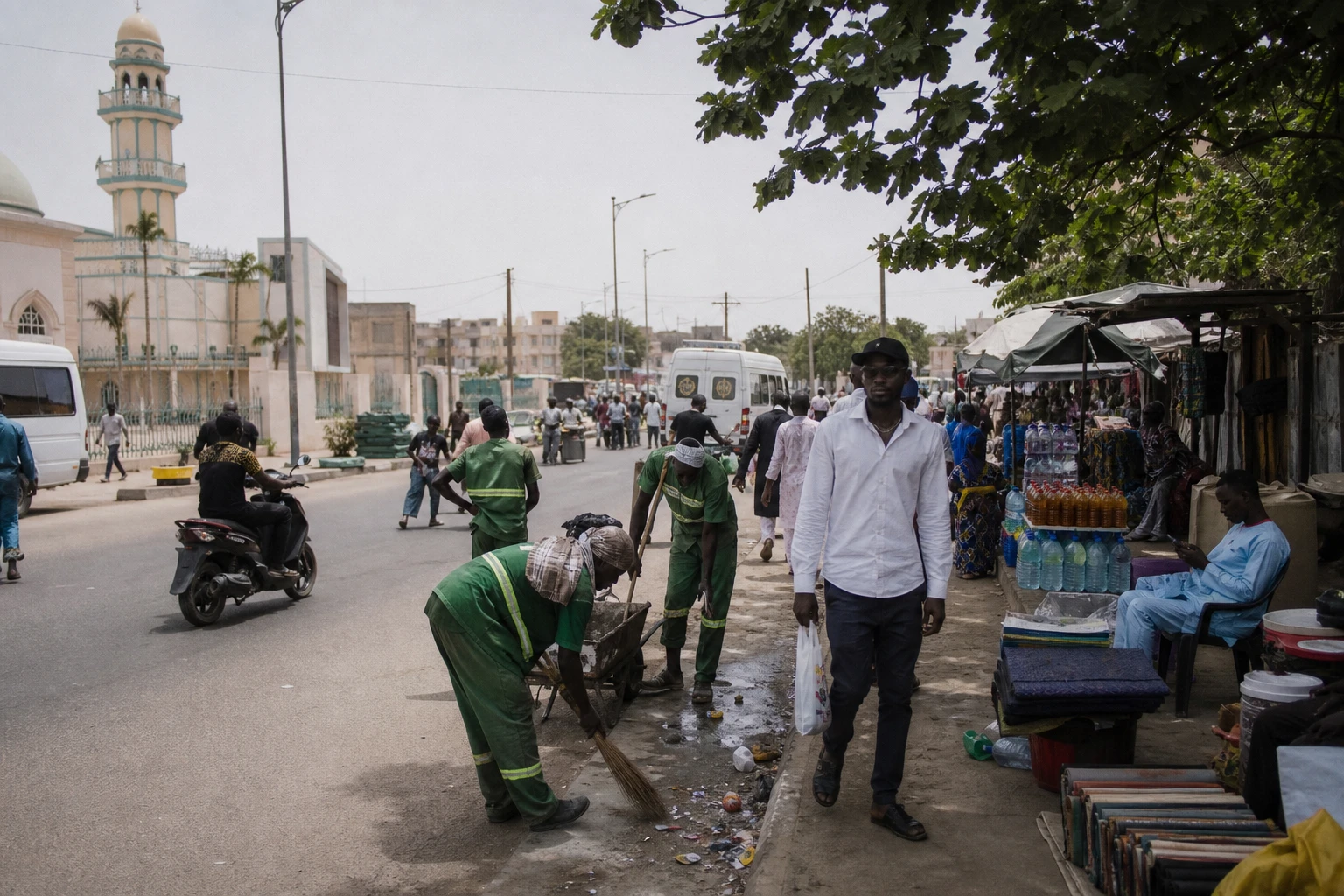
A religious city on edge as it prepares for the Gamou
In Tivaouane, the religious calendar shapes daily life well beyond the faithful. Just days before the Gamou, the major celebration of the Mawlid held in the Tijani city, the town has been confronted with a tragedy that highlights a broader reality: places of religious devotion are not immune to everyday violence, and families need protection first and foremost, not speeches. The 2026 Gamou is being organised around themes linked to unity, social cohesion and spirituality, while the authorities have held a series of security meetings and put traffic measures in place.
Tivaouane, in the Thiès region, holds a special place in Senegal. A major religious city in the west of the country, it welcomes tens of thousands of pilgrims each year and mobilises the administration, police, gendarmerie, local authorities and technical services. This concentration of people calls for heightened vigilance over security, roads, sanitation and healthcare provision, as the municipality also seeks to strengthen its infrastructure.
What the investigation has revealed so far
On 22 August 2026, the body of Ndèye Bigué Sène, 20, was found in a scrubland area of the Séico district in Tivaouane. Initial findings led investigators to focus on a man identified by the initials B. Ndiaye, who was taken into custody as part of an investigation opened into premeditated murder. Several Senegalese media outlets report that he initially denied the allegations, then admitted to the acts during a second questioning.
According to information made public about the case, the victim knew the suspect. The same sources report that she had been preparing for the baccalaureate before also turning to commerce, and that she was staying in Tivaouane for the Gamou after living in Keur Massar with her uncle. Investigators have also examined phone data, often a decisive factor in cases where the relationship between those involved must be reconstructed hour by hour.
Statements attributed to the suspect describe a sequence of violence: blows, strangulation, then the abandonment of the victim’s phone near the railway line. These statements remain part of the investigation and must be checked against the autopsy, the findings at the scene and technical analyses. At this stage, possible sexual violence has not been established and will depend on the medico-legal findings.
Beyond the crime, a social perspective is needed
The case highlights a sensitive issue in Senegal: the influence of certain occult intermediaries, sometimes presented as marabouts or spiritual advisers, over people made vulnerable by poverty, social ambition or the pursuit of rapid advancement. Accounts of “instructions” supposedly leading to wealth, ritual objects given to the suspect and promises of easy gains evoke a familiar imaginary, but one that can carry a heavy social cost when superstition meets real violence.
For the victim’s family, the case goes far beyond the criminal proceedings. It touches on the safety of young women in public spaces, trust in close relationships and the police’s ability to quickly separate fact from fiction. For Tivaouane, it comes at a time when the city must manage pilgrim flows, public order, emergency services and pressure on urban services all at once. In the days before the Gamou, the municipal authorities were themselves preparing to clear roads and crowded spaces.
Religious and administrative authorities therefore face a dual challenge. On the one hand, they must preserve the calm of a major event in Senegalese spiritual life. On the other, they must show that the public response is not limited to securing crowds, but also protects individuals, everyday routes and outlying areas where the most serious violence often occurs. In a city that sees itself as a spiritual reference point, collective trust also depends on the ability to prevent tragedies behind closed doors.
What the case says about Senegal today
The case resonates far beyond Tivaouane. It comes at a time when major religious gatherings shape public space, domestic security and even local economies in Senegal, from transport and accommodation to small businesses and neighbourhood services. Across West Africa, it is also a reminder that security policies must address crowds, outlying neighbourhoods and the protection of women together; otherwise, prevention remains incomplete.
The next major milestone will be judicial. The autopsy, technical cross-checks, a full examination of the phone and the possible identification of the person referred to as “Coulibaly” will show whether the case involves a lone perpetrator or a broader mechanism. In Senegal, where religious cities play a role in social stability, this kind of case is a reminder of a simple truth: religious devotion does not negate gender-based violence, criminal misconduct or the demand for truth.



