Algeria
 Egypt
 Libya
 Morocco
 Tunisia
 Benin
 Burkina Faso
 Cabo Verde
 Côte d'Ivoire
 Ghana
 Guinea
 Guinea-Bissau
 Liberia
 Mali
 Mauritania
 Niger
 Nigeria
 Senegal
 Sierra Leone
 The Gambia
 Togo
 Cameroon
 Central African Republic
 Chad
 DR Congo
 Equatorial Guinea
 Gabon
 Republic of the Congo
 São Tomé and Príncipe
 Burundi
 Comoros
 Djibouti
 Eritrea
 Ethiopia
 Kenya
 Madagascar
 Malawi
 Mauritius
 Mozambique
 Rwanda
 Seychelles
 Somalia
 South Sudan
 Tanzania
 Uganda
 Angola
 Botswana
 Eswatini
 Lesotho
 Namibia
 South Africa
 Zambia
 Zimbabwe
In Sudan, rain is no longer enough to save harvests
In several rural areas of Sudan, the question is no longer simply whether to sow. First, people need to know whether the soil will retain enough moisture, whether roads will remain open and whether families will still be able to access seeds, fuel and markets. In a country already ravaged by war, a dry season harsher than expected can turn agricultural hardship into a crisis of survival.
Sudan has been gripped by conflict since April 2023, displacing millions of people and disrupting the subsistence economy. Humanitarian agencies now describe the country as one of the world’s most severe hunger hotspots. The warning is not abstract: according to the latest IPC assessment, the international benchmark for classifying food insecurity, about 19.5 million people will face crisis-level food insecurity or worse in 2026.
A climate shock compounds the war
The drought forecast in the country’s south-east is not happening in a vacuum. It is hitting an area where production systems are already fragile, prices rise quickly and population displacement makes cultivation more difficult. Humanitarian analyses for 2026 also point to risks linked to El Niño, a natural climate phenomenon that disrupts rainfall and can cause droughts or floods depending on the area. In Sudan, this is not an isolated shock but a multiplier of losses.
Agricultural areas in the south-east, particularly around Blue Nile State and regions near border routes, depend on a very short growing-season window. When the rains arrive at the wrong time, sowing is compromised. When they stop too early, crops fail to ripen. And when war blocks transport, even a decent harvest does not necessarily feed the villages that need it. This threefold pressure — climate, conflict and access — explains the scale of the deterioration.
The latest warnings from the FAO and the World Food Programme rank Sudan among the world’s most critical hunger hotspots for the June-November 2026 period. The agencies warn that unfavourable climate prospects, combined with aid shortfalls and access constraints, risk worsening food insecurity further. The FAO also says it aims to reach 12.3 million people in Sudan in 2026, but faces very substantial funding needs.
Farmers caught between a lost season and inaccessible markets
For Sudanese farmers, drought is measured not only in millimetres of rain. It is also reflected in the cost of inputs, the condition of wells, the availability of pump parts and the ability to sell produce at the right time. When roads are cut off or too dangerous, crops are sold locally at knock-down prices. Rural families then lose twice over: they produce less and earn less.
The humanitarian picture is already extremely bleak in several parts of the country. The FAO and its partners say acute hunger now affects nearly two in five Sudanese people. Other areas are experiencing near-total logistical paralysis, with high prices, forced displacement and degraded public services. In Khartoum, for example, the health crisis and collapse of infrastructure are a reminder that war damages not only cities; it also disrupts the countryside that feeds them.
The south-east is not spared this pattern. Even when an area avoids the heaviest fighting, it suffers the indirect effects of war: fuel shortages, lack of cash, closed trade routes and fear of movement. For farming households, this means fewer seeds saved from one season to the next, less access to informal credit and less capacity to absorb a climate shock. The result is simple: the weather becomes more dangerous when the state no longer performs its basic functions.
Sudan’s warning extends beyond its borders
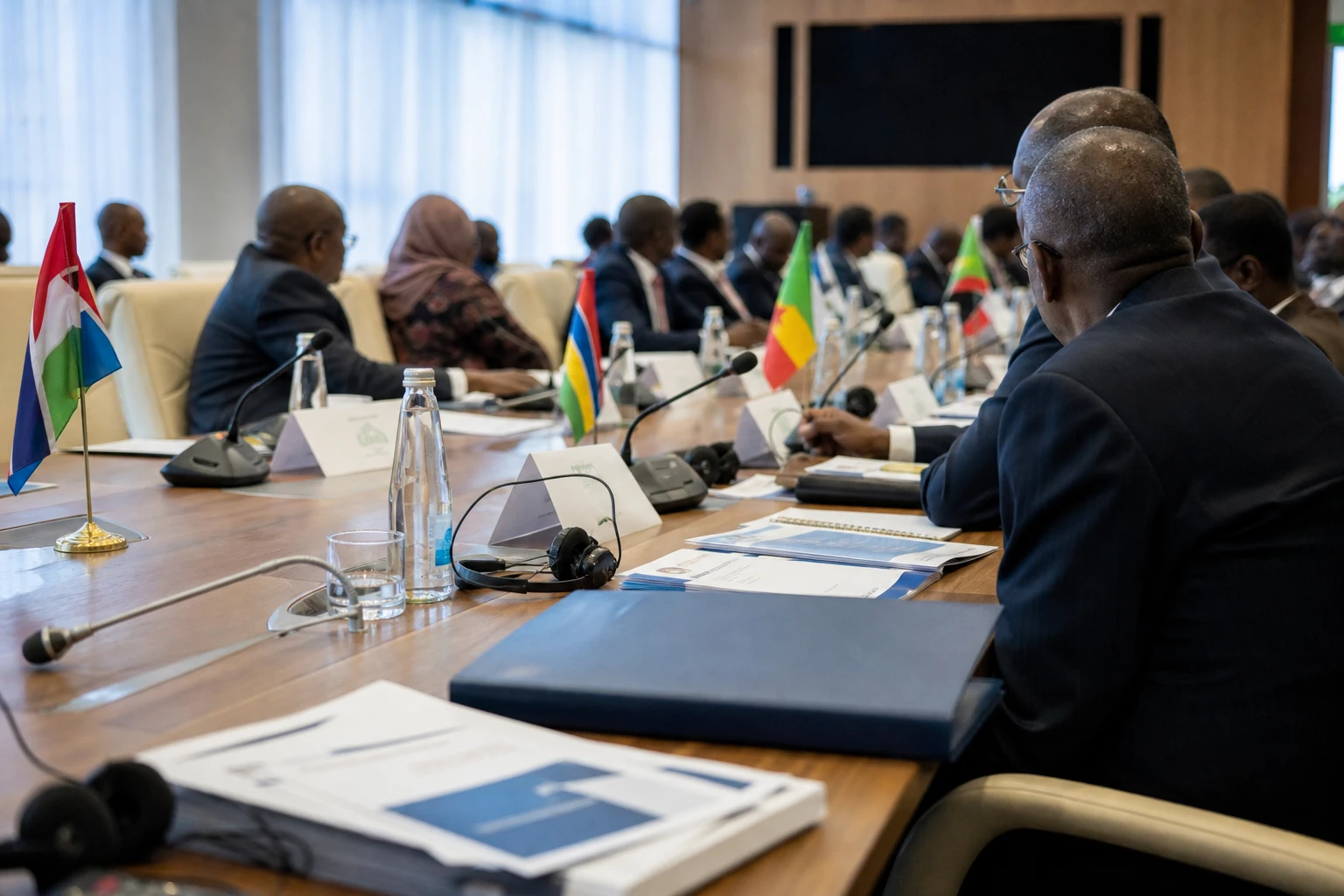
Sudan is not just a humanitarian issue. It is a test of stability across the Horn of Africa. The country is a member of IGAD, the regional organisation that also monitors crises in Ethiopia, Somalia, Kenya, Uganda, Djibouti, Eritrea and South Sudan. When Sudanese production falls, the effects spread to border markets, trade routes and displaced populations. The African Union is also watching the issue as an indicator of the continent’s ability to respond to a crisis combining war, climate and food security.
The regional implications are clear. If rainfall remains low, fighting continues and aid trickles in, Sudan could see the famine-stricken areas already reported in Darfur and Kordofan expand. Conversely, a window of climatic relief will not be enough without humanitarian access, safe roads and support for small-scale producers. That is what is at stake in the coming months: not just one bad season, but the chance to stop it becoming a lasting catastrophe.
For rural families, the real question now is one of continuity. For Khartoum and Port Sudan, it concerns the cost of imports, pressure on aid and the management of a country fragmented by war. For the region, it is a reminder that a food crisis never has just one cause. In Sudan, climate is merely widening a breach already carved out by conflict.