Algeria
 Egypt
 Libya
 Morocco
 Sudan
 Tunisia
 Benin
 Burkina Faso
 Cabo Verde
 Côte d'Ivoire
 Ghana
 Guinea-Bissau
 Liberia
 Mali
 Mauritania
 Niger
 Nigeria
 Senegal
 Sierra Leone
 The Gambia
 Togo
 Cameroon
 Central African Republic
 Chad
 DR Congo
 Equatorial Guinea
 Gabon
 Republic of the Congo
 São Tomé and Príncipe
 Burundi
 Comoros
 Djibouti
 Eritrea
 Ethiopia
 Kenya
 Madagascar
 Malawi
 Mauritius
 Mozambique
 Rwanda
 Seychelles
 Somalia
 South Sudan
 Tanzania
 Uganda
 Angola
 Botswana
 Eswatini
 Lesotho
 Namibia
 South Africa
 Zambia
 Zimbabwe
A city growing faster than its services
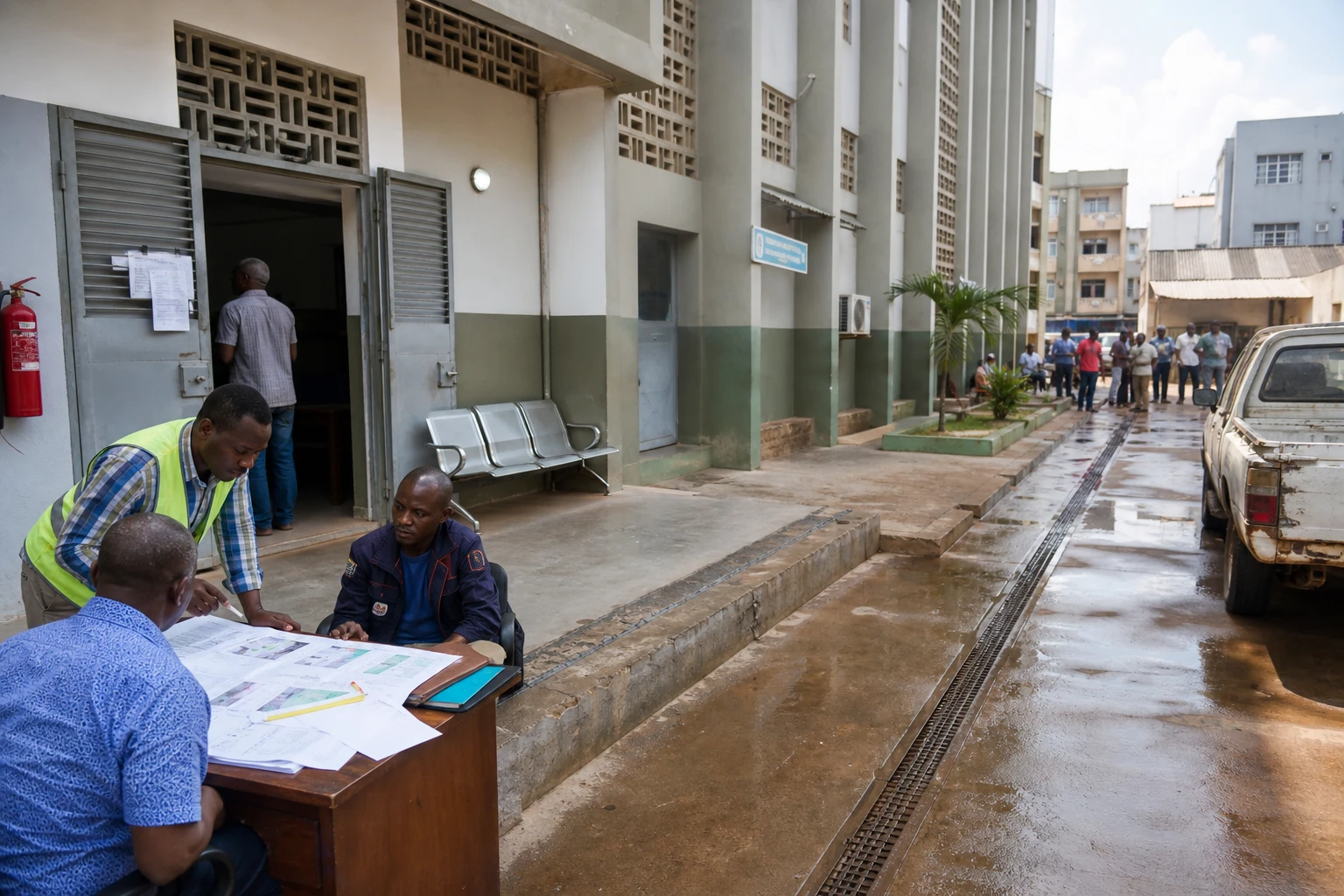
In Conakry, the Guinean capital, rain does not fall only on rooftops. It also exposes the weaknesses of an urban system under pressure. When a rubbish dump becomes a place to live, and then a site whose closure is announced, the risk does not disappear. It shifts. And sometimes, it kills.
The disaster in the Dar es Salam neighbourhood of Guinea is a reminder of a simple reality: sanitation is not a technical issue reserved for ministries. It is a matter of public safety, housing, drainage and local governance. In the capital, the mountain of rubbish at Dar es Salam has for years been known as a source of public health and environmental tensions.
Dar es Salam, a site marked for closure but still dangerous
According to the Guinean authorities, the waste slide occurred in the early hours of Sunday 23 August 2026, after heavy rain fell at around 2am. The official toll announced at the scene was 30 dead, six seriously injured and 16 slightly injured. Search operations were still under way after a mass of rubbish collapsed, burying shacks and makeshift homes.
The key issue here is timing. Two days before the disaster, the government had announced the gradual closure of the Dar es Salam dump, described as one of Conakry’s main environmental challenges. This sequence shows that an administrative decision, even when announced, is not enough to neutralise a site already overwhelmed by years of accumulated waste, human habitation and a lack of suitable infrastructure.
Dar es Salam is not simply a rubbish tip. It is Conakry’s largest dump, situated in an area where families also live in homes built close to the waste slope. Media outlets that have followed the site for several years describe a neighbourhood exposed to smoke, fumes and the risk of landslides, in a densely populated and precarious environment.
What this disaster says about urban Guinea
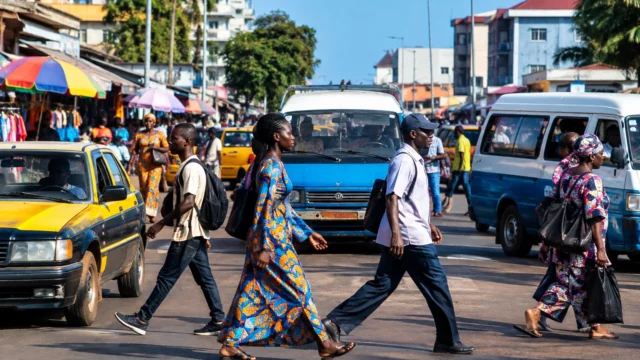
In Guinea, the issue goes beyond the disaster itself. It points to how Conakry is expanding, sometimes faster than its sanitation networks, drains, treatment centres and resettlement policies. When the rain comes, it reveals what was not addressed beforehand. Waste becomes waterlogged, slopes give way, and the buildings nearby become the first victims.
The government says it wants to close Dar es Salam gradually and relocate the remaining families. But the transition is difficult on the ground. Closing a dump without a replacement solution exposes local residents to a double danger: staying near an unstable site, or being displaced without adequate support. The social dimension is therefore central. It affects vulnerable households and informal waste workers, as well as traders and transport operators who depend on the daily economy of these outlying areas.
The case of Conakry is also a reminder that urbanisation in West Africa can no longer be considered without serious management of waste and rainwater. In several capitals across the ECOWAS region, the accumulation of rubbish, the unregulated occupation of low-lying areas and fragile drainage networks turn every rainy season into a stress test. Guinea is therefore no exception. It is on the front line of a regional problem: building liveable cities without shifting risks on to the poorest.
A significance that extends beyond the Guinean capital
This disaster also highlights the importance of prevention. In West Africa, weather warnings and periods of intense rainfall have become as much a part of urban management as they are climate issues. When authorities announce a dump’s closure, they must pair it with a precise timetable, alternative waste-disposal arrangements, a resettlement plan and monitoring of high-risk sites. Without these, closure remains an intention, not protection.
For Guinea, the challenge is immediate. It affects the credibility of government action, as well as the state’s ability to protect Conakry’s residents from well-known risks. For the region, it is a reminder that a coastal capital cannot develop sustainably with open rubbish dumps at the heart of densely populated neighbourhoods. This is a matter of health, safety and urban planning.
The next test will be follow-through. It will be necessary to check whether the closure of Dar es Salam becomes a real operation, whether the families concerned are rehoused and whether Conakry finally steps up a waste policy commensurate with its population growth. Until these questions are fully answered, the site will remain a symbol: that of a capital where rubbish, rain and fragile housing can still combine in the worst possible scenario.