Algeria
 Egypt
 Libya
 Morocco
 Sudan
 Tunisia
 Benin
 Burkina Faso
 Cabo Verde
 Côte d'Ivoire
 Ghana
 Guinea
 Guinea-Bissau
 Liberia
 Mali
 Mauritania
 Niger
 Nigeria
 Sierra Leone
 The Gambia
 Togo
 Cameroon
 Central African Republic
 Chad
 DR Congo
 Equatorial Guinea
 Gabon
 Republic of the Congo
 São Tomé and Príncipe
 Burundi
 Comoros
 Djibouti
 Eritrea
 Ethiopia
 Kenya
 Madagascar
 Malawi
 Mauritius
 Mozambique
 Rwanda
 Seychelles
 Somalia
 South Sudan
 Tanzania
 Uganda
 Angola
 Botswana
 Eswatini
 Lesotho
 Namibia
 South Africa
 Zambia
 Zimbabwe
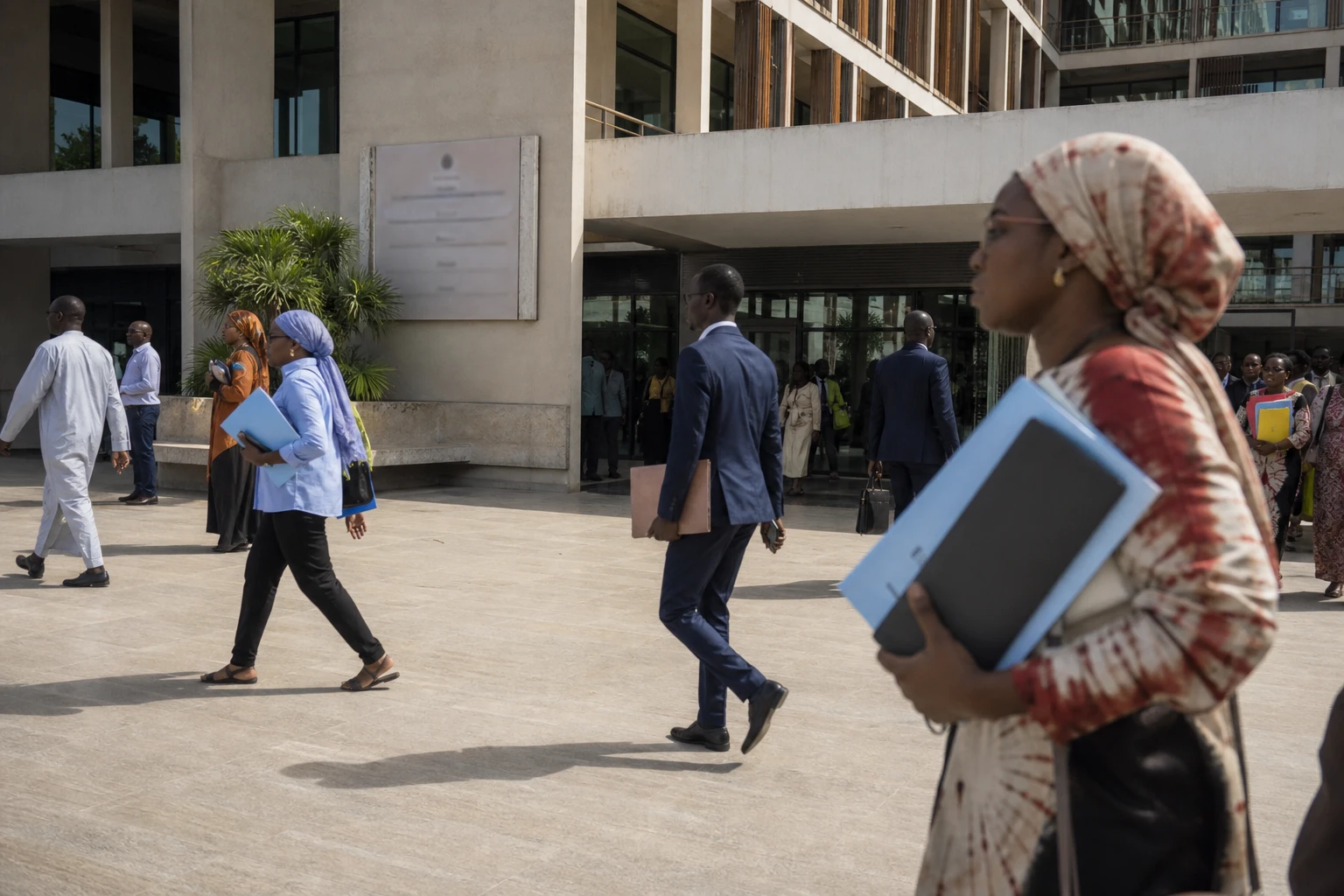
A fresh exchange that goes beyond the case of one Senegalese judge
Dakar’s response was not muted. Senegal expressed its “deep concern” after US sanctions were announced on 18 August 2026 against International Criminal Court President Tomoko Akane and Senegalese judge Abdoulaye Seye. Washington accuses them of working on cases involving nationals of countries that do not accept the Court’s jurisdiction. The sanctions include restrictions on entry to the United States and the freezing of assets within US jurisdiction.
Senegalese diplomacy set out a clear position: any measure that obstructs the independence, security and ability of ICC judges to carry out their duties undermines the integrity of international criminal justice. This position is consistent with the country’s past stance. In August 2025, Senegal had already called for the withdrawal of US sanctions targeting four Court judges, including Senegalese judge Mame Mandiaye Niang.
The issue therefore goes beyond an individual sanction. It calls into question the place of African states in the architecture of international justice, at a time when Washington continues to challenge the ICC’s jurisdiction over cases linked to the United States and Israel. The Court’s president herself denounced the impact of these measures on the institution’s work in 2025.
Senegal reiterates its position: support for the Rome Statute and defence of judicial independence
Senegal is not intervening here as a mere observer. The country has long presented itself as a steadfast supporter of the ICC. The foreign ministry notes that Dakar was the first state to ratify the Rome Statute, in February 1999. This is more than a symbolic fact: it places Senegal at the heart of the group of states parties seeking to strengthen the international jurisdiction.
This stance is consistent with the structure of Senegalese diplomacy, which has a directorate specifically responsible for following sessions of the Assembly of States Parties to the Rome Statute. In other words, the ICC is not a peripheral issue for Dakar. It is part of an established diplomatic focus linked to international judicial co-operation and the country’s credibility in multilateral forums.
In its statement, Senegal is defending more than one of its citizens. It is defending a principle. In Dakar’s view, sanctioning judges for carrying out their duties undermines the right of judges and prosecutors to work freely, without external political pressure. This view echoes that of the ICC itself, which has denounced an attack on its independence and the rule of law.
Senegal’s presence within the ICC also gives the case particular significance. Abdoulaye Seye is not an abstract name. His case is a reminder that African legal expertise contributes directly to the work of a global court, including on highly political cases. The US sanction therefore affects a professional career, but also African visibility in international institutions.
What this decision means for West Africa and international justice
In practical terms, the US sanctions first create personal and financial risks for the judges targeted. They may complicate travel and banking relations and, more broadly, hamper their ability to work without pressure. For a court such as the ICC, which relies on the co-operation of its states parties and the security of its staff, the impact is immediate.
Politically, the episode intensifies a longstanding debate: the tension between state sovereignty and international criminal justice. Washington justifies its measures on the grounds of protecting its nationals and those of allies such as Israel. The ICC, by contrast, argues that this approach undermines judicial independence and weakens the principle of accountability for the most serious crimes.
For Senegal, the stakes are twofold. On the one hand, the country is protecting one of its citizens and reaffirming a legal position it has held for more than two decades. On the other, it is strengthening its image as a reliable partner for multilateral justice mechanisms, in a West Africa where institutional balances remain fragile, particularly amid political crises and military transitions. Dakar’s voice still carries weight in regional debates on international law and criminal accountability.
The case also resonates across the continent. Several African states have long accused the ICC of selectivity, while others defend its usefulness in addressing mass atrocities. Senegal is clearly choosing the latter camp here, while maintaining an African perspective on the issue: international justice can only be credible if it protects those who make it work, including when they come from the continent.
What happens next will depend on responses from other states parties, the European Union and the Court’s other partners. The European Union has already said it regretted earlier sanctions against ICC judges, and several capitals, including Paris, have publicly expressed support for the institution in the past. In episodes of this kind, the battle is fought on diplomatic as well as legal ground.
In Dakar and The Hague, the message is the same: this is not just about a Senegalese national targeted by Washington. It is about whether international justice can continue to operate when it becomes the target of reprisals. For Senegal, an active member of multilateral forums and the first country to ratify the Rome Statute, the answer is clear: the ICC’s independence is non-negotiable.