Algeria
 Egypt
 Libya
 Morocco
 Sudan
 Tunisia
 Benin
 Burkina Faso
 Cabo Verde
 Côte d'Ivoire
 Ghana
 Guinea
 Liberia
 Mali
 Mauritania
 Niger
 Nigeria
 Senegal
 Sierra Leone
 The Gambia
 Togo
 Cameroon
 Central African Republic
 Chad
 DR Congo
 Equatorial Guinea
 Gabon
 Republic of the Congo
 São Tomé and Príncipe
 Burundi
 Comoros
 Djibouti
 Eritrea
 Ethiopia
 Kenya
 Madagascar
 Malawi
 Mauritius
 Mozambique
 Rwanda
 Seychelles
 Somalia
 South Sudan
 Tanzania
 Uganda
 Angola
 Botswana
 Eswatini
 Lesotho
 Namibia
 South Africa
 Zambia
 Zimbabwe
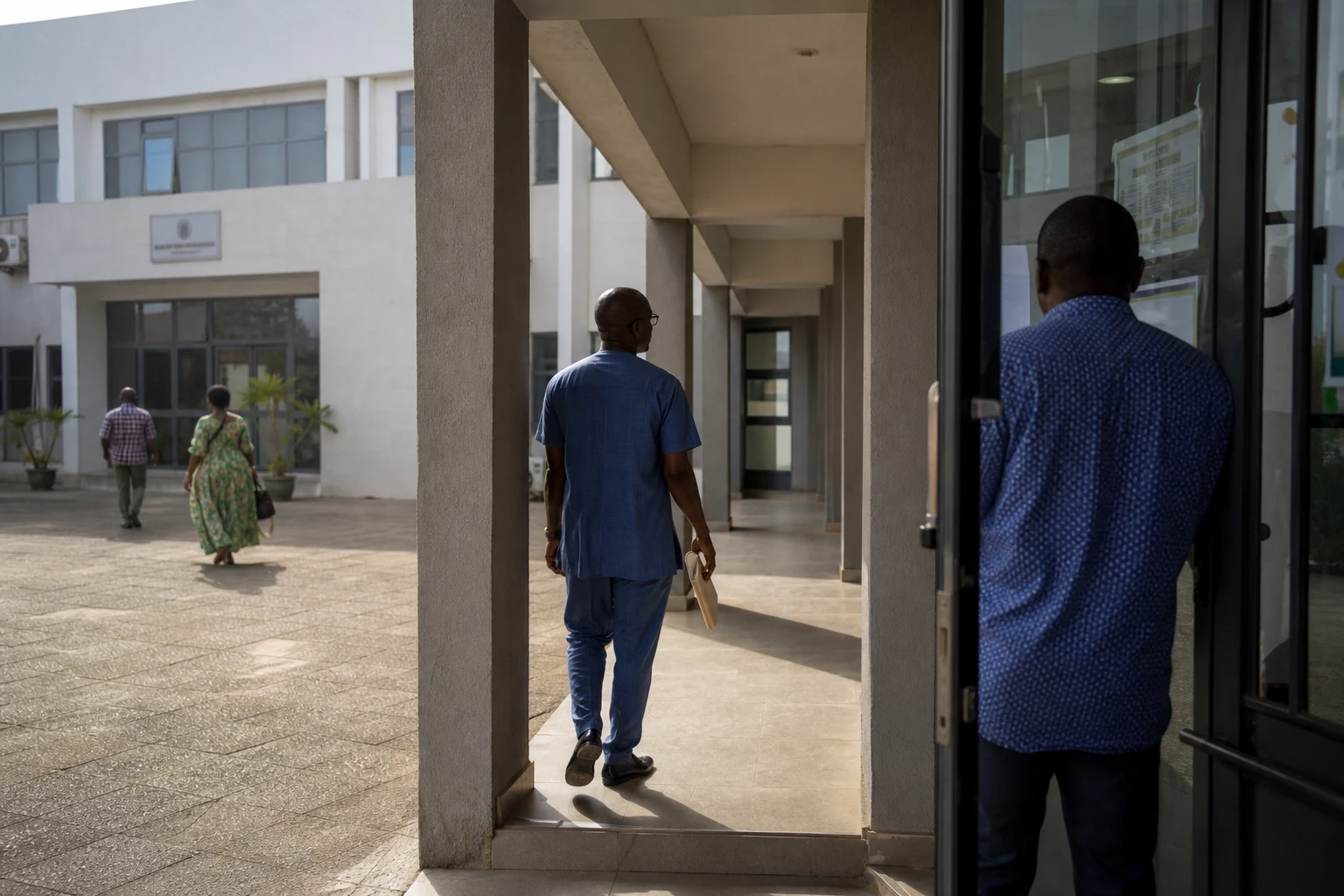
In Bissau, a vote announced before minimum safeguards are in sight
In Guinea-Bissau, the political battle is no longer being fought solely over the constitutional text. It is also about whether it is even possible to take part in public debate. Less than two weeks before the referendum on 30 August 2026, the opposition is denouncing a closed process in a country where the end of the crisis must still restore trust between institutions, parties and voters.
The PAIGC, the historic party of Guinea-Bissau’s independence, has taken a hard line: a boycott. Its reasoning is simple. According to the party, political groups were excluded from preparations for the vote, while their offices have remained closed since the coup of 26 November 2025. Under these conditions, taking part would, in its view, amount to endorsing an already uneven consultation.
A country in transition, under the scrutiny of ECOWAS and the African Union
Guinea-Bissau remains at the heart of West African mechanisms for managing political crises. In its final communiqué in July 2026, ECOWAS reiterated the need for a constitutional referendum on 30 August 2026 and general elections on 6 December 2026, while calling for transparency, inclusion and respect for rights and freedoms. The African Union, for its part, condemned the coup of November 2025 and reaffirmed its rejection of unconstitutional changes of government.
This regional framework matters. In West Africa, ECOWAS is not merely observing. It is trying to keep the transition on a path that avoids another prolonged impasse. The stakes in Bissau therefore go beyond institutional design. They also concern the credibility of a return to constitutional order in a region already marked by repeated political ruptures.
The heart of the disagreement: who writes the rules of the game?
The proposal put to a vote provides for a change in the political system. The president would gain expanded powers: appointing the prime minister and members of the government, being able to dissolve parliament, and shifting from a parliamentary system to a presidential one. The text has already been adopted by the transition’s legislative body, according to several consistent sources.
For the PAIGC, the issue is not merely institutional. It is political. Its spokesperson, Muniro Conté, says the process was launched without the parties, and that the usual oversight and complaints mechanisms have been neutralised. The party also says it fears that polling-station boards will be biased, with positions entrusted to people close to the regime. These are serious allegations. They should therefore be treated as political grievances, not established facts in the absence of an independent electoral audit.
The boycott thus becomes a tool of protest. It is not simply a refusal to take part in the vote. It also seeks to signal that a referendum has political value only if it is based on shared rules. In a transition, form is never secondary. It determines the legitimacy of the result, especially when the main parties say they have been excluded from the process.
What this vote means in practice for the people of Guinea-Bissau
For the transition authorities, a shift to a presidential system can be presented as a way to clarify the chain of command and avoid the unstable coalitions that have marked Guinea-Bissau’s political life. This argument has long featured in the country’s public debate. But it also has a downside: concentrating more power in Bissau, in the hands of the head of state, without robust checks and balances or political consensus.
For opposition parties, the threat is different. If their offices remain closed and access to the campaign remains limited, they lose their ability to influence the vote, oversee the poll and pursue any challenges. This has a direct impact on urban activists, voters in the capital Bissau and areas where party networks still shape local political information. By contrast, the transition government retains the advantage of the state apparatus and the timetable.
The social dimension is also at stake. In Guinea-Bissau, where the informal economy remains essential, political uncertainty quickly affects prices, movement and daily activities. When political competition intensifies, households, small traders and civil servants are often the ones to bear the cost of waiting. In the short term, the real issue is therefore not only whether people vote, but whether the vote can still produce rules accepted by all.
A sequence to watch through to 6 December
The transition timetable sets out a tight sequence. A referendum on 30 August, followed by presidential and legislative elections on 6 December 2026, if the roadmap remains in place. The timetable is now being closely watched in Bissau, Abuja and Addis Ababa, as it will show whether Guinea-Bissau’s transition is moving towards political normalisation or prolonged concentration of power under the guise of reform.
At the continental level, Guinea-Bissau is a reminder of a simple reality: constitutional crises are not just about the wording of a text. They raise questions of representation, civilian oversight of power and the role of regional organisations in restoring democratic order. ECOWAS and the African Union have set out a framework. On 30 August, it will become clear whether that framework can still include all Guinea-Bissau’s political actors, or only those already in control of the transition.