Algeria
 Egypt
 Morocco
 Sudan
 Tunisia
 Benin
 Burkina Faso
 Cabo Verde
 Côte d'Ivoire
 Ghana
 Guinea
 Guinea-Bissau
 Liberia
 Mali
 Mauritania
 Niger
 Nigeria
 Senegal
 Sierra Leone
 The Gambia
 Togo
 Cameroon
 Central African Republic
 Chad
 DR Congo
 Equatorial Guinea
 Gabon
 Republic of the Congo
 São Tomé and Príncipe
 Burundi
 Comoros
 Djibouti
 Eritrea
 Ethiopia
 Kenya
 Madagascar
 Malawi
 Mauritius
 Mozambique
 Rwanda
 Seychelles
 Somalia
 South Sudan
 Tanzania
 Uganda
 Angola
 Botswana
 Eswatini
 Lesotho
 Namibia
 South Africa
 Zambia
 Zimbabwe
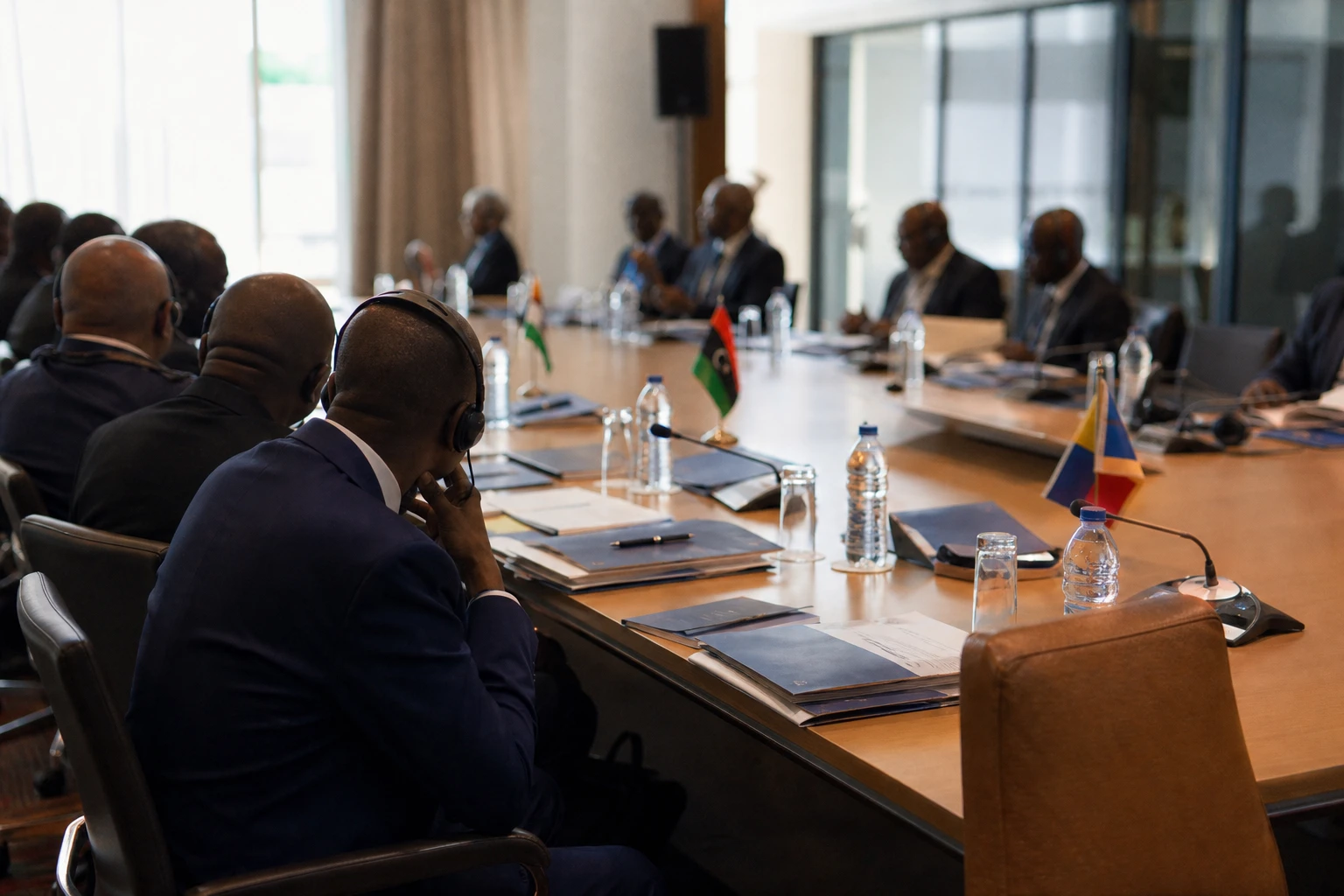
In Tripoli and Benghazi, stability remains a fragile word
In Libya, political anniversaries no longer heal wounds. They make them visible. Fifteen years after the fall of Muammar Gaddafi, the country still has two centres of power, two security apparatuses and the same question for Libyans: who really controls the state, beyond the flags and communiqués?
20 August 2026 was another reminder of this reality. In Benghazi, in the east, a senior military intelligence official linked to the camp of Field Marshal Khalifa Haftar was killed by a car bomb, according to several international media outlets and security sources cited by Reuters. In the west, in Zawiya, drones targeted sensitive oil and energy facilities near Tripoli, once again exposing the vulnerability of a country whose economy depends almost entirely on hydrocarbons.
Libya has not descended into total chaos. Rather, it has settled into a harsh, incomplete coexistence that is profitable for some. It is this status quo, more than open confrontation, that has blocked any lasting political reunification for years.
A stalled transition, replaced by de facto balances of power
The electoral process that was meant to open a way out of the crisis never came to fruition. The elections expected in late 2023 never took place, and the UN is still trying to bring Libyan actors to agreement on the rules of the game, with an advisory committee set up in February 2025 to propose electoral and institutional options. The issues remain the same: presidential and legislative elections, a timetable, candidate eligibility criteria and a mechanism for settling disputes.
The deadlock has created interests of its own. In the east, structures linked to Khalifa Haftar have consolidated their security and administrative grip. In the west, the Government of National Unity, based in Tripoli, retains international recognition and control of central financial levers. Between the two, parallel administrations, armed networks and local power brokers have learned to live off division rather than resolve it. This is one reason why unifying the state remains politically costly. It would mean redistributing positions, revenues and influence.
The implications go beyond the balance of power between Tripoli and Benghazi. Libya remains a North African country whose internal balances affect the entire southern shore of the Mediterranean. It also matters to the African Union, which regularly calls for a Libyan-led solution, and to the Arab Maghreb Union, paralysed like the Libyan file by a lack of regional political convergence.
Oil brings the accounts together, not the country
Oil remains the real backbone of Libya’s system. Production is concentrated in areas sometimes controlled by the east, but revenues pass through Tripoli’s financial institutions, notably the Central Bank. In 2024, the bank published its revenue and expenditure statements, showing that the central budgetary system remains at the heart of the political battle. In 2025, the UN was still highlighting the issue of unifying institutions and financial mechanisms.
This interdependence explains why neither side can really do without the other. The east needs the centre to turn oil wealth into cash. Tripoli needs oil to fund the state, public-sector salaries and the external balance. The result: technical arrangements follow one another, but they often serve to prolong a political division that both sides say they want to overcome.
Recent figures also show how fragile this model is. The Central Bank reported a fall in oil revenues in 2024, while African sources have pointed to a foreign currency shortage and persistent budgetary pressures. In a country where public authority depends heavily on oil wealth, any shock to terminals, refineries or the exchange rate quickly affects salaries, imports and daily life.
What Libya tells North Africa and the continent
Libya’s story is not only one of national failure. It also illustrates a continental challenge: how to rebuild a state when institutions, armed forces and the economy have been deeply fragmented. Fifteen years after 2011, the country shows that a change of regime is not enough to deliver a transition. Without an institutional compromise, sovereignty remains incomplete, even when borders are closed and ministries are in place.
For Libyans, the impact is tangible. Residents of Tripoli, Benghazi, Zawiya and southern cities do not endure the crisis in the same way. Big cities live with security rivalries, industrial zones with attacks on infrastructure, and families with uncertainty over public-sector jobs, services and the price of imported goods. The elites, meanwhile, can accommodate disorder. The population much less so.
What happens next will be determined on several fronts: whether a new electoral framework is established, stability around oil facilities, and the ability of financial institutions to withstand pressure from both sides. In Libya, the real test will not be a slogan of unity. It will be the possibility, at last, of governing without every step forward depending on an armed power struggle.