Algeria
 Egypt
 Libya
 Morocco
 Sudan
 Tunisia
 Benin
 Burkina Faso
 Cabo Verde
 Côte d'Ivoire
 Guinea
 Guinea-Bissau
 Liberia
 Mali
 Mauritania
 Niger
 Nigeria
 Senegal
 Sierra Leone
 The Gambia
 Togo
 Cameroon
 Central African Republic
 Chad
 DR Congo
 Equatorial Guinea
 Gabon
 Republic of the Congo
 São Tomé and Príncipe
 Burundi
 Comoros
 Djibouti
 Eritrea
 Ethiopia
 Kenya
 Madagascar
 Malawi
 Mauritius
 Mozambique
 Rwanda
 Seychelles
 Somalia
 South Sudan
 Tanzania
 Uganda
 Angola
 Botswana
 Eswatini
 Lesotho
 Namibia
 South Africa
 Zambia
 Zimbabwe
In Accra, a national security issue, not just diplomacy
For Ghana, the issue is no longer just the war in Ukraine. It now concerns the protection of citizens, the fight against recruitment networks and the credibility of the Ghanaian state in the face of networks that promise work and then sometimes send young people to the front. In Moscow, Ghanaian Foreign Minister Samuel Okudzeto Ablakwa said he had secured a commitment from his Russian counterpart, Sergey Lavrov, to cooperate against this illegal recruitment. The minister also cited 62 deaths and 15 people missing among Ghanaians drawn into the conflict.
This episode is part of Ghanaian diplomacy operating on several fronts. On the one hand, Accra is seeking to protect its citizens. On the other, the country is maintaining channels of cooperation with Moscow. On 16 June 2026, Ghana’s Ministry of Foreign Affairs received the designated ambassador of the Russian Federation to Accra and reiterated its intention to strengthen bilateral ties in education, energy, trade and technology. Ghana also maintains an embassy in Moscow, a sign of sustained relations despite tensions linked to the war.
What Ghana’s figures show, and how other sources compare
The figures have changed over a few months. In late February 2026, Ghana’s Ministry of Foreign Affairs said that at least 55 Ghanaians had been killed in the war in Ukraine and that 272 citizens had been “lured” into the conflict since 2022. Around the same time, the Ghanaian press reported that Ukrainian intelligence estimated that about 272 Ghanaians had been recruited into the Russian army over the previous three years. In July 2026, the Ghana News Agency confirmed that the government had opened an investigation into criminal recruitment networks, citing 272 people reported to have been recruited, of whom 55 had died and two had been captured as prisoners of war.
So, on 17 August 2026 in Moscow, Ablakwa presented a graver picture. According to reports carried by several media outlets, he raised the toll to 62 dead and 15 missing after his meeting with Sergey Lavrov. Anadolu Agency reported the same statement, specifying that the Ghanaian minister spoke of “illegal recruitment” and of a Russian commitment to work with Accra to stop it. Europa Press also confirmed the remarks, placing them at a press conference in Moscow.
This increase in the figures should not be read as a simple statistical addition. Rather, it shows that the case remains open, with further cases coming to light, families seeking news and the authorities trying to identify the routes used for departures. The Ghanaian government has also linked the case to fake job offers and online trafficking networks, pointing to a broader problem of deceptive migration and the exploitation of economic vulnerabilities.
Why are young Ghanaians agreeing to leave?
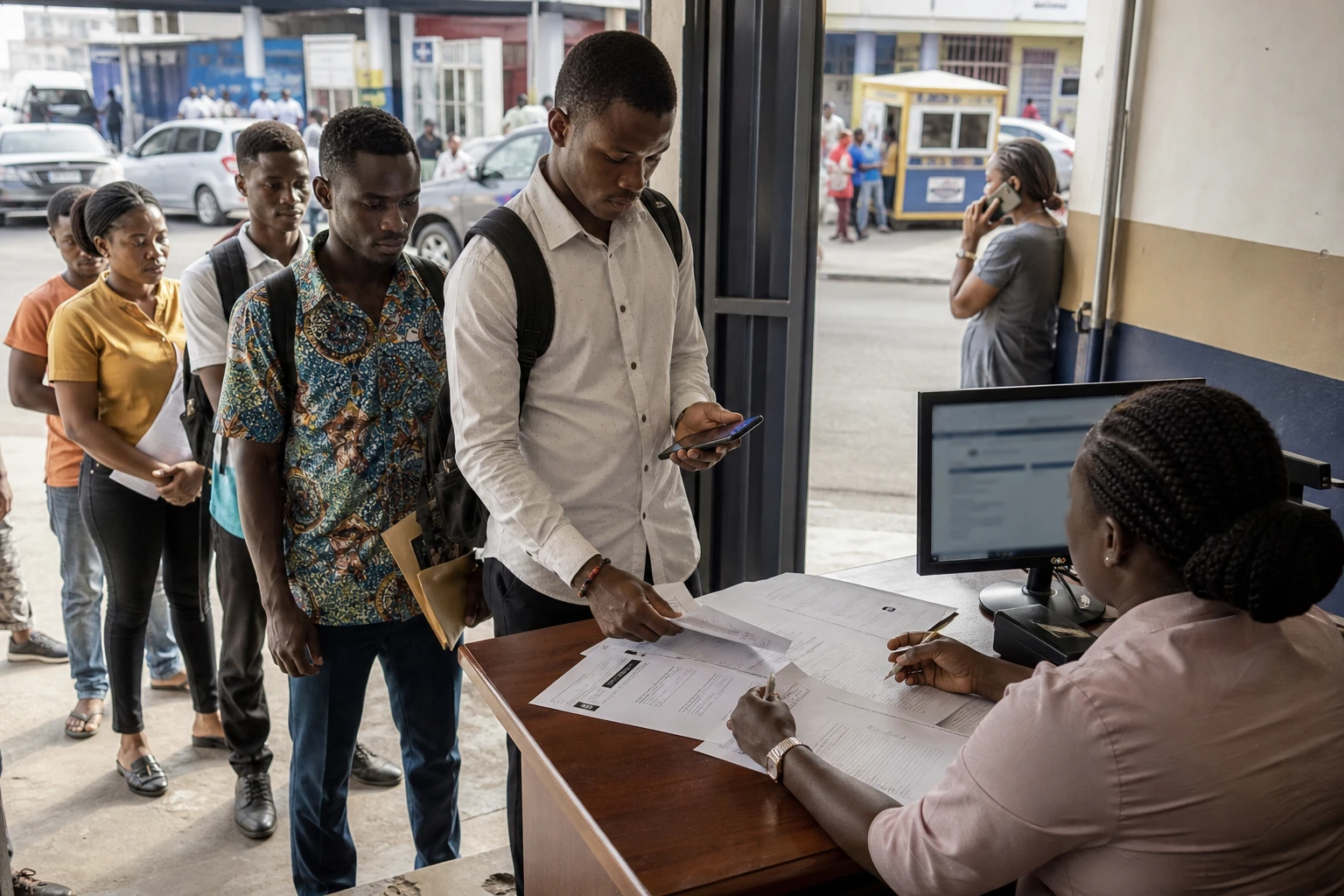
Sources agree on one essential point: the departures are not solely military in nature; they are often preceded by a civilian job offer. Several investigations and testimonies published in Ghana refer to job offers in Russia, sometimes through intermediaries presented as recruiters, followed by the discovery of a military service contract after arrival. The Ghanaian press has also reported that one Ghanaian prisoner of war described group recruitment, with a job promised before he signed documents committing him to the Russian army.
There is a very tangible economic driver at work. In a country where access to formal employment remains unequal, promises of quick pay, a visa or stability can carry considerable weight. The networks exploit this pressure, especially among young men already exposed to irregular migration routes. The Ghanaian government has also linked this case to other instances of migration fraud, citing rescue and repatriation operations from Côte d’Ivoire. This shows that the forced or deceptive movement of people is not confined to a single crisis zone.
The issue also affects families and urban and rural communities. In Accra, Kumasi and Tamale, the promise of an income in foreign currency remains attractive. But in areas where unemployment and underemployment are widespread, the cost of a mistake can be irreversible. When young people leave with no clear prospect of returning, entire households lose a source of financial support, as well as some of their already fragile trust in international migration channels.
A Ghanaian case, but a warning for all of West Africa
Ghana’s case is not isolated. Reuters, the Associated Press and Africanews have reported similar concerns in Kenya, Nigeria, Cameroon, South Africa and Botswana. On several occasions, African governments have asked Moscow to stop these recruitment efforts or clarify how they operate. Kenya even said in March 2026 that it had secured a Russian commitment to end this type of recruitment, proof that the issue has become a diplomatic matter in its own right across the continent.
In this context, Accra’s position carries weight beyond its borders. Ghana is an important member of ECOWAS, the Economic Community of West African States, and a country often seen as an institutional benchmark in the region. When its authorities speak of criminal networks, disinformation and clandestine recruitment, they are also describing a risk shared across West Africa: the circulation of fake job offers, the exploitation of young people in precarious circumstances and the export of vulnerability to a distant conflict.
The case also has continental implications. Ukraine and Russia are now competing for influence in Africa through diplomacy, information and promises of cooperation. The issue of African recruits for the Russian army is a reminder that global power struggles play out even in individual lives. For African states, the immediate task is to document departures, identify intermediaries and protect citizens before they disappear from view on a foreign front. For Ghana, the next step will be to turn the commitment secured in Moscow into verifiable results on the ground.