Algeria
 Egypt
 Libya
 Morocco
 Sudan
 Tunisia
 Benin
 Burkina Faso
 Cabo Verde
 Côte d'Ivoire
 Ghana
 Guinea
 Guinea-Bissau
 Liberia
 Mali
 Mauritania
 Niger
 Nigeria
 Senegal
 Sierra Leone
 The Gambia
 Togo
 Cameroon
 Central African Republic
 Chad
 DR Congo
 Equatorial Guinea
 Gabon
 Republic of the Congo
 São Tomé and Príncipe
 Burundi
 Comoros
 Djibouti
 Eritrea
 Ethiopia
 Kenya
 Madagascar
 Malawi
 Mauritius
 Mozambique
 Rwanda
 Seychelles
 Somalia
 South Sudan
 Tanzania
 Uganda
 Angola
 Botswana
 Eswatini
 Lesotho
 Namibia
 Zambia
 Zimbabwe
Human remains, but above all a political history
In Namibia, the return of ancestors is about more than mourning. It touches on national memory, families’ dignity and how a country heals the wounds left by colonialism and apartheid. When human remains return from abroad, it is not just another symbolic gesture. It is a way of closing, in a very tangible sense, chapters that have been open for decades.
The issue resonates particularly strongly in Windhoek, Namibia’s political capital, just days before Heroes’ Day, celebrated on 26 August. The date marks the start of the armed struggle for independence on 26 August 1966 at Omugulugwombashe. In 2026, it coincides with the 60th anniversary of the struggle’s beginning, lending added significance to the return of remains linked to Namibia’s resistance.
A repatriation years in the making
On 19 August 2026, in Cape Town, South Africa returned to Namibia the remains of more than 80 people who died under apartheid or during the colonial period. They include those of Festus Nehale and Simon Niilenge, two Namibian activists imprisoned on Robben Island who died in 1971 and 1974, respectively. They had been buried in Cape Town. Other remains came from the collections of the Iziko Museum in Cape Town, where bones had been kept at a time when racial pseudoscience was used to classify bodies and peoples.
The repatriation is part of a broader movement to bring African human remains held abroad back to the continent. The Namibian government has been pressing for such returns for several years. Windhoek has already secured repatriations from Germany in 2011, 2014 and 2018. Namibia, formerly under German colonial rule and later administered by South Africa, remains highly attentive to questions of remembrance relating to past violence.
In South Africa, the gesture is also part of a broader public policy. The country has introduced a national policy on the restitution and repatriation of human remains and heritage objects. Its cultural administration speaks of restorative justice, healing and reconciliation. The exhumation and reburial of 63 Khoi and San remains in March 2026 had already shown that Pretoria was seeking to establish a lasting framework for such repatriations.
What the ceremony says about relations between Windhoek and Pretoria
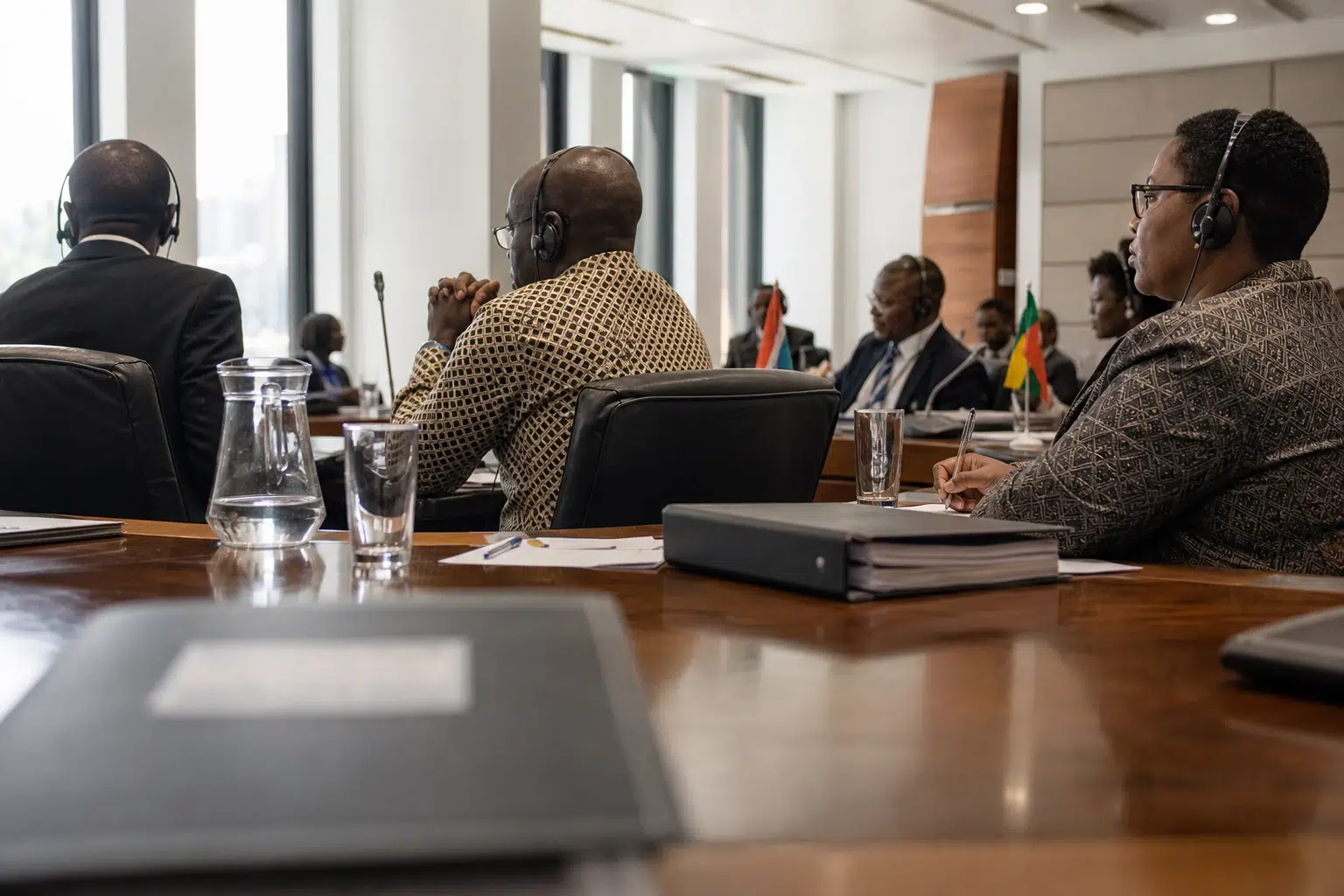
The return of the Namibian remains comes at a specific diplomatic moment. On 17 July 2026, the fourth session of the South Africa–Namibia Bi-National Commission was held in Pretoria, attended by both presidents. The forum deals with political, economic and commemorative issues between the two neighbours. In this context, the question of human remains and the memory of liberation naturally has a place.
In Cape Town, the ceremony brought together political leaders, families and heritage professionals. South Africa’s culture minister described the operation as an act of restorative justice and dignity. For Namibia, the Minister of Education, Arts and Culture, Sanet Steenkamp, recalled that the men had left as “subjects of a colonial order” and were now returning to a free and sovereign republic. The distinction is important. It marks the shift from a status imposed by domination to full recognition as citizens.
For the families, the return means more than an administrative transfer. They regain the possibility of burying their loved ones according to their rites. In societies where kinship, ancestors and land remain connected, the return of bodies or human remains is never neutral. It concerns spirituality, family continuity and the place of the dead in collective history. This is also why the Namibian authorities wanted the reburial to coincide with the Heroes’ Day calendar. The message is clear: these men are not simply dead people to be repatriated, but independence fighters to be written back into the national story.
An issue that goes beyond Namibia
The repatriation also resonates across southern Africa. SADC, the region’s development community, deals with more than trade and the movement of people. It also carries a shared memory shaped by anti-colonial struggles, exile, political prisons and borders drawn by outside powers. Namibia and South Africa have long been bound together by the history of occupation, resistance and liberation solidarity. The return of these remains recalls that shared history while showing that reparations can sometimes take very tangible forms.
The issue also matters across the continent. For several years, African states have been calling for the return of human remains, sacred objects and heritage items scattered across museums and universities in the Global North. The question is not merely cultural. It concerns peoples’ right to tell their own history without relying exclusively on institutions that have sometimes contributed to their dispossession. In this context, South Africa has taken on a particular role, having begun to build a clearer legal and administrative framework for such returns.
For Namibia, the significance is immediate. It strengthens a national memory in which liberation heroes are not frozen in textbooks but honoured in public practice. For South Africa, it confirms a determination to embed restorative justice in its institutions. And for the region, it shows that a neighbouring state can become a key partner in healing colonial wounds, provided it recognises that memory is not merely an embellishment, but an issue of sovereignty.